
Tangaek — Decoctions · Vegetables
石耳 Rock Tripe
 Related Crop · Rock Tripe →
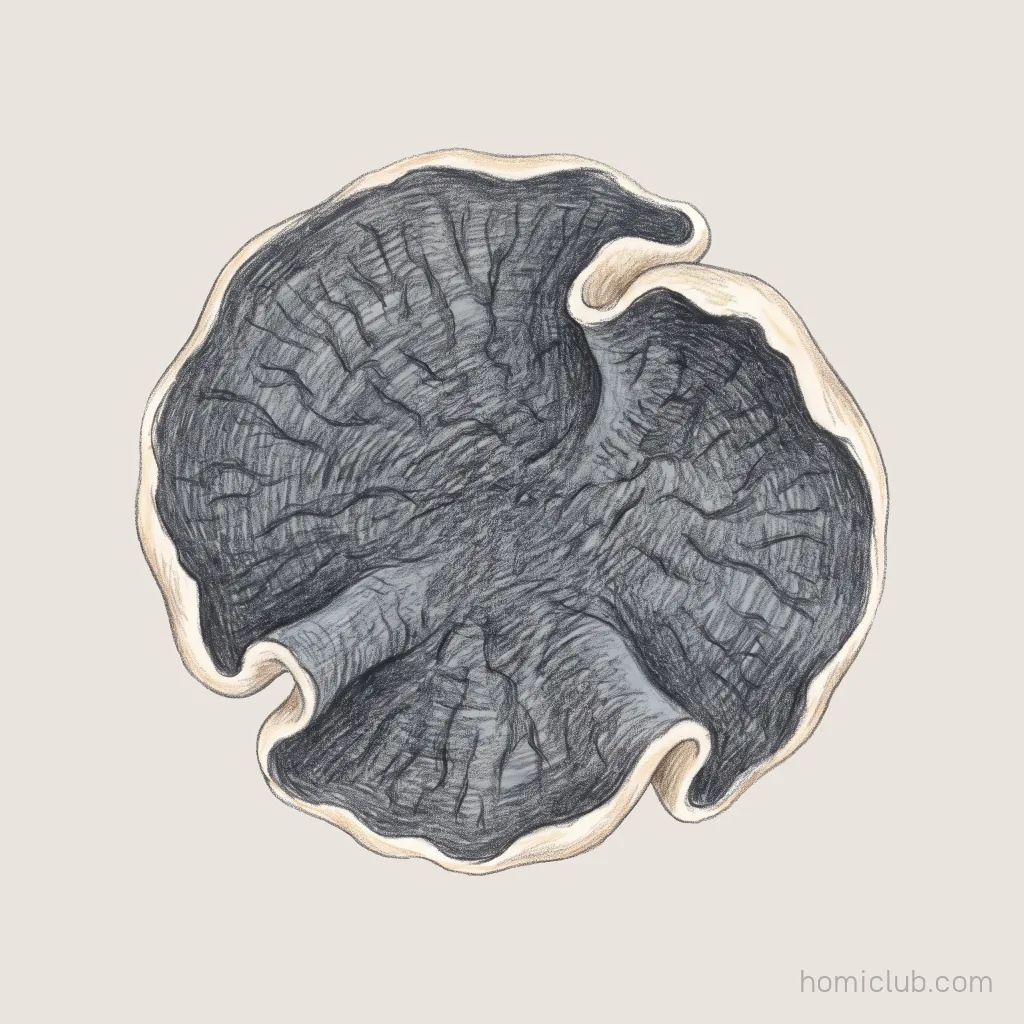
Seogi is a lichen clinging to cliff faces deep in the mountains, looking like a scrap of black leather. It is still sold as seogi mushroom and used as the dark garnish on japchae, rice cakes, and hot pots. The Donguibogam noted it was also called yeongji, which is not the reishi mushroom of today.
Original, read line by line 東醫寶鑑 · Tangaek — Decoctions vol. 2
-
性寒一云平, 味甘, 無毒.
Its nature is cold, though one account calls it neutral; its taste is sweet, and it is non-toxic.
HomiclubSeogi is called a mushroom but is in fact a lichen clinging to rock. It looks like a scrap of black leather with a felted underside; it is soaked, rubbed clean, and shredded fine as a garnish.
-
淸心養胃, 止血, 延年, 益顔色, 令人不飢.
It clears the heart, nourishes the stomach, stanches bleeding, lengthens the years, enriches the complexion, and keeps a person from hunger.
-
生於名山石崖上, 名曰靈芝. 《日用》
It grows on the rock cliffs of famed mountains and is named yeongji (靈芝). 《Ilyong (日用)》
HomiclubThe yeongji named here is not the red-capped reishi known by that name today. In older records yeongji also served as a general term for any numinous plant or fungus.
Related Crop
Rock Tripe →
Reading on Rock Tripe
Vegetables — more entries
This is a cultural and historical record from a classical text, not a claim about any food’s effects. Nothing here is a health supplement or intended to prevent or treat disease. Consult a medical professional about health concerns. · Text: Korean Medicine Classics DB · Reading: Homiclub