
Tangaek — Decoctions · Vegetables
烏芋 Water Chestnut (Olbanggae)
 Related Crop · Water Chestnut (Olbanggae) →
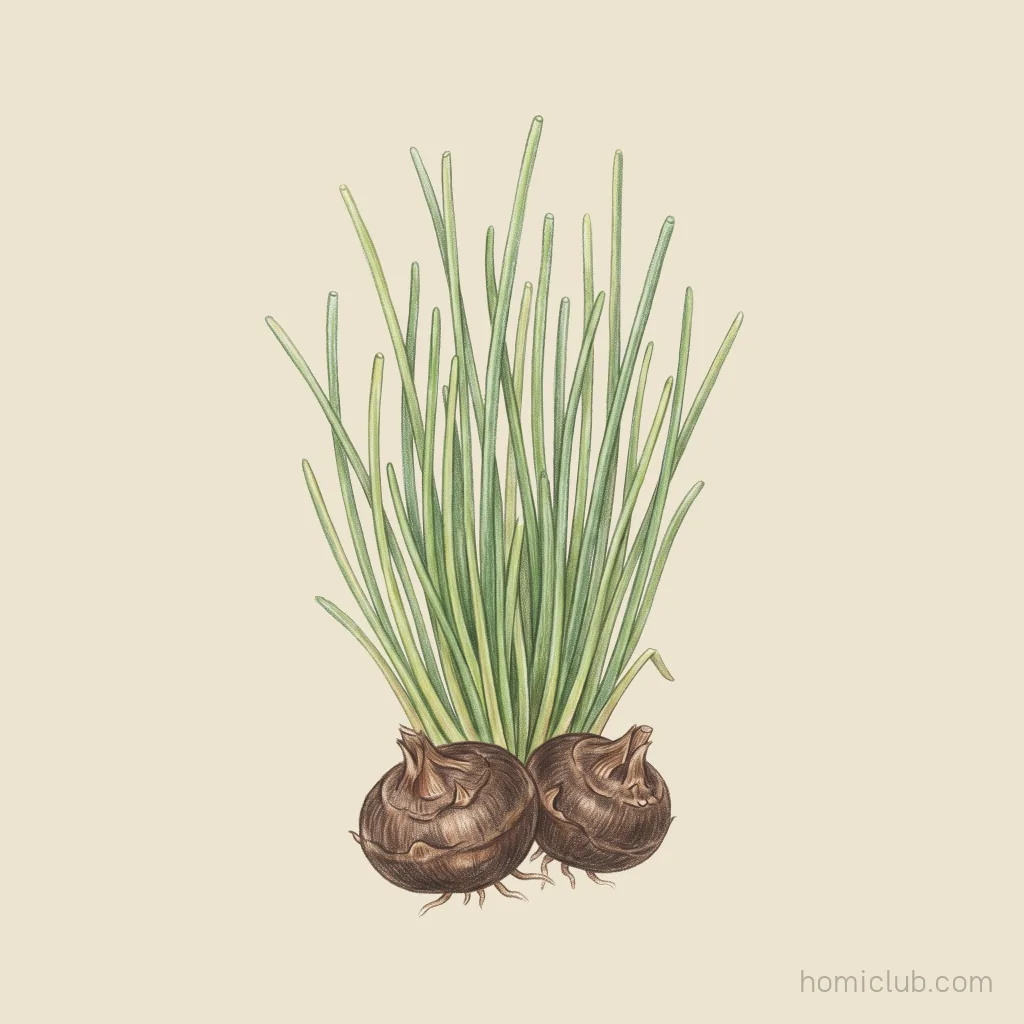
Olbanggae is the corm of a sedge that grows in waterside mud. It is the crisp water chestnut of Chinese cooking, sold as ma-tai, and the same plant as the olbanggae in the crop guide. The Donguibogam lists it in the vegetable section as ou (烏芋) and records the folk name balje.
Original, read line by line 東醫寶鑑 · Tangaek — Decoctions vol. 2
-
性微寒一云冷, 味苦甘, 無毒一云有毒.
Its nature is slightly cold, though one account calls it cold; its taste is bitter and sweet; it is non-toxic, though one account says it is toxic.
HomiclubOu is the corm of a sedge that grows in waterside mud. It belongs to the same group as the ingredient known in Chinese cooking as mati (馬蹄) and in English as water chestnut, prized for its crisp bite.
-
除胸胃熱. 治黃疸, 止消渴, 明耳目, 開胃下食.
It removes heat in the chest and stomach. It addresses jaundice, halts sogal (消渴, wasting thirst), brightens the ears and eyes, and opens the stomach so that food goes down.
-
處處有之, 生水濕地. 澤瀉之類也. 人取食之. 亦以作粉食.
It is found everywhere and grows in wet, marshy ground. It belongs to the taeksa (澤瀉) group. People dig it up and eat it. It is also made into a flour and eaten.
-
厚人腸胃, 令不飢. 正二月採食之, 荒歲多採以充糧. 《本草》
It thickens a person's intestines and stomach and keeps one from hunger. It is dug and eaten in the first and second months, and in lean years it is gathered in quantity to fill out the food supply. 《Boncho (本草)》
HomiclubThis passage records it as a famine food. Water chestnut corms overwinter in the mud of paddies and wet ground, so they were dug out of the soil in early spring.
-
烏芋, 葉似箭鏃, 根黃似芋而小, 煮熟可啖. 《入門》
Ou has leaves resembling arrowheads, and its root is yellow and like taro but smaller; boiled until done, it can be eaten. 《Immun (入門)》
HomiclubThe line about arrowhead-shaped leaves appears to fold in the related aquatic plant sogwinamul (Sagittaria). True water chestnut has reduced leaves and stands as straight, rush-like stems above the water, so it looks quite different.
-
烏芋, 卽鳧茨也. 俗謂之葧臍. 《丹心》
Ou is the same as buja (鳧茨). Among the common people it is called balje (葧臍). 《Dansim (丹心)》
Related Crop
Water Chestnut (Olbanggae) →
Vegetables — more entries
This is a cultural and historical record from a classical text, not a claim about any food’s effects. Nothing here is a health supplement or intended to prevent or treat disease. Consult a medical professional about health concerns. · Text: Korean Medicine Classics DB · Reading: Homiclub