
Tangaek — Decoctions · Vegetables
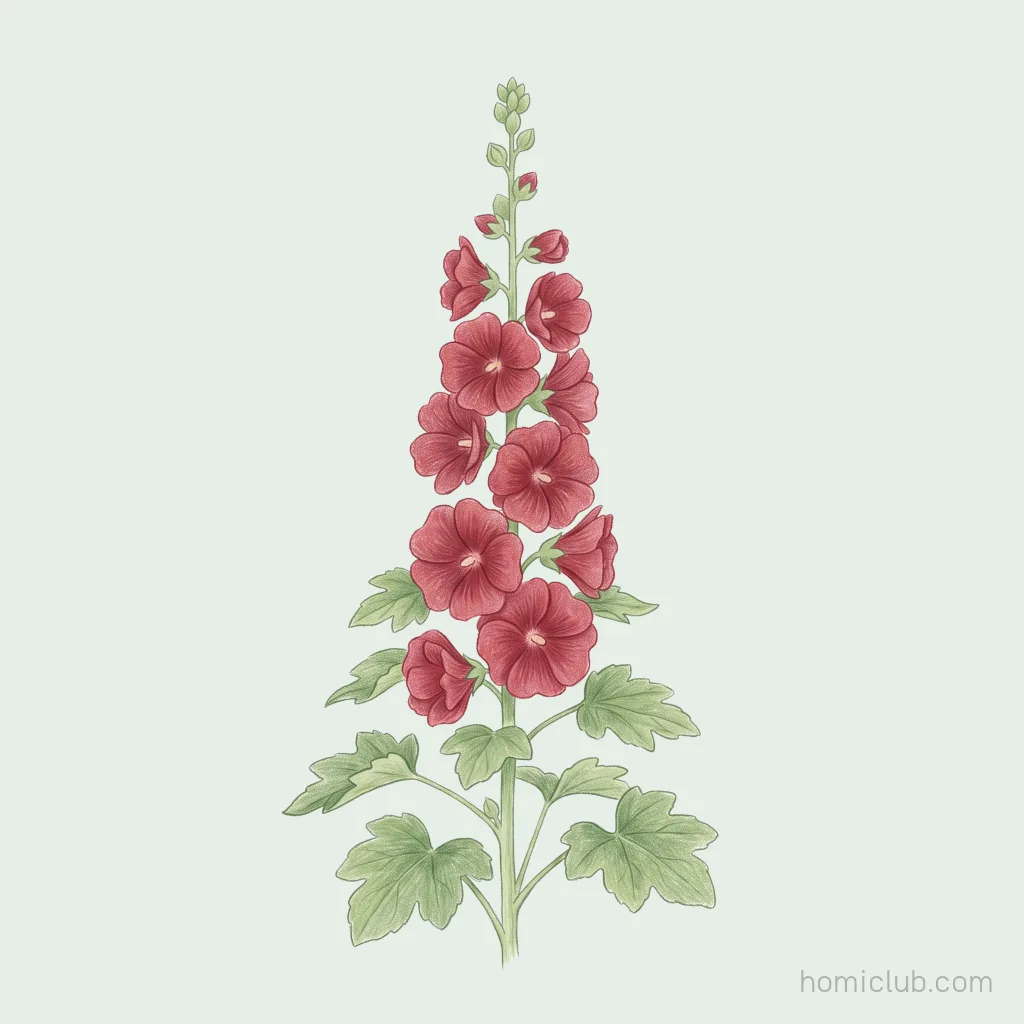
紅蜀葵 Hollyhock
 Related Crop · Hollyhock →
Hongchokgyu is the hollyhock that blooms red. The Donguibogam explains the name, saying the seed came over from the lands of Rong and Shu, and notes that the plant resembles mallow. Today it is better known as a summer flower planted along fences.
Original, read line by line 東醫寶鑑 · Tangaek — Decoctions vol. 2
-
性寒, 味甘, 無毒.
Its nature is cold, its taste sweet, and it is non-toxic.
HomiclubHongchokgyu is the red-flowered hollyhock. A biennial in the mallow family, it grows straight up past head height and is familiar as the summer flower planted in rows along walls and roadsides.
-
根莖幷主客熱. 利小便, 散膿血惡汁.
Both the root and the stem govern gaekyeol (客熱, visiting heat). They promote urination and disperse pus, blood, and foul discharge.
-
四時, 取紅單葉者. 根治帶下, 排膿血惡物, 極驗.
Through all four seasons, take the kind with single red petals. Its root addresses daeha (帶下, vaginal discharge) and is highly effective at expelling pus, blood, and foul matter.
HomiclubThe instruction to choose single-petalled plants stands out. Most hollyhocks in gardens today are double-flowered cultivars whose blooms look quite unlike the single form described here.
-
處處有之, 以種出戎蜀, 故謂之蜀葵. 形似葵, 花有五色如槿花. 《本草》
It is found everywhere, and because its seed came from the lands of Yung (戎) and Shu (蜀) it is called chokgyu (蜀葵). Its form resembles mallow, and its flowers come in five colors like those of the rose of Sharon. 《Boncho (本草)》
Related Crop
Hollyhock →
Reading on Hollyhock
Vegetables — more entries
This is a cultural and historical record from a classical text, not a claim about any food’s effects. Nothing here is a health supplement or intended to prevent or treat disease. Consult a medical professional about health concerns. · Text: Korean Medicine Classics DB · Reading: Homiclub