
Tangaek — Decoctions · Vegetables
白菜 Butterbur (Meowi)
 Related Crop · Butterbur (Meowi) →
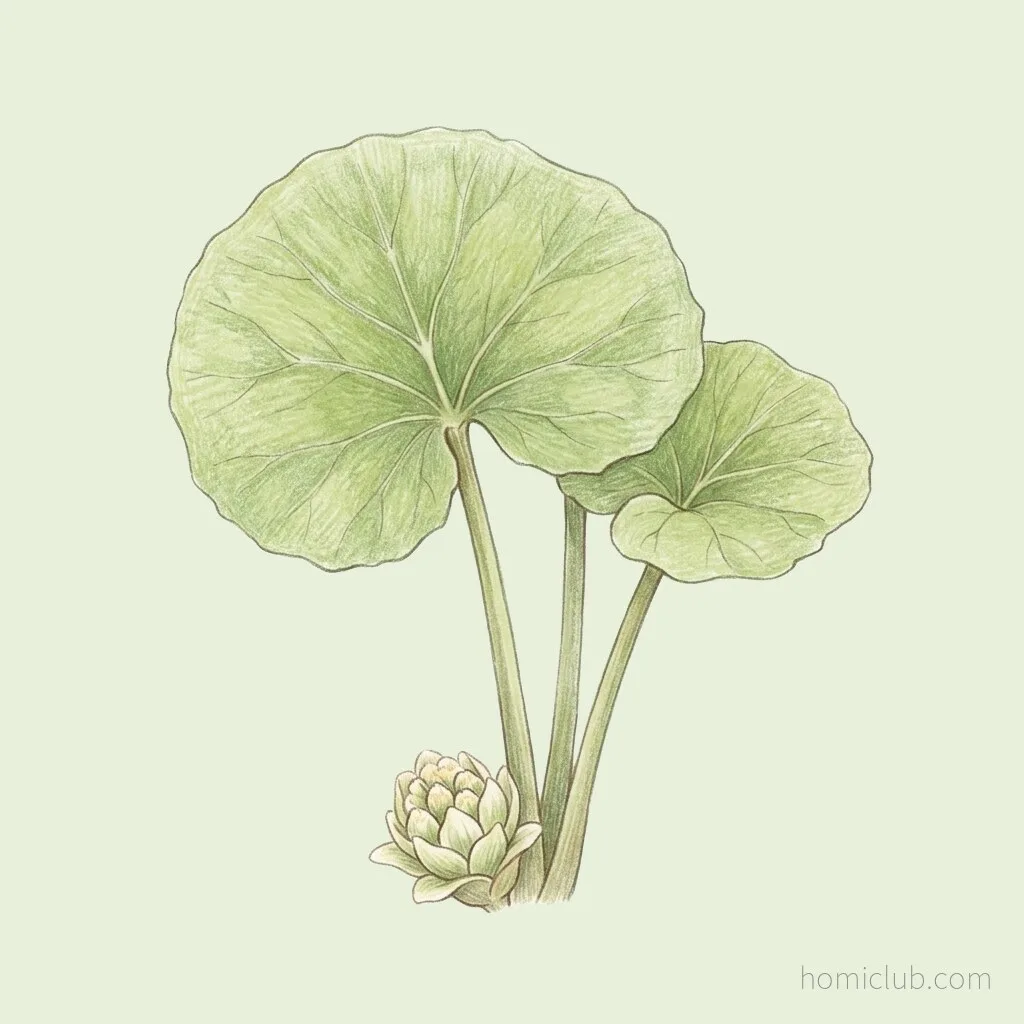
Meowi is butterbur, a perennial of the daisy family and the same plant in the crop guide; old Korean wrote it meohwi. Spring leaf stalks are blanched and dressed as a green or dropped into soup, and the flower buds are fried in batter. The text notes only that the stalks are boiled for soup or a dressed green, and that it was planted everywhere.
Original, read line by line 東醫寶鑑 · Tangaek — Decoctions vol. 2
-
性平, 無毒.
Its nature is neutral and it is non-toxic.
HomiclubThe baekchae recorded here is meowi, butterbur, a different plant from the napa cabbage that shares its name. Written meohwi in old Korean, it is a perennial of the daisy family whose spring leafstalks are blanched, peeled, and dressed.
-
取莖, 煮作羹茹, 甚佳.
The stalks are taken, boiled, and made into soup or a vegetable dish, which is excellent.
HomiclubWhat the text calls the stalk (莖) is the meowitdae, botanically the leafstalk. Butterbur's true stem is a rhizome creeping sideways underground, and the leaves rise straight from its nodes on long leafstalks.
-
處處種之. 《俗方》
It is planted everywhere. 《Sokbang (俗方)》
HomiclubIn the southern provinces it spreads on its own along paddy banks and behind houses. The flower stalk, which rises from the ground before the leaves, is treated separately from the leafstalk.
Related Crop
Butterbur (Meowi) →
Reading on Butterbur (Meowi)
Vegetables — more entries
This is a cultural and historical record from a classical text, not a claim about any food’s effects. Nothing here is a health supplement or intended to prevent or treat disease. Consult a medical professional about health concerns. · Text: Korean Medicine Classics DB, collated with the Jangseogak copy of the 1613 wooden movable-type edition · Reading: Homiclub