
Tangaek — Decoctions · Vegetables
葱白 Welsh Onion (Daepa)
 Related Crop · Welsh Onion (Daepa) →
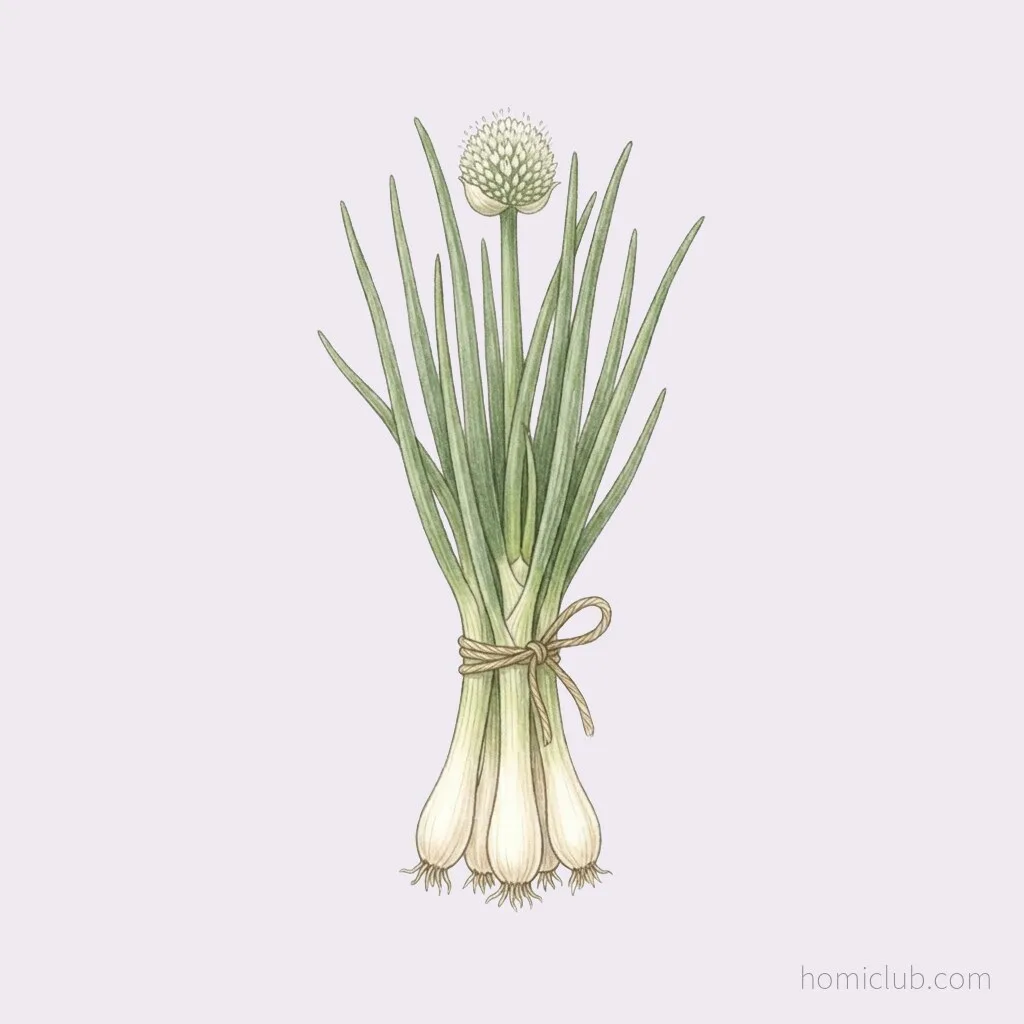
Chongbaek is the white lower stem of a scallion, the same daepa as in the crop guide and the part dropped into a stock pot. The Dongui Bogam also records the name dongchong, winter scallion, because the plant survives the cold, and adds that it should not be eaten in quantity.
Original, read line by line 東醫寶鑑 · Tangaek — Decoctions vol. 2
-
性涼一云平, 味辛, 無毒.
Its nature is cool, though one account calls it neutral; its taste is pungent and it is non-toxic.
HomiclubChongbaek is the base of the scallion, the white part that grows below the soil. In Korean kitchens the white stalk of the large scallion is cut into broth, while the root fibers at the very bottom are trimmed away.
-
主傷寒寒熱, 中風面目腫. 療喉痺, 安胎, 歸目, 除肝邪, 利五藏, 殺百藥毒, 通大小便. 治奔豚脚氣.
It chiefly treats chills and fever from cold damage and swelling of the face and eyes from jungpung (中風, wind stroke). It treats hubi (喉痺, throat blockage), calms the fetus, returns to the eyes, removes evil qi from the gan (肝, liver), benefits the ojang (五藏, five viscera), kills the toxins of the hundred medicines, and frees the stool and urine. It treats bundon (奔豚, running piglet qi) and gakgi (脚氣, leg qi).
-
處處種之, 宜冬月食. 只可和五味用之, 不宜多食. 盖開骨節, 出汗虛人故爾.
It is planted everywhere and suits eating in the winter months. It may only be used blended with the five flavors, and eating much of it is not fitting, for it opens the joints and draws out sweat, leaving a person depleted.
-
一名凍葱, 謂經冬不死. 分莖栽蒔而無子也. 食用入藥, 最善.
It is also called dongchong (凍葱, frozen scallion), meaning that it passes the winter without dying. It is planted by dividing the stems and bears no seed. It is best both for eating and for entering medicine.
HomiclubDongchong (凍葱) means the scallion that passes the winter. Scallions can be raised from seed, but dividing the clumps lets a grower carry a planting forward without letting it bolt, which is the method the text records as planting by dividing the stems.
-
此物, 大抵以發散爲功, 多食昏人神. 且白冷而靑熱. 傷寒藥去靑葉者, 以其熱也.
This thing takes dispersing as its main action, so eating much of it clouds a person's spirit. Moreover the white part is cold and the green part is hot. Cold-damage formulas discard the green leaves because they are hot.
-
葱者菜之伯, 雖臭而有用. 消金玉成漿. 《本草》
The scallion is the eldest among vegetables; though it smells, it has its use. It dissolves gold and jade into liquid. 《Boncho (本草)》
-
入手太陰經ㆍ足陽明經, 以通上下之陽也. 專主發散風寒. 《湯液》
It enters the hand taeeum and foot yangmyeong channels and thereby frees the yang (陽) above and below. It is devoted above all to dispersing wind and cold. 《Tangaek (湯液)》
Related Crop
Welsh Onion (Daepa) →
Reading on Welsh Onion (Daepa)
Vegetables — more entries
This is a cultural and historical record from a classical text, not a claim about any food’s effects. Nothing here is a health supplement or intended to prevent or treat disease. Consult a medical professional about health concerns. · Text: Korean Medicine Classics DB · Reading: Homiclub