
Tangaek — Decoctions · Vegetables
芥菜 Mustard Greens (Gat)
 Related Crop · Mustard Greens (Gat) →
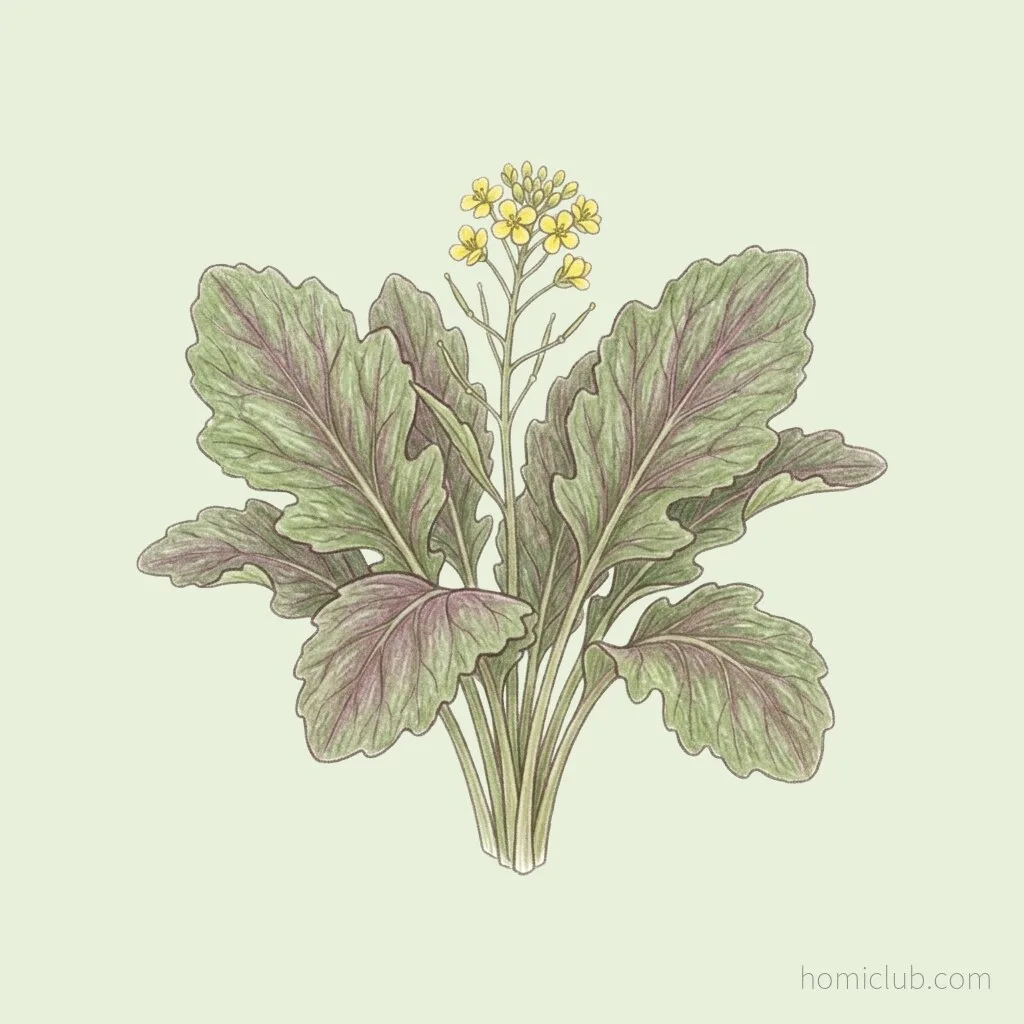
Gaechae is leaf mustard, the same plant as the got in the crop guide. The text describes leaves like napa cabbage but hairy, with a sharp bite. Today it is eaten as kimchi and pickles, and the seed is ground into mustard. Three kinds are listed: yellow, purple, and white.
Original, read line by line 東醫寶鑑 · Tangaek — Decoctions vol. 2
-
性溫, 味辛, 無毒.
Its nature is warm, its taste is pungent, and it is non-toxic.
HomiclubGaechae is the mustard green, an annual in the cabbage family alongside napa cabbage and radish. In southern Korea its leaves are made into kimchi and its seeds are ground into mustard powder.
-
除腎邪, 利九竅, 明耳目, 止咳嗽上氣, 能溫中, 去頭面風.
It removes evil qi from the sin (腎, kidney), frees the nine orifices, brightens the ears and eyes, stops coughing and sanggi (上氣, qi rising), can warm the center, and dispels wind in the head and face.
-
芥味歸鼻.
The taste of mustard returns to the nose.
-
似菘而有毛, 味極辛辢. 大葉者良. 煮食動氣, 猶勝諸菜.
It resembles napa cabbage but is hairy, and its taste is extremely pungent and sharp. Those with large leaves are best. Boiled and eaten it stirs the qi, yet it still surpasses the other vegetables.
HomiclubRough hairs on the underside of the leaf and on the stalk are the clue that separates mustard greens from napa cabbage. In Korea broad-leaved kinds such as the Dolsan mustard of Yeosu are grown for kimchi.
-
有黃芥ㆍ紫芥ㆍ白芥. 黃芥紫芥, 作虀食之最美, 白芥入藥. 《本草》
There are hwanggae (黃芥, yellow mustard), jagae (紫芥, purple mustard), and baekgae (白芥, white mustard). Hwanggae and jagae are most delicious made into pickle and eaten, while baekgae goes into medicine. 《Boncho (本草)》
Related Crop
Mustard Greens (Gat) →
Reading on Mustard Greens (Gat)
Vegetables — more entries

This is a cultural and historical record from a classical text, not a claim about any food’s effects. Nothing here is a health supplement or intended to prevent or treat disease. Consult a medical professional about health concerns. · Text: Korean Medicine Classics DB · Reading: Homiclub