
Tangaek — Decoctions · Fruits
芡仁 Gorgon fruit (makhana)
 Related Crop · Gorgon fruit (makhana) →
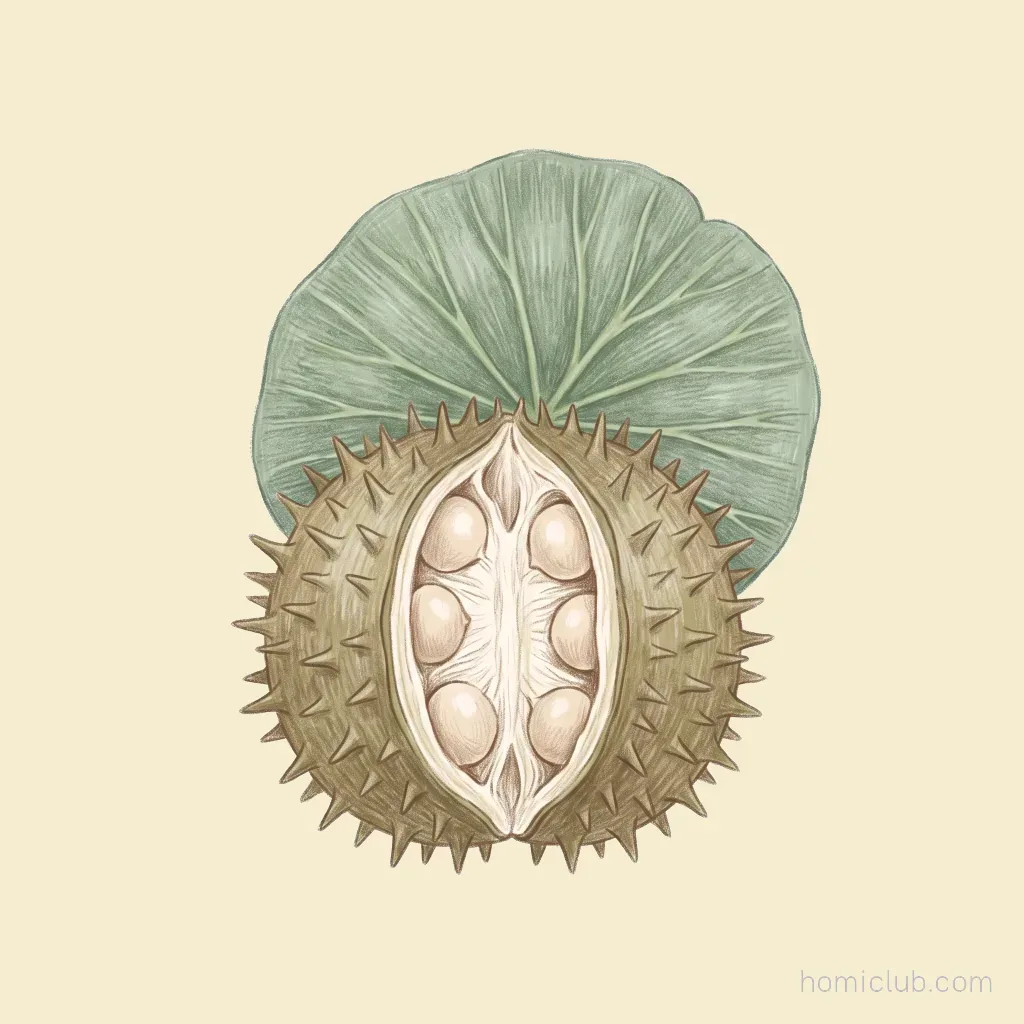
Geomin is the seed of the prickly water lily that grows in ponds, the same gasiyeonbap as in the crop guide. It is eaten today as qianshi in China and as puffed makhana in India, in porridge or as a snack. The Dongui Bogam also records the name gyedusil, chicken-head fruit, after the shape of the pod.
Original, read line by line 東醫寶鑑 · Tangaek — Decoctions vol. 2
-
性平, 味甘, 無毒.
Its nature is neutral, its taste sweet, and it has no toxicity.
-
益精氣, 强志, 令耳目聰明, 延年.
It adds to essence and qi, firms the will, sharpens the ears and eyes, and lengthens life.
-
一名雞頭實, 一名雞雍.
It is also called gyedusil (雞頭實) and gye-ong (雞雍).
-
生水澤中.
It grows in ponds and marshes.
HomiclubIn Korea the gorgon plant is designated an endangered wild species (Class II), so digging up wild plants or picking fruit in reservoirs and marshes without a permit is punishable. Upo Wetland in Changnyeong, South Gyeongsang, is a well-known native site, and anyone wishing to grow it uses commercially distributed seed.
-
葉大如荷, 皺而有刺.
Its leaves are as large as lotus leaves, wrinkled and prickly.
HomiclubThe gorgon plant (Euryale ferox) is an annual aquatic herb of the water-lily family. Its floating leaves reach 1 to 2 m across when fully grown, and stiff prickles crowd the veins, leafstalks and flower stalks.
-
花子若拳大, 形似雞頭, 故以名之.
The flower head is the size of a fist and shaped like a chicken’s head, hence the name.
-
實若石榴, 皮靑黑肉白.
The fruit resembles a pomegranate, with a dark bluish-black skin enclosing white flesh inside.
-
八月採, 蒸之, 於烈日曬之, 其皮卽開, 亦可舂作粉.
It is gathered in the eighth month, steamed, and dried under a strong sun, and the husk then opens; it can also be pounded into flour.
HomiclubThe eighth lunar month shifts from year to year but usually falls around September. Growers today crack the hard seed coat by machine or by hand; in India the dried seeds are roasted and then struck open with a wooden mallet.
-
益人勝菱.
It benefits people more than the water caltrop (菱) does.
HomiclubThe ling (菱) it is measured against is the water caltrop, listed immediately after this entry in the same fruit section as neungin (菱仁). Both are starchy fruits gathered from ponds, which is why the two are set side by side.
-
《本草》
《Boncho (本草)》
-
芡音儉能補人之精欠少, 謂之水硫黃.
芡 (pronounced geom, like 儉) can make up for a person’s lack of essence, and so it is called “water sulfur” (水硫黃).
HomiclubThe character 芡 sets 欠 beneath the grass radical 艹, and the Shuowen jiezi reads 欠 as its sound element. The text's use of 欠少 (shortfall) right after giving the reading 儉 appears to tie that sound and meaning together to explain the name.
-
《入門》
《Immun (入門)》
-
作粉, 熬金櫻子汁作丸, 名水陸丹, 能秘精.
Made into powder and formed into pills with simmered juice of Rosa laevigata (金櫻子), it is called suryukdan (水陸丹) and can hold in the essence.
HomiclubGeumaengja is the fruit of a climbing rose (Rosa laevigata), pear-shaped and thickly covered in fine bristles. It has its own entry in the wood section of the same Tangaek volume.
-
《日用》
《Iryong (日用)》
Related Crop
Gorgon fruit (makhana) →
Reading on Gorgon fruit (makhana)
Fruits — more entries
This is a cultural and historical record from a classical text, not a claim about any food’s effects. Nothing here is a health supplement or intended to prevent or treat disease. Consult a medical professional about health concerns. · Text: Korean Medicine Classics DB, collated with the Jangseogak copy of the 1613 wooden movable-type edition · Reading: Homiclub