
Tangaek — Decoctions · Vegetables
蕺菜 Houttuynia
 Related Crop · Houttuynia →
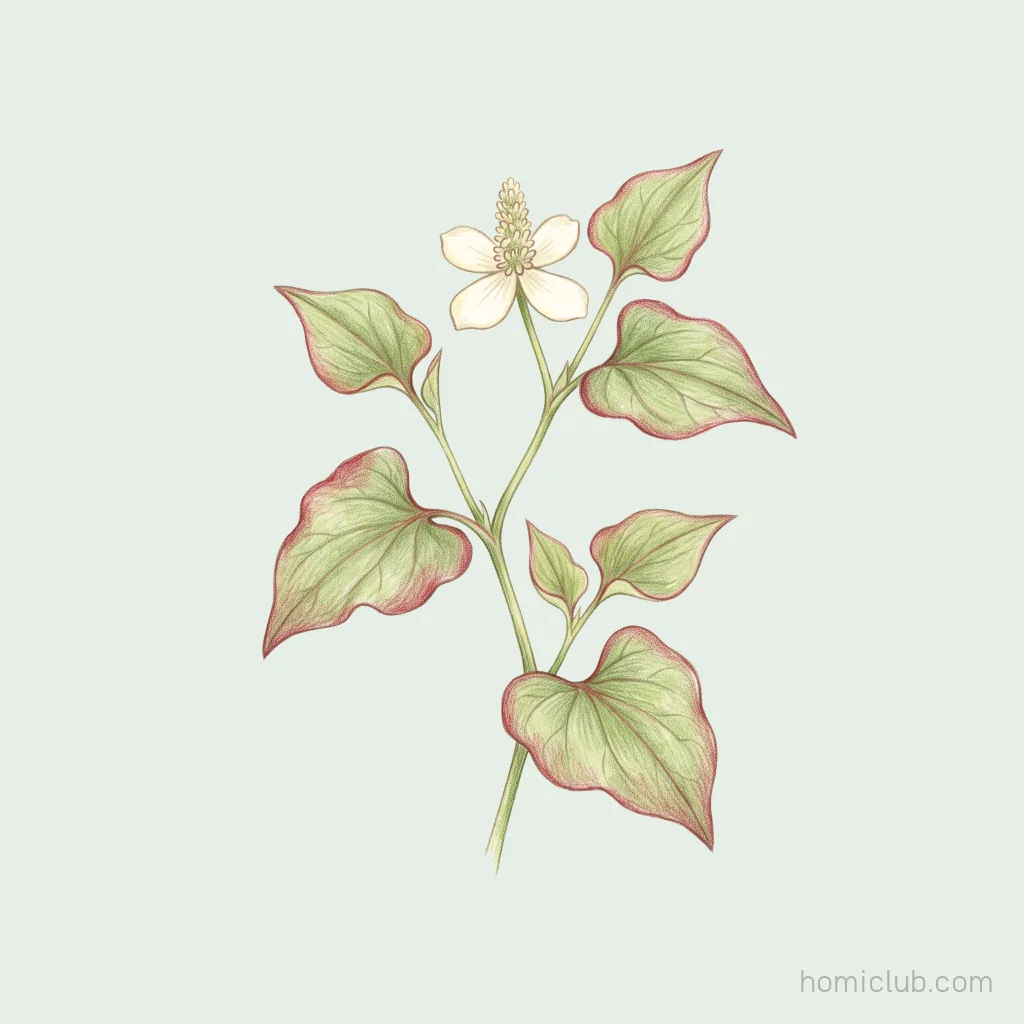
Jeupchae is the stem and leaf of fish mint, the same plant as the yangmomil in the crop guide. Its old Korean name was myeol; today it is better known as eoseongcho, named for its fishy smell. Dongui Bogam says it is common in hills and fields and often eaten raw, but cautions against eating it over a long stretch.
Original, read line by line 東醫寶鑑 · Tangaek — Decoctions vol. 2
-
性微溫, 味辛, 有毒.
Its nature is slightly warm, its taste is pungent, and it is toxic.
HomiclubJeupchae is yakmomil, houttuynia. Its old Korean name is myeol, and it is easy to recognize by its heart-shaped leaves and four white bracts spread in a cross.
-
主蠼螋尿瘡.
It governs guusu-nyochang (蠼螋尿瘡), sores said to come from earwig urine.
-
處處有之, 生山中及田野間. 人好生食, 然久食損陽氣. 《本草》
It is found everywhere, growing in the mountains and among fields and plains. People like to eat it raw, but long use damages yang qi. 《Boncho (本草)》
HomiclubIt spreads in colonies in damp shade, and its leaves give off a strong fishy smell when rubbed. Because of that smell it is more often called eoseongcho, from the character for fish (魚).
Related Crop
Houttuynia →
Vegetables — more entries
This is a cultural and historical record from a classical text, not a claim about any food’s effects. Nothing here is a health supplement or intended to prevent or treat disease. Consult a medical professional about health concerns. · Text: Korean Medicine Classics DB · Reading: Homiclub