
Tangaek — Decoctions · Vegetables
根 Auk Ppuri (아욱 뿌리)
Mallow root is the root of the mallow plant, an annual herb of the mallow family. In Dongui Bogam it does not stand as an independent article: it appears in the Vegetables section (chaebu, 菜部) as a sub-entry attached to mallow seed (dongkyuja, 冬葵子). The original text devotes only two short lines to it, and records neither its nature and flavor (seongmi — the basic profile of warming-or-cooling character and taste by which traditional Korean medicine classifies every medicinal substance) nor any method of preparation.
The book divides the single mallow plant into three separate medicines: the seed, entered under the name dongkyuja, and the leaf and the root, each given its own listing. Of these, only the leaves and tender young stems still appear on the table today; the root is hardly ever used.
Original, read line by line 東醫寶鑑 · Tangaek — Decoctions vol. 2
-
主惡瘡. 療淋, 利小便. 《本草》
It governs akchang (惡瘡, malignant sores). It treats rim (淋, strangury) and promotes urination. 《Boncho (本草)》
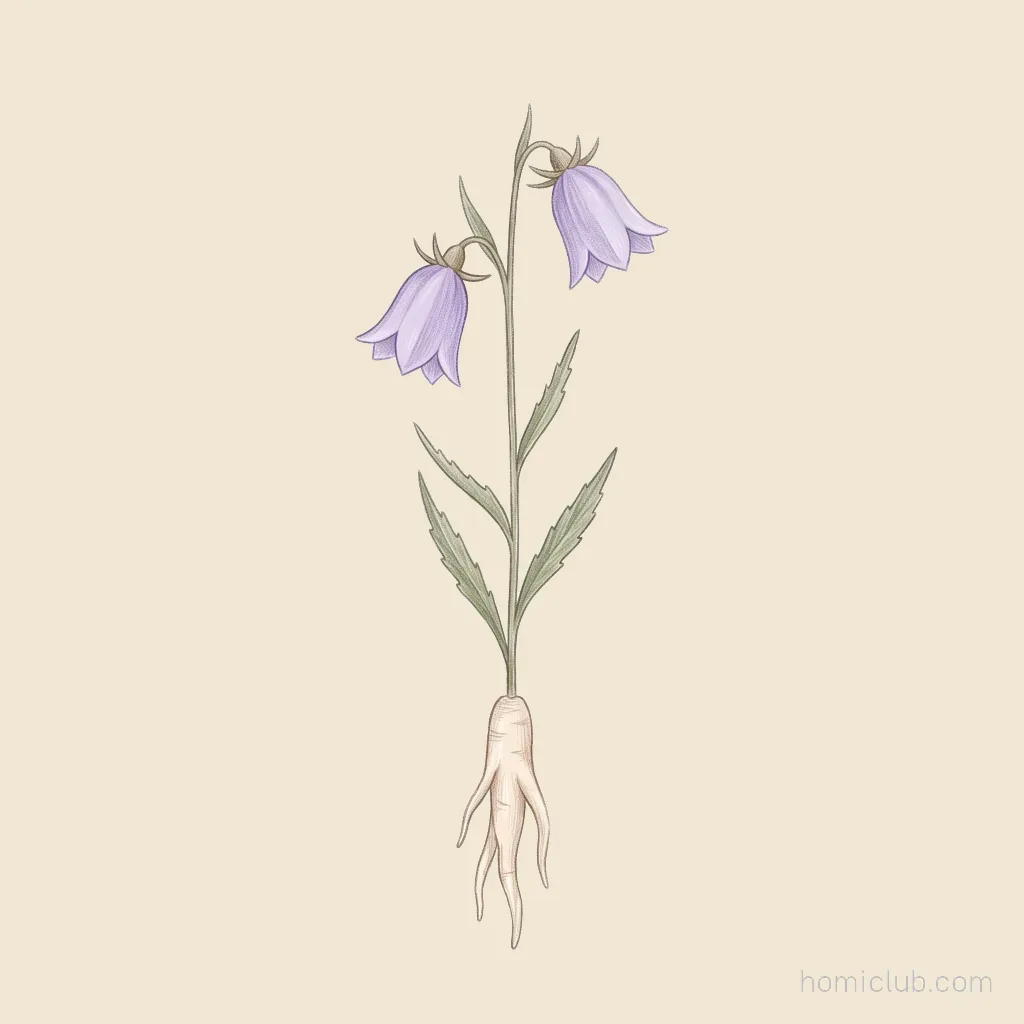
HomiclubThe mallow root is a straight white taproot, the part left after the leaves and seed are taken. The mucilage found throughout the plant is present in the root as well, so a cut surface feels slippery.
Vegetables — more entries
This is a cultural and historical record from a classical text, not a claim about any food’s effects. Nothing here is a health supplement or intended to prevent or treat disease. Consult a medical professional about health concerns. · Text: Korean Medicine Classics DB · Reading: Homiclub