
Tangaek — Decoctions · Vegetables
蘘荷 Myoga
 Related Crop · Myoga →
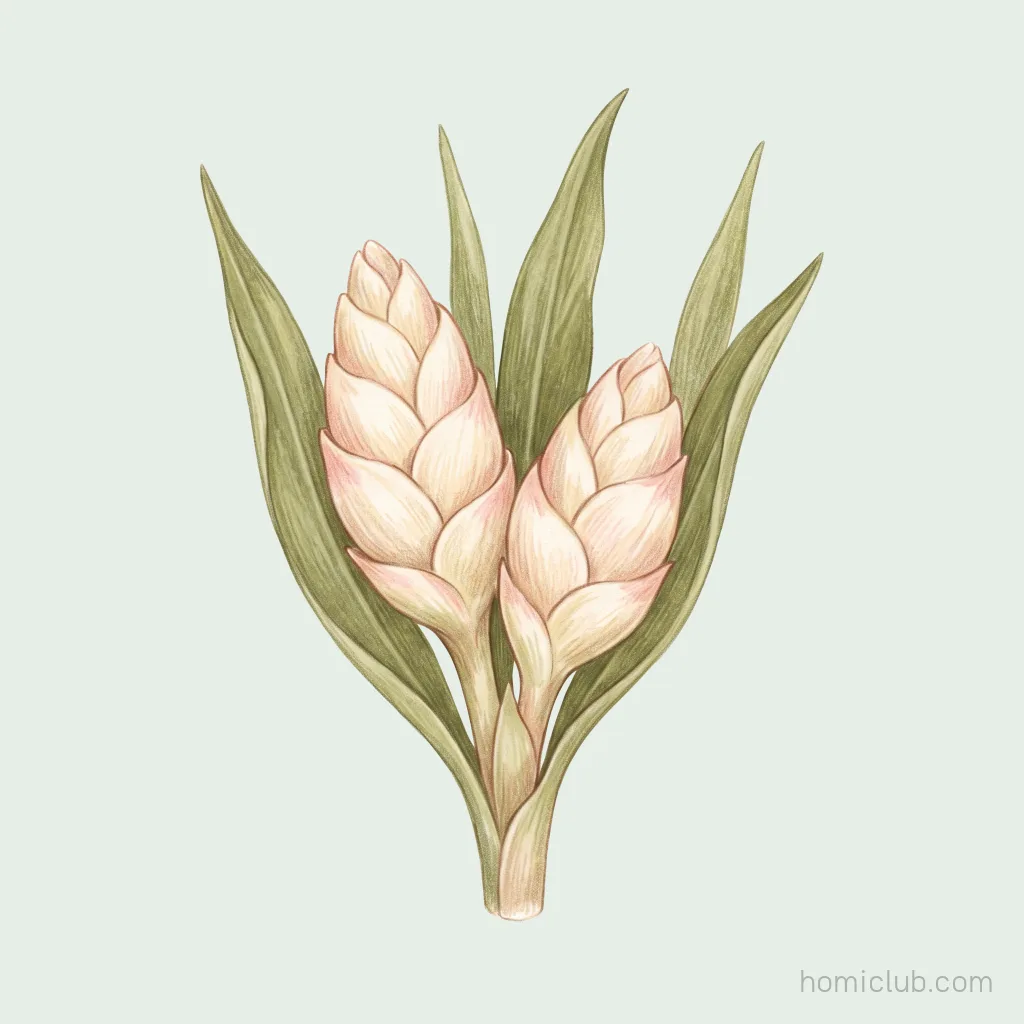
Yangha is myoga ginger, a ginger-family perennial whose flower buds are eaten as they push out of the ground. It is the same yangha as in the crop guide, with banana-like leaves and a thick rhizome shaped like ginger. A Korean note says the south of the country planted it widely; it is a Jeju vegetable still.
Original, read line by line 東醫寶鑑 · Tangaek — Decoctions vol. 2
-
性微溫, 味辛, 有小毒.
Its nature is slightly warm, its taste is pungent, and it is slightly toxic.
HomiclubYangha is a perennial of the ginger family whose flower buds, pushing up straight from the ground, are eaten. On Jeju and the south coast it is called yangae and served as a seasoned green or a pickle.
-
主中蠱及瘧.
It governs being struck by go (蠱, gu poisoning) and malarial fevers (瘧).
-
葉似甘蕉, 根如薑而肥. 其根莖堪爲葅.
Its leaves resemble the banana plant and its root is like ginger but plumper. Its rhizome is fit for making jeo (葅, salted pickle).
HomiclubBy its leaves alone it looks like a banana plant, and its rhizome creeps sideways as ginger does. What is eaten today, however, is not the rhizome but the reddish flower buds that rise beside it.
-
有赤白二種, 赤者堪啖, 白者入藥.
There are two kinds, red and white; the red is fit to eat and the white goes into medicine.
-
周禮, 以嘉草除蠱毒. 嘉草, 卽蘘荷也. 《本草》
The Jurye (周禮) says that gacho (嘉草) removes go poison (蠱毒); gacho is none other than yangha. 《Boncho (本草)》
-
我國南方有之, 人多種食. 《俗方》
It grows in the southern part of this country, where people plant and eat much of it. 《Sokbang (俗方)》
Related Crop
Myoga →
Vegetables — more entries
This is a cultural and historical record from a classical text, not a claim about any food’s effects. Nothing here is a health supplement or intended to prevent or treat disease. Consult a medical professional about health concerns. · Text: Korean Medicine Classics DB · Reading: Homiclub