

- Type
- Berries
- Difficulty
- Moderate
- Season
- Spring
- Sowing
- Transplant
Strawberry
Fragaria × ananassa
Vitamin C and anthocyanins · a red spring berry
Strawberry is a perennial of the rose family. The red part eaten is a swollen receptacle — a false fruit — and each small grain on its surface is a true fruit. Composition tables put it at about 60 mg of vitamin C and about 32 kcal per 100 g, and the red colour comes from pelargonidin-type anthocyanins. It grows well in pots and in balcony boxes, and once established it sends out runners that root into new plants, so a patch can be widened the following year. Korean production is mostly under cover, with harvest running from late autumn through the following spring.
Year-Round Calendar
- 1
- 2
- 3
- 4
- 5
- 6
- 7
- 8
- 9
- 10
- 11
- 12
- 9
- 10
- 5
- 6
Where It Grows
- Main producer Produces roughly a third of world output. Plastic greenhouses in Shandong, Hebei and Liaoning are the centre of it.
-
Main producer
The California coast (Watsonville and Oxnard) carries the summer volume and Florida the winter volume, so fruit comes year-round. Harvest March, April, May, June, July, August, September, October
- 3
- 4
- 5
- 6
- 7
- 8
- 9
- 10
- Major producer Grown through the winter in the Nile Delta and shipped to Europe.
- Major producer Michoacán and Baja California are the winter growing areas, and the fruit goes to the North American market.
- Major producer Production is divided between the Mediterranean coast and the inland plateau, running from spring through summer.
-
Major producer
Huelva, in the southwest, is the supplier of Europe's spring strawberries. Harvest February, March, April, May
- 2
- 3
- 4
- 5
The strawberry grown today is a hybrid that arose in eighteenth-century Europe, when the Chilean strawberry, native to Chile in South America, met the Virginia strawberry, native to North America; because its wild origin does not connect to the regions where it is now farmed, no origin row has been set up. The wild ancestors are in the Americas, the species itself was made in Europe, and today's growing areas divide between places with warm winters (protected and open-field winter cropping) and coasts with cool summers.
- Optimum
- 17~20℃
- Range
- 5~30℃
- Hardiness
- Half-hardy
- Day length
- Short-day
Strawberries like cool weather. Fruit swells and sweetens at daytime temperatures of 17–20℃ and night temperatures around 10℃. Above 30℃ the pollen is damaged and misshapen fruit becomes more common. Flower buds are set in autumn, as days shorten and temperatures fall, so June-bearing varieties are short-day plants, while everbearing varieties, which set flowers even in summer, respond less to day length. The plant passes the winter with its crown bud held against the soil.
In Korea Nationwide
Almost the entire crop is grown under cover. Seedlings are set out in their final beds in September–October, overwinter (pass the winter in place), and are picked from December until May of the following year. The month of planting and the month of picking do not fall in the same year. Nonsan and Buyeo in South Chungcheong, Jinju and Sancheong in South Gyeongsang, and Damyang in South Jeolla are the known districts. The summer volume is taken up by everbearing cultivation in highland areas (cool upland farming) such as Pyeongchang in Gangwon.
How to grow
- Light
- Somewhere sunny
- Soil and depth
- 20cm deep with good drainage
- Spacing
- 25cm
- Watering
- Steady. Water landing on the fruit rots it
- Feeding
- Base dressing when you plant in autumn, plus one feed before flowering
- Harvest
- Once the colour reaches the shoulders. Ripened on the plant is sweeter
What makes the difference. Plant in autumn, overwinter, pick the following spring. Planted in spring you get almost nothing that year
Common problems
- Grey mould You will see Grey fuzz on the fruit and it collapses What to do Lay straw or fleece so the fruit never touches soil
- Spider mites You will see Rough leaves, faded colour What to do They come in dry spells. Mist to raise humidity
This page describes how a crop is grown and used. It does not claim health effects for any food, nor is it intended to prevent or treat disease. Component and study notes are references only and do not mean the same result occurs in people. Consult a medical professional about health concerns.
Health Benefits
Most of the studies used freeze-dried powder. Human studies on blood markers have mostly been supplementation trials feeding a fixed amount of freeze-dried strawberry powder, which is a different condition from eating fresh berries as they come. Pooled analyses of such trials report lower readings on some inflammation and oxidation markers, but the participant numbers are small and the results diverge, so what can be said today is that a signal was observed.
Vitamin C — what is settled. Composition analysis has established that strawberry carries about 60 mg of vitamin C per 100 g. Vitamin C is not made in the body and has to come from food. That does not mean eating more of it holds off any particular illness.
Anthocyanins and ellagic acid. The pelargonidin-type anthocyanins behind the red colour, together with ellagic acid, are polyphenols found repeatedly in strawberry. Much of the related work sits at the test-tube and animal stage, so it is still early to say what follows when a person eats the fruit.
Nutrition
- Vitamin C (About 60 mg per 100 g) — A water-soluble vitamin
- Anthocyanins and ellagic acid (Polyphenols characteristic of strawberry) — The red comes from pelargonidin anthocyanins; ellagic acid is colourless
- Folate (Present) — One of the B vitamins
Vitamin C Strawberries carry about 60 mg of vitamin C per 100 g, a level comparable to that of citrus fruits. A cup of berries, roughly 150 g, comes to about 90 mg. Berry size varies widely by cultivar and grade, so counting by weight holds up better than counting by the berry.
Anthocyanins The anthocyanins that create the red color of the fruit are mainly pelargonidin glucosides, polyphenols for which antioxidant activity has been reported. They come up in research on chronic inflammation and on blood vessels, but nothing is settled in humans.
Ellagic acid & ellagitannins Polyphenols characteristic of strawberries and raspberries, with strong reported antioxidant activity. Most of the related work sits at the preclinical stage, in cells and animals, which is why berries come up often in that literature; it does not mean the same follows when a person eats the fruit.
Flavonols (quercetin & kaempferol) Flavonols such as quercetin and kaempferol occur in the fruit and add further reported antioxidant activity. Together with the anthocyanins they make up the polyphenol profile of the berry.
Folate, manganese, potassium & dietary fiber Folate, manganese, potassium and dietary fiber are all present in balanced amounts. It is a nutrient-dense fruit, and a single handful supplies several micronutrients at once.
Low calorie & low glycemic index At about 32 kcal per 100 g, strawberries belong to the low-calorie fruits. Their glycemic index is also on the low side, so for all their sweetness they carry little caloric weight.
Pairings
○ Yogurt and cream — Pairing strawberries with yogurt or cream brings together vitamin C with protein and calcium. Strawberry yogurt and strawberry cake are classic examples, letting you enjoy a dessert while still keeping a degree of nutritional balance.
○ Dark chocolate — When the anthocyanins in strawberries meet the cacao polyphenols in dark chocolate, the antioxidant synergy is maximized. Both foods are powerful polyphenol sources, so eating them together makes for richer flavor and greater health benefits alike.
○ Spinach and leafy salads — Adding strawberries to a leafy salad such as spinach helps the body absorb plant-based iron. The strawberries' abundant vitamin C markedly boosts the uptake of non-heme iron from the greens, a genuine nutritional synergy. Spinach
○ Lemon and lime — A squeeze of lemon or lime brightens the acidity of strawberries and adds extra vitamin C. When making jam or syrup, the higher acidity also improves keeping quality, a handy practical bonus.
○ Mint and basil — Garnishing strawberries with mint or basil creates an unexpected synergy. The cool, fresh aroma of the herbs lifts the berries' sweetness, and they double as an attractive garnish for desserts and drinks. Basil · Mint
○ Honey — A drizzle of honey draws out the natural sweetness of strawberries. It is also the simplest way to turn tart, sharp berries into a well-balanced dessert.
△ Strawberry allergy — Anyone with a strawberry allergy should steer clear. It's one of the more common food allergies, often showing up as itching around the mouth or hives.
△ Pesticide concerns — Strawberries are known to carry relatively high pesticide residues compared with other crops. Washing them thoroughly under running water is the baseline, and choosing organic when possible is the safer bet.
△ Kidney failure — Strawberries are fairly rich in potassium, so people with kidney failure should limit their intake. When the kidneys can't excrete potassium properly, the buildup can lead to serious complications.
Varieties
- Seolhyang (Seedling transplant) — The most widely grown variety in Korea. Fairly disease-tolerant and sweet, which makes it a safe first choice.
- Maehyang (Seedling transplant) — Firm fruit with a strong aroma that holds up after picking, but it is fussier to grow than Seolhyang.
- Janghee (Akihime) (Seedling transplant) — Long, tapered fruit that ripens early for a head start on the season. The flesh is soft, so eat it fresh.
- Everbearing types (Seedling transplant) — Fruits in several flushes from spring to autumn, which suits pots and balcony boxes. Berries run small.
Source: Food and Nutrition Information
Stories about Strawberry
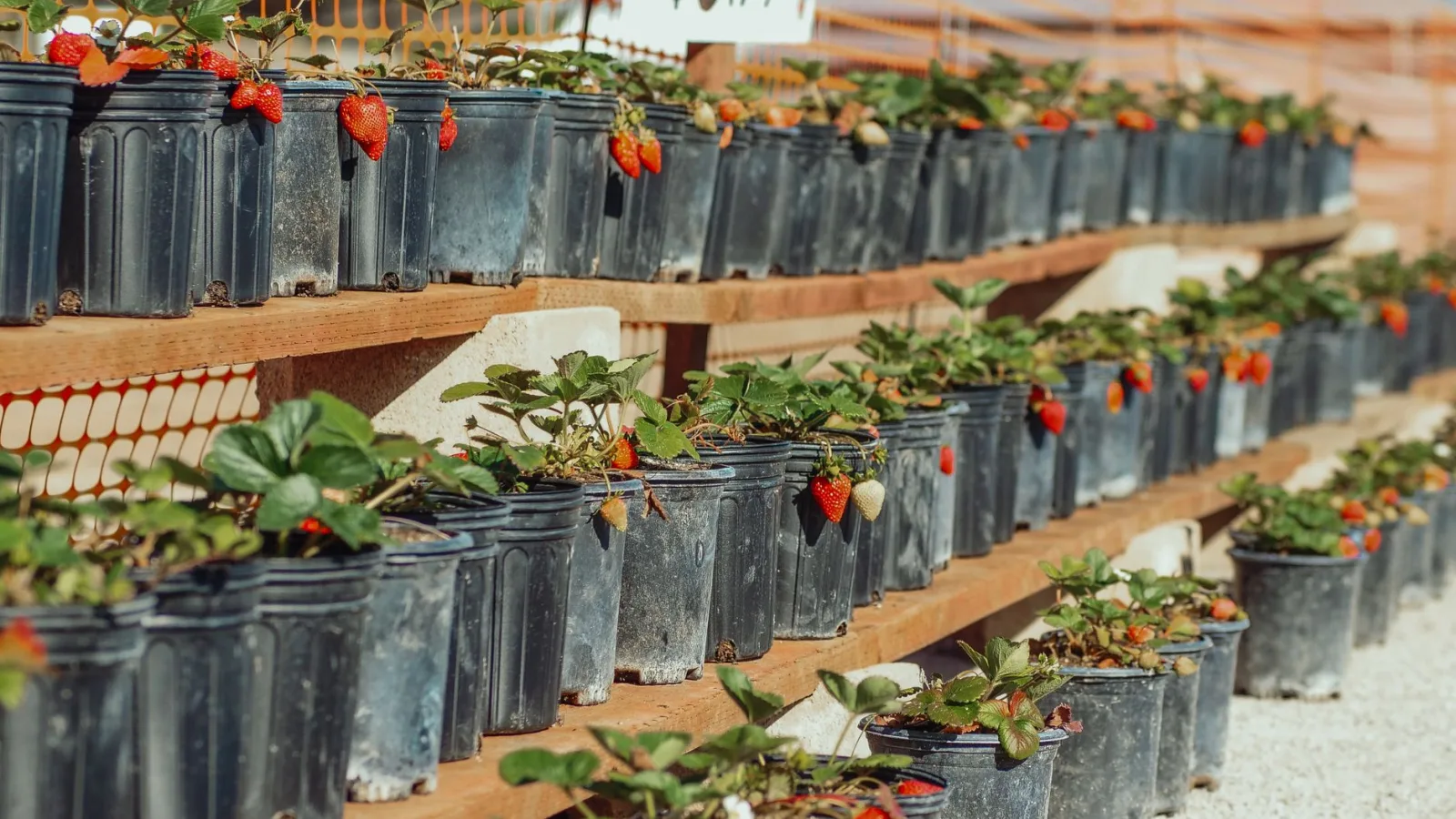
Peru's Fragrant Heirloom Cacao Doesn't Skimp on Yield
Heirloom cacao prized for its aroma has long been thought to yield poorly. A study on smallholder farms in northern Peru found that well-tended Blanco de Piura trees can produce as many beans as commercial varieties.
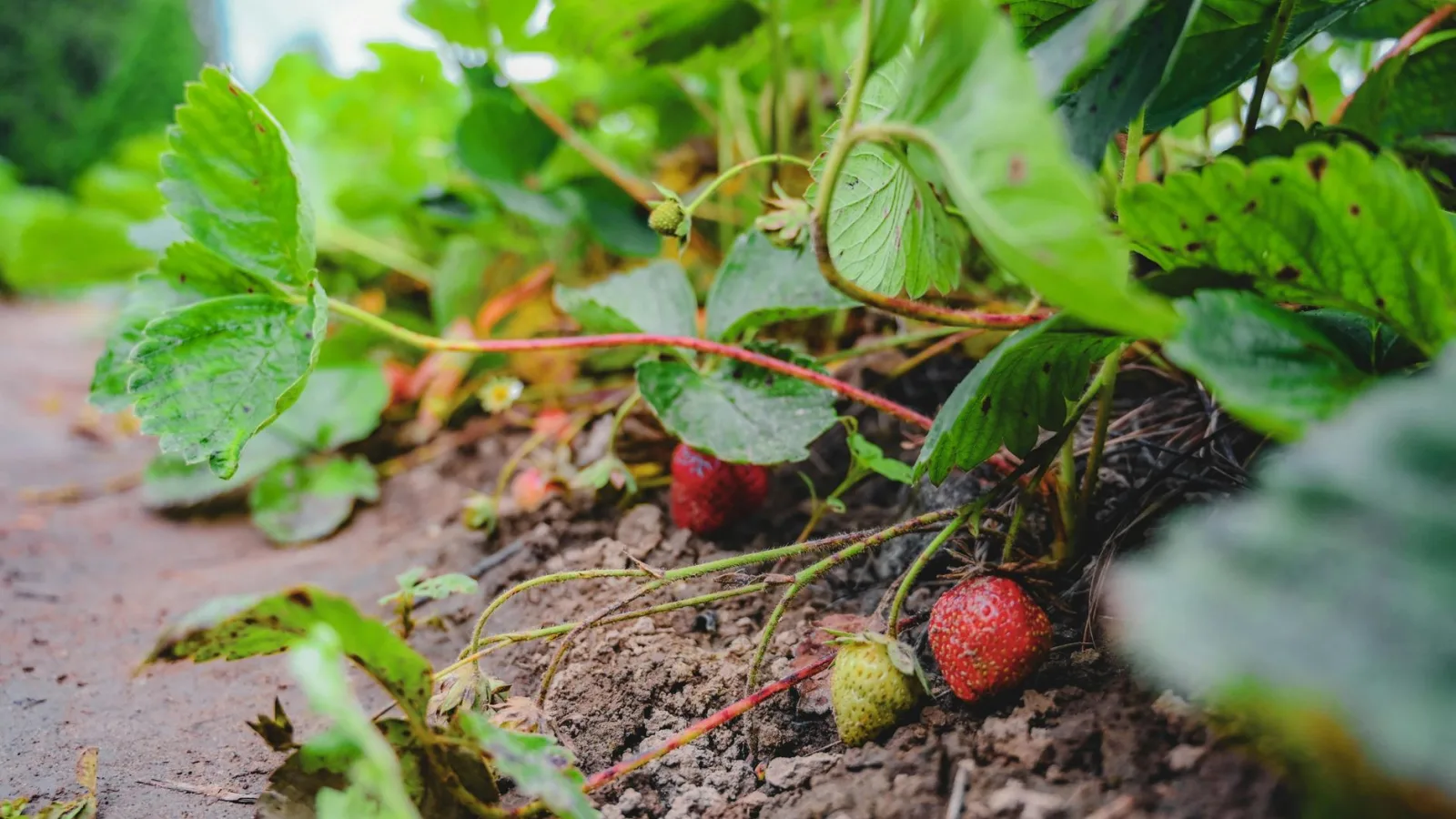
A Molecule from a Brazilian Frog, and a Five-Minute Strawberry Soak
Researchers in Brazil soaked strawberries for five minutes in a peptide first found in frog skin, and the berries held their firmness longer. It's still a lab result — but the everyday part, keeping picked fruit cool and dry, works in any garden today.
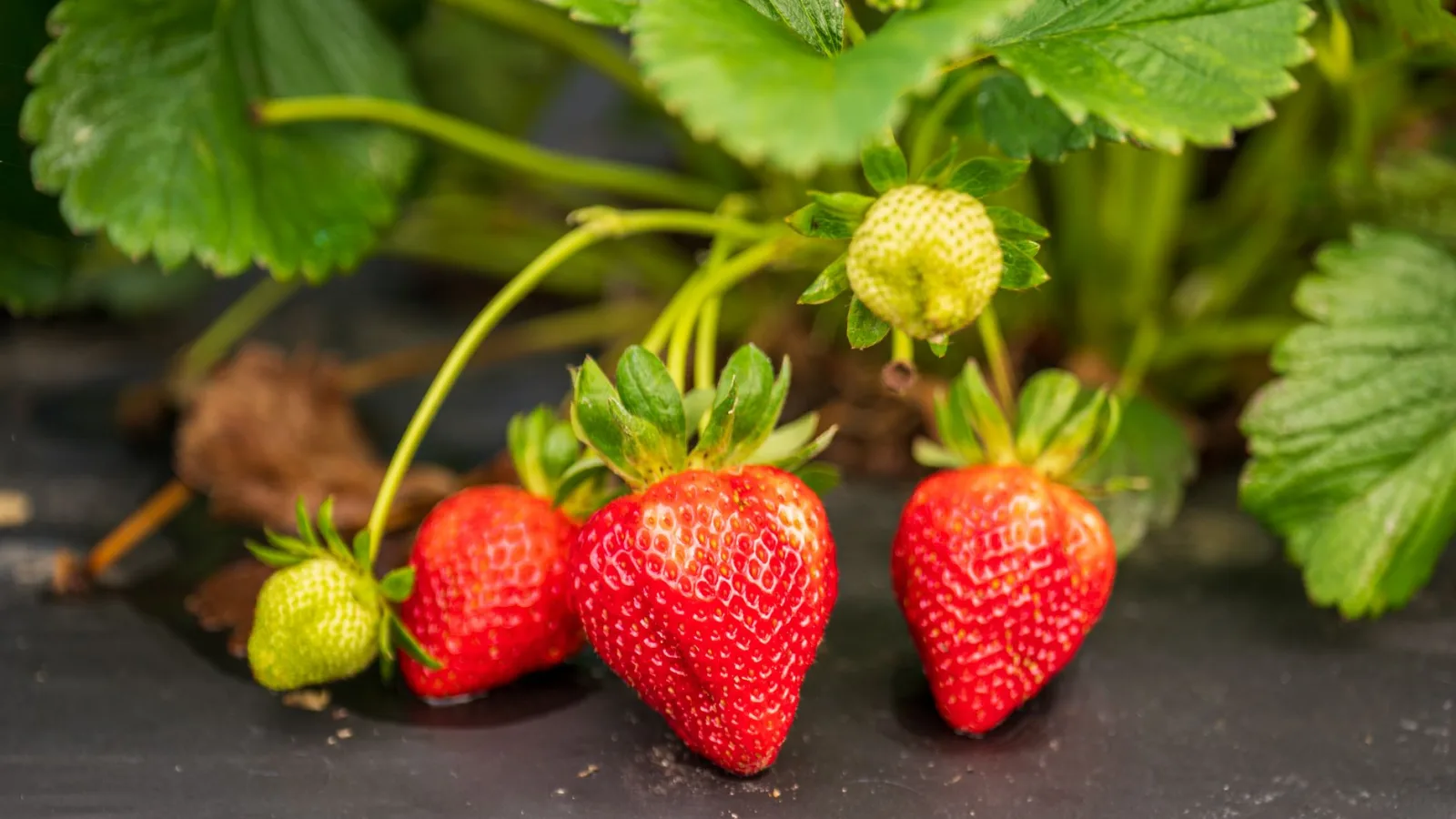
Neo-P: The New Headache in the Strawberry Patch
A fungus once considered harmless has turned into one of the toughest problems in strawberry growing, attacking leaves, crowns, and fruit all at once. Here's how to recognize Neo-P in your own patch and stop it before it spreads down the row.
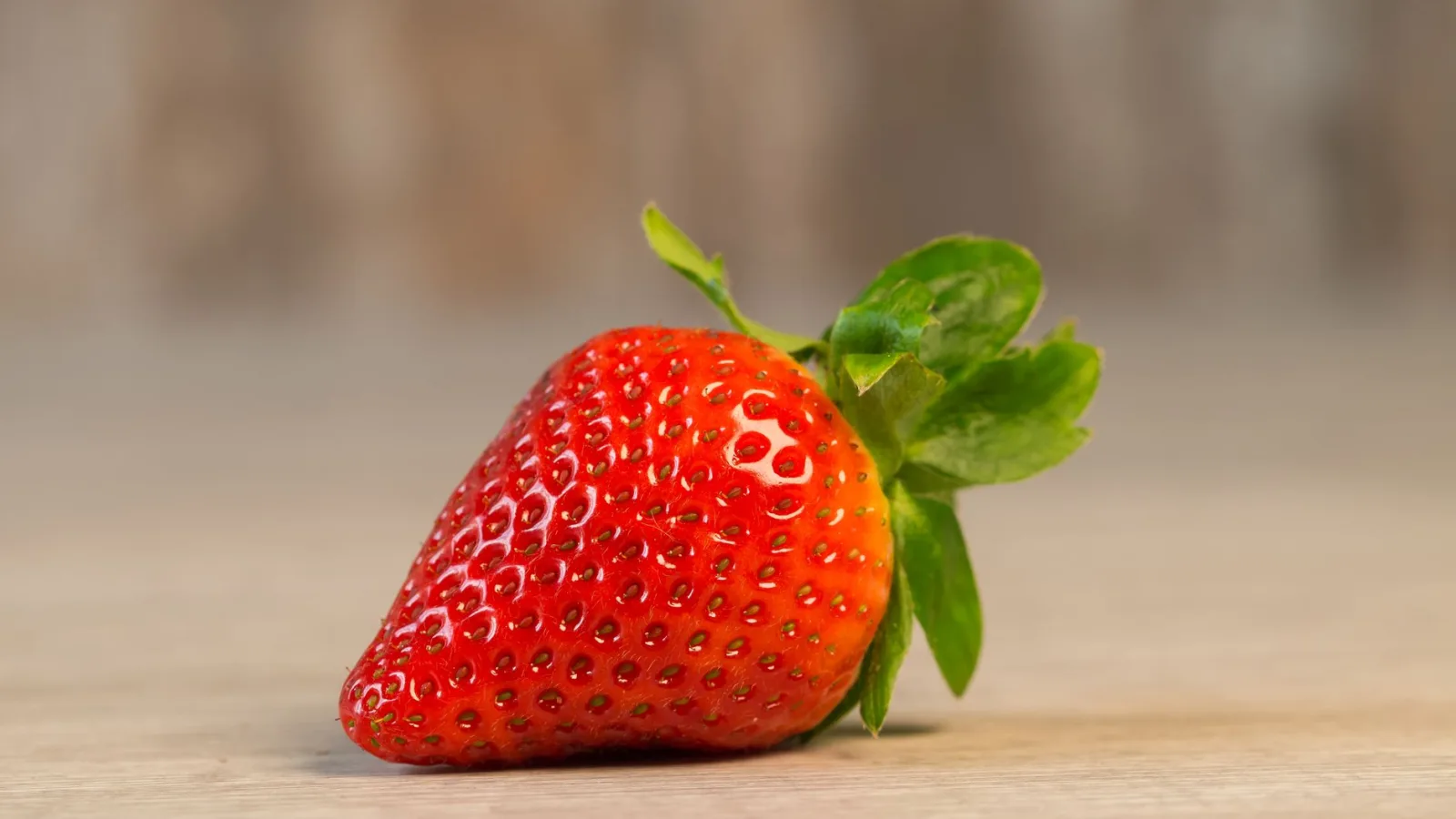
The Strawberry Wasn't Built in a Day
The strawberry in your palm carries the record of at least four wild genomes that merged over tens of thousands of years — and new DNA research has finally sorted out the order they arrived in. Plus how to choose and grow the right cultivar in your own plot.