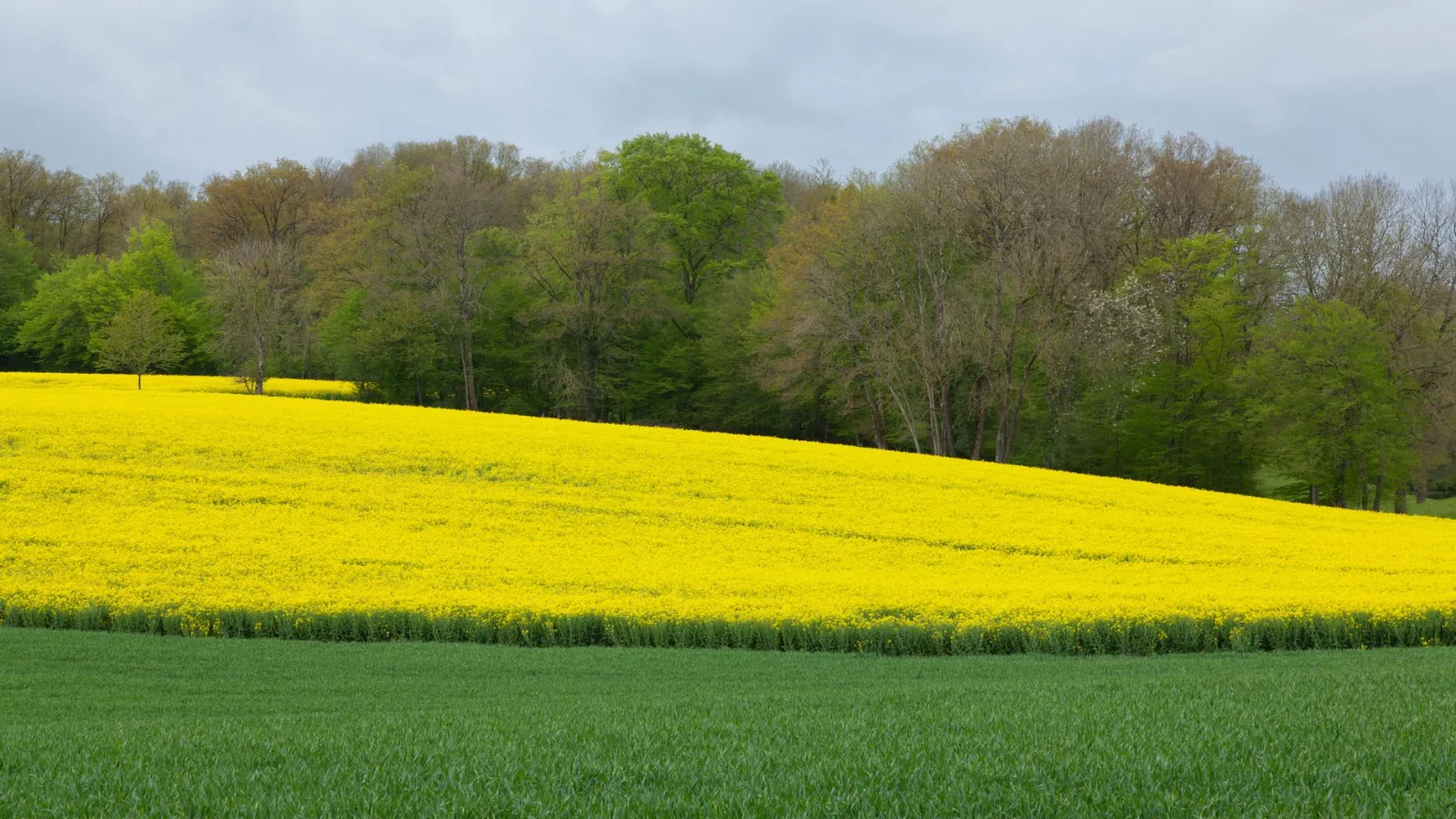
Rapeseed sown in rows in September goes into winter with a few leaves on it. Under snow it holds out to around −15℃, and when the days lengthen in March and April in the Northern Hemisphere it starts growing again, pushing up tender leaves and flower stalks. Cut a handful, carry it into the kitchen, and one question is left. What do you eat it with?
Rapeseed is a biennial in the mustard family. Chew a leaf and a peppery bite arrives at the back end — it comes from glucosinolates, the sulfur compounds that run through brassica vegetables. That pepperiness, and the bitterness alongside it, are what you're working with when you choose a dressing. The cooler the weather the leaves grew in, the more tender the tissue and the milder the flavor. The plant does best between 12 and 20℃.
Thirty seconds in the pot — then comes the dressing
Salt a pot of boiling water lightly and drop the greens in. Don't go past 30 seconds. Rinse them under cold water right away to stop the cooking, then squeeze the water out gently by hand. Blanch them too long and the leaves go limp and the green drains out. Dress them right before they go to the table. Dress them ahead and the salt and the fermented paste pull water out of the leaves, and it pools in the bottom of the dish.
Chogochujang — acidity rounds off the peppery edge
Chogochujang, vinegar stirred into gochujang (a paste fermented from chiles), is the dressing that has stayed closest to rapeseed greens the longest. The tartness of the vinegar and the sweetness of the gochujang round off the peppery finish left on the leaf. Equal parts gochujang and vinegar, half as much sugar, and a little minced garlic will set the seasoning. If the heat is too much, add a bit more vinegar. The further it leans sour, the faster the pepperiness settles down.
Perilla oil and sesame oil — the pigment dissolves in fat
Beta-carotene, which gives the leaves their yellow-green cast, is fat-soluble, so it comes out more readily when you eat it with oil. Blanched rapeseed greens tossed with nothing but salt and perilla oil (pressed from perilla seeds) are plenty. The aroma of perilla oil sits well with the pungency of the greens; neither one covers the other. Sesame oil leads with its toasted side, so save it for leaves that are still very young.
There's an oil pressed from rapeseed itself, too. The Donguibogam, the 17th-century Korean medical compendium, records that the seeds were pressed for oil, and from the 1970s onward, breeding brought out varieties that lowered both the erucic acid share of the seed oil and the pungent compounds in the seed. That group of varieties is what we call canola. Food-grade varieties are held below 2% erucic acid. Canada, China, India, France, Germany, and Australia all grow it on a large scale. For dressing the greens as namul, though, perilla oil — aroma still intact — does more for the leaf.
Doenjang — salt and savor press the bitterness down
The saltiness and savory depth of doenjang (a paste fermented from soybeans) match the bitterness in rapeseed greens. A doenjang-dressed side is finished the moment you loosen a little doenjang into the blanched leaves and add a few drops of perilla oil. If the greens are going into soup, add them last and let it come to a single boil. Cook them longer and the leaves fall apart and the color goes yellow.
One plate today
- Chogochujang — tartness to catch the peppery finish on the blanched leaves.
- Perilla oil and salt — beta-carotene dissolves out into the fat.
- Doenjang — saltiness and savor cover the bitterness.
The Donguibogam lists rapeseed in its 菜部 (vegetables) section as 芸薹, with the Korean name given as pyeongji. It calls the plant warm in nature and cool in the same breath, and records the flavor as pungent and free of toxicity. Next to a note that it grows commonly everywhere, it also preserves the remark that Daoists in particular avoided eating it over long stretches. These are the notes of an old medical text, not a judgment from today's medicine. The leaves also carry the vitamin C and calcium common to spring greens, so make a season of side dishes out of what wintered over.
Now is the sowing window in the Northern Hemisphere. Put a row in a spare corner of the garden or a large pot and you'll have leaves to dress come March or April. Start with the seed today; pick the dressing in spring.