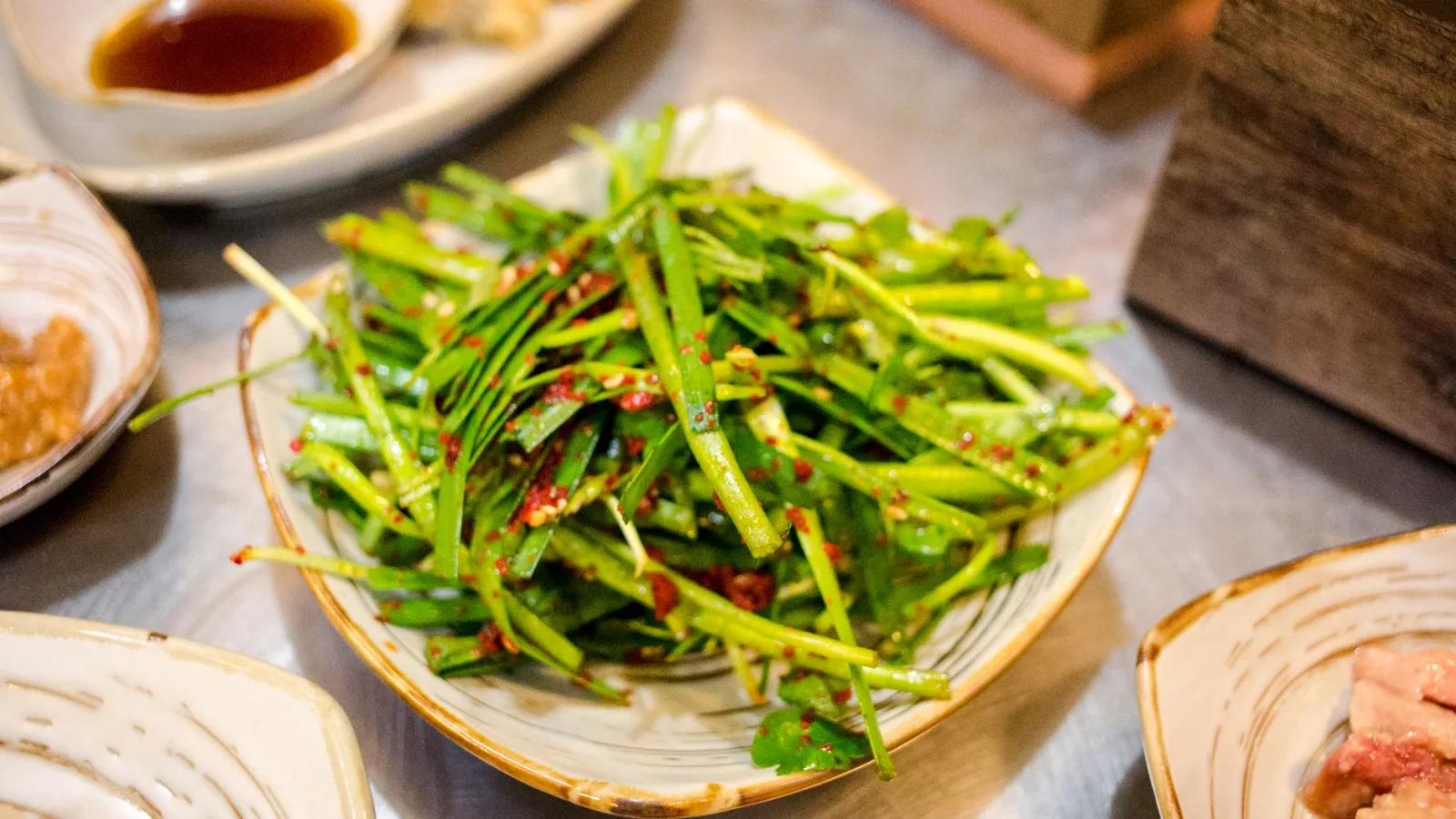
A Loyal Regular in the Garden Corner
Once garlic chives settle into a bed, they stay with you for a remarkably long time. The Dongui Bogam, the landmark 17th-century Korean medical encyclopedia, noticed the same thing. It says the plant is named for its staying power: plant it once and it lasts. It also notes that a grower can cut it three or four times in a single year without harming the roots. If you hill soil over the plants in winter, they send up new shoots before spring arrives. People centuries ago clearly admired the plant's habit of growing back no matter how often it was cut.
That's why a plate of buchu-jeon (savory chive pancakes) or a small bowl of seasoned chives is one of the easiest harvests a home gardener can bring in. Yet the Dongui Bogam treated this humble vegetable as far more than a side dish.
What the Dongui Bogam Says
The Dongui Bogam describes garlic chives (韭, gu) as warm in nature, and in some passages even hot. It gives their flavor as pungent and slightly sour and lists them as non-toxic. Their medicinal action reaches the liver, kidneys, and stomach, with a special effect on kidney yang (腎陽, sinyang), the warming, energizing force that traditional medicine places in the kidneys.
Quoting the Bencao, the classical Chinese materia medica, the text says garlic chives calm the five organs, clear heat from the stomach, and build up what is weak or depleted. They also warm the lower back and knees and ease a tight, blocked feeling in the chest (痺, bi). Quoting the teachings of the Chinese physician Zhu Danxi, it adds that they break up stagnant blood and blocked energy in the chest and replenish the energy of the liver. From all this, the text concludes that garlic chives are the warmest and most beneficial of all vegetables and well worth eating regularly.
Chive seeds (韭子, guja) get their own entry. The text calls them warm in nature and says they treat nocturnal emissions and cloudy urine, warm the lower back and knees, and strengthen yang energy. For medicinal use, they are lightly toasted first. Entries like these earned garlic chives the nickname giyangcho, roughly "the herb that raises yang." They have traditionally been used for symptoms linked to weak kidney yang.
The Dongui Bogam also adds a caution. Because garlic chives smell so strong and pungent, it lists them as a food to avoid for anyone working to cultivate a calm, disciplined mind. Tradition also holds that people with yin deficiency and excess heat should eat less of them. That means people who often have a dry mouth or feel flushed.
How It Compares with Modern Nutrition
Let's put the Dongui Bogam's claim that garlic chives "warm the lower back and knees and do you good when eaten regularly" next to what we know today. Garlic chives are commonly described as a leafy green with a good mix of vitamins and minerals. They also contain sulfur compounds that give them their sharp, distinctive aroma. The "pungent flavor" the Dongui Bogam wrote about is the same trait we now credit to those aromatic compounds.
Of course, old phrases like "strengthening yang" or "breaking up stagnant blood" can't be translated directly into the language of modern medicine. The Dongui Bogam described its remedies through its own era's understanding of the body, which differs from today's nutrition science. Still, the everyday wisdom behind it holds up: eating warming vegetables in season does the body good. That idea rings just as true for anyone carrying freshly cut chives from the garden to the kitchen.
From Garden to Table
As for how to eat them, the Dongui Bogam recommends both pressing them for juice and making them into jeo (葅), a kind of pickled vegetable dish. In today's kitchen, that means much the same thing: blanching them for a seasoned side dish or enjoying them as buchu-jeon or chive kimchi. The text also says the seeds (韭子) are lightly toasted and made into pills or powder for medicinal use. That part is best left to herbal medicine professionals.
A few more pointers. The Dongui Bogam warns against eating large amounts of garlic chives together with honey. People with yin deficiency and excess heat, or anyone prone to a dry mouth or frequent nosebleeds, should also avoid overdoing it. And if you're recovering from an illness or have a sensitive stomach, go a little lighter on the seasoning.
Garlic chives come back three or four times a season no matter how often you cut them, so try working them into your meals, simply and lightly, whenever they're in season. The old text praised them as a vegetable that does you good even when eaten every day. Perhaps their greatest virtue is simply how easy they are to grow and gather.