Meeting a Watermelon in the Midsummer Garden
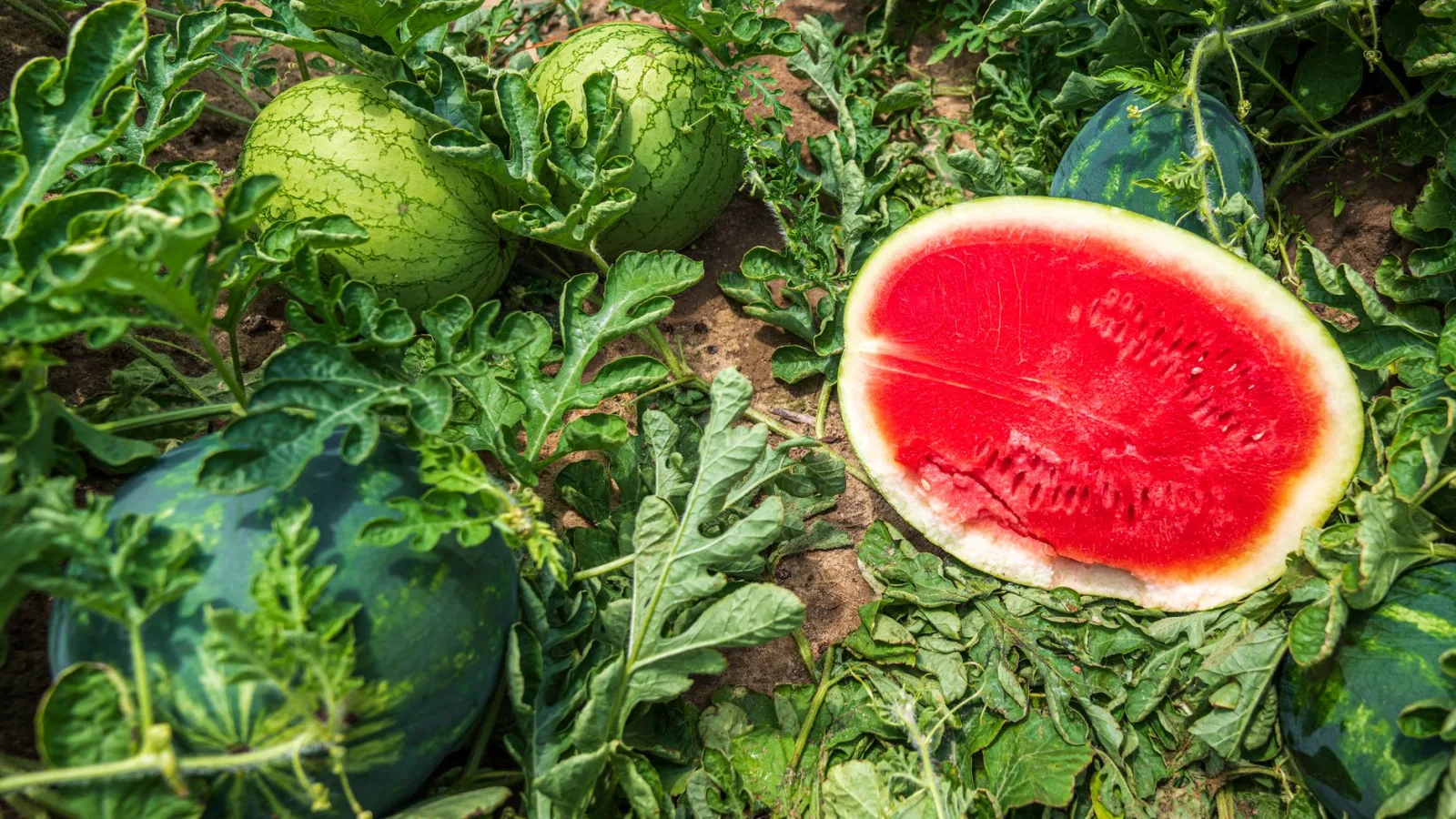
Fellow gardeners, once you've spent a July or August afternoon working the beds under a hard sun, you start to long for something you can carry into the shade and bite into. At moments like that, nothing is more welcome than a slice of watermelon straight from the refrigerator. It cracks open with that crisp sound, sweet juice floods your mouth, and for a little while the heat loosens its grip.
Watermelon asks for a generous share of a home garden, it's true, but there's real pleasure in watching the vines run out and the fruit round into itself week by week. Turn to the Donguibogam and you'll find the story of how the plant reached our soil. When the Khitan subdued the Uighurs, the text says, they came away with these seeds, grew them under a covering of cow dung, and got fruit that was round and large like a bottle gourd, colored like green jade. At first it grew mostly in the northern country; then it spread north and south until it was found nearly everywhere, ripening in the sixth and seventh months. Watching a melon swell in your own garden with those old lines in mind, you start to feel how much history one fruit can carry.
How the Donguibogam Read It
The Donguibogam sets down watermelon (西瓜) as cold in nature (性寒), sweet in taste yet extremely bland (味甘極淡), and free of toxicity (無毒). It is a fruit for the hottest stretch of the year, and that cold nature, the text holds, is what makes it useful for governing heat in the body.
Its chief virtues, as recorded: it presses down feverish restlessness and thirst (壓煩渴), disperses the toxin of summer heat (消暑毒), eases the middle and sends the qi downward (寬中下氣), and promotes urination (利小便). The text adds that it treats bloody dysentery (治血痢) and is used for sores in the mouth (療口瘡). The Korean commentary sums it up as a fruit for heat waves and heatstroke, one that relieves thirst and inner agitation, and that helps move water along in cases of swelling or sluggish urination.
What's striking is that the rind was treated as its own medicine. In Korean traditional medicine it goes by the name seogwa chwi-ui (西瓜翠衣), literally "the watermelon's kingfisher-green robe," and the commentary notes its use for swelling and for summer diarrhea. There's a thriftiness in that — finding a purpose in the part most of us scrape clean and throw out. The Donguibogam also introduces another kind called yanggye-gwa (楊溪瓜), which comes up in autumn and ripens in winter, its flesh red as rouge and its flavor, the text claims, better than watermelon's.
Measured Against Today's Nutrition
The Donguibogam's view of watermelon as a fruit that clears heat and thirst runs easily alongside what we take for common sense now. Watermelon is mostly water, which makes it a good way to replace what you sweat out over a long summer day. The relief of summer heat and inner agitation the text describes (解暑除煩) is, in plain terms, close to what all that water does.
The line about promoting urination (利小便) doesn't contradict anything either — it's the ordinary consequence of eating a very watery fruit. And the traditional use for clearing the effects of drink (解酒) rhymes with the long habit of reaching for a wedge of watermelon after a night out, mostly to get some fluid back. That said, friends, take all of this as a conversation between an old text and everyday experience rather than a claim. Rather than declaring that watermelon treats any particular condition, it's better to sit with the question of where the old record and today's understanding happen to meet.
From the Garden to the Table
Most of the time, watermelon is simply eaten raw. You can also juice it, or float it in hwachae, the chilled Korean fruit punch — and as the commentary on the Donguibogam points out, the rind can be pickled or used in herbal formulas. Slicing that rind thin and giving it a quick stir-fry, or dressing it as a cold salad, is worth trying at least once instead of tossing it.
One caution, though. As the Donguibogam says plainly, watermelon is a fruit of cold nature. The commentary therefore advises going easy on it if your stomach is weak or you tend to run cold, if you're prone to loose stools, or if you're menstruating or in late pregnancy. Watermelon chilled to the bone can sit heavily on the digestion, so rather than eating it the moment it leaves the refrigerator, let it stand a while and lose its sharpest chill. It goes down much more comfortably that way.
The next time you bring a melon from your own summer garden to the table, why not call to mind the record the old physicians left behind? That slice of relief from the heat may come to you with a little more depth.