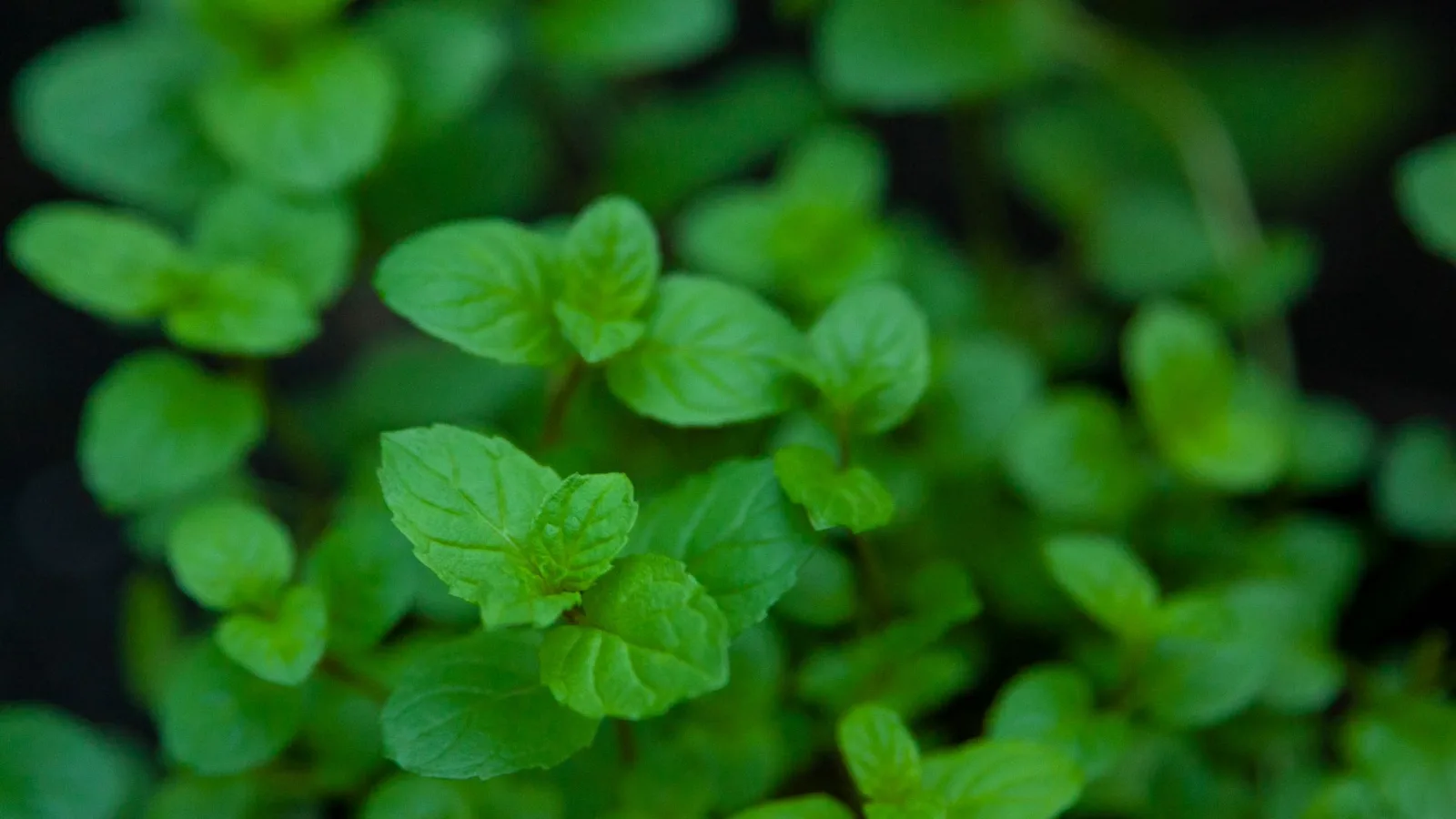
A Cool Corner of the Garden
Mint is one of those plants that, once you put it in the ground, does the spreading for you — a bare corner of the garden goes green in no time. Rub a leaf between your fingertips and that clean, cold scent lifts straight to your nose. On a hot summer afternoon, a few leaves floated in cold water, or steeped into tea, seem to lighten your mood along with everything else. This ordinary herb we reach for so casually was treated in the old medical books as a drug in its own right, under the name bakha (薄荷). Today let's walk through how the Donguibogam saw it.
What the Donguibogam Says
On the nature of bakha (薄荷), the Donguibogam records that it is "warm (性溫), or by another account neutral (一云平)." Its flavor is pungent and bitter (味辛苦), and it carries no toxicity (無毒). Elsewhere the text adds that its nature and flavor are pungent and cool (性味辛涼) — so it was understood as an herb that holds a cool, refreshing quality inside a warm one.
As for what it does, the book lists a good deal. It draws the energies of other medicines into the nutritive and defensive layers of the body (榮衛), induces sweating to disperse toxins (發毒汗), and treats the headache that comes with cold damage (療傷寒頭痛). It also addresses wind-stroke, invasive wind, and head wind (治中風賊風頭風), frees up the joints (通利關節), and greatly relieves weariness and fatigue (大解勞乏).
The Tangaekpyeon, the Donguibogam's volume on medicinal substances, says that bakha "clears the head and eyes best of all (最淸頭目)." It is described as entering the Hand Taeeum and Hand Gworeum channels (手太陰ㆍ手厥陰經) — the pathways associated with the lungs — and as a medicine that travels upward. Korean-language commentaries summarize it this way: its energy goes to the lungs and liver, and its main use is as a dispersing herb for wind-heat colds, headaches, and sore throats. There are also entries for brightening the eyes (明目), and for external use — holding it in the mouth to treat mouth sores, aching gums, and bad breath. Clearly, the old physicians liked bakha for cooling everything from the neck up.
There's one charming note as well. In the section on foods, a short line survives: "cats grow drunk on mint (猫食薄荷則醉)." If you keep a cat, that's worth remembering the next time you brush past the patch.
Set Against Modern Nutrition
The Donguibogam's reading of bakha as "an herb that clears the head and eyes and disperses stuffiness" isn't far off from what we ourselves notice in that bracing scent. Mint leaves contain a volatile oil rich in menthol, the source of the coolness. The classical phrases for brightening the eyes (明目) and clearing the head and eyes (淸頭目) connect naturally to the crisp, wide-awake feeling the aroma gives.
The Korean commentaries also mention mint tea after a meal to ease digestion or a heavy, bloated stomach, and its use for calming the mind in cases of hwabyeong — the pent-up frustration Korean medicine treats as its own condition — or general stuffiness in the chest. One line to draw here, though: all of this is a record of how the Donguibogam and the traditional view describe the herb, not a claim that it cures anything. Take it as an account of how an old medical book saw mint, and leave it there.
From the Garden to the Table
Few crops make the trip from garden bed to kitchen as easily as mint. The Donguibogam itself notes that you can "grow it in a plot and eat it raw, and it also does well pickled (可生啖, 亦宜作葅)." The book adds the storage method too: gather the stems and leaves in summer and autumn, and dry them in the sun for later use (夏秋採莖葉, 暴乾用).
Steeping tea from fresh or dried leaves, or floating a sprig in a cold drink as a garnish, is the simplest way in. A light cup after dinner to settle a heavy stomach is exactly the habit the old texts leaned on.
A few cautions are worth stating plainly. According to the Korean commentaries, the Donguibogam held that heavy use of bakha scatters the body's vital energy, so enjoy it as tea, but don't overdo it. Mint essential oil calls for more care still. Applying it around the nose of infants and toddlers can suppress breathing and should be avoided altogether, and people who are pregnant or nursing are safest steering clear of high-dose oils. If you have acid reflux, keep an eye on how much you take: mint can relax the lower esophageal sphincter and make symptoms worse.
Go pick a few mint leaves today and float them in a glass of cold water. That scent the old books credited with clearing the head and eyes is worth meeting at the tip of your own nose.