
Tangaek — Decoctions · Herbs
鬱金 Turmeric
 Related Crop · Turmeric →
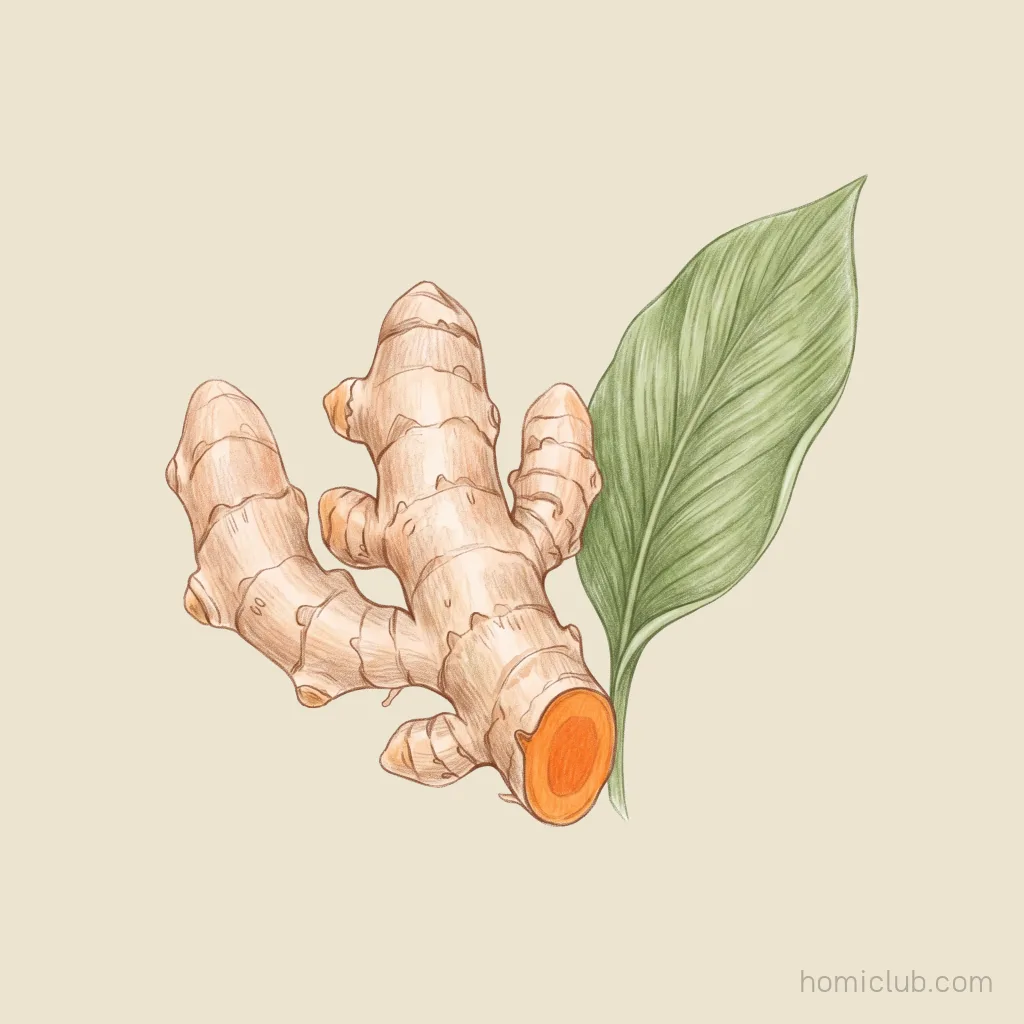
Ulgeum is the tuber of a Curcuma, the same plant as in the crop guide and a close relative of the turmeric that colors curry yellow. The tubers are dug, dried, and ground. The Dongui Bogam rates highest the ones shaped like a cicada's belly, and describes washing them and drying them over a low fire.
Original, read line by line 東醫寶鑑 · Tangaek — Decoctions vol. 3
-
性寒, 味辛苦, 無毒.
Its nature is cold, its taste is pungent and bitter, and it is non-toxic. It cools the body while helping to dispel stagnation.
-
主血積, 下氣,
It treats stagnant blood masses and brings rebellious qi downward, easing the tightness that gathers in the chest.
-
治血淋尿血金瘡,
It addresses bloody urinary dribbling, hematuria, and wounds from metal blades, both stanching bleeding and helping the injury close.
-
療血氣心痛. 《本草》
It relieves chest pain that arises when blood and qi knot together. So recorded in the Bencao.
-
鬱金不甚香,
Turmeric is not strongly fragrant; its scent is more of a quiet diffusion than a heavy perfume.
-
但其氣輕揚,
Yet its qi is light and rising, spreading upward and outward with ease.
-
能致達酒氣於高遠,
It can carry the force of wine to high and distant places, acting as a guide that lifts the action of other remedies.
-
以降神也.
For this reason it is said to draw down the spirits, and the old physicians used it to clear the mind.
-
古人, 用以治鬱遏不能散者.
The ancients used it to release qi that was choked and could not disperse, particularly when the chest felt weighed down.
-
在處有之,
It grows in many places and is not hard to obtain, though its effect is by no means slight.
-
形如蟬肚者佳.
Roots shaped like a cicada's belly, plump and rounded, are considered the finest grade.
-
水洗, 焙乾用. 《入門》
Wash it in water, then dry it gently over low heat before use. So noted in the Yimen.
Related Crop
Turmeric →
Herbs — more entries
This is a cultural and historical record from a classical text, not a claim about any food’s effects. Nothing here is a health supplement or intended to prevent or treat disease. Consult a medical professional about health concerns. · Text: Korean Medicine Classics DB · Reading: Homiclub