
Tangaek — Decoctions · Herbs
芎藭 Cnidium
 Related Crop · Cnidium →
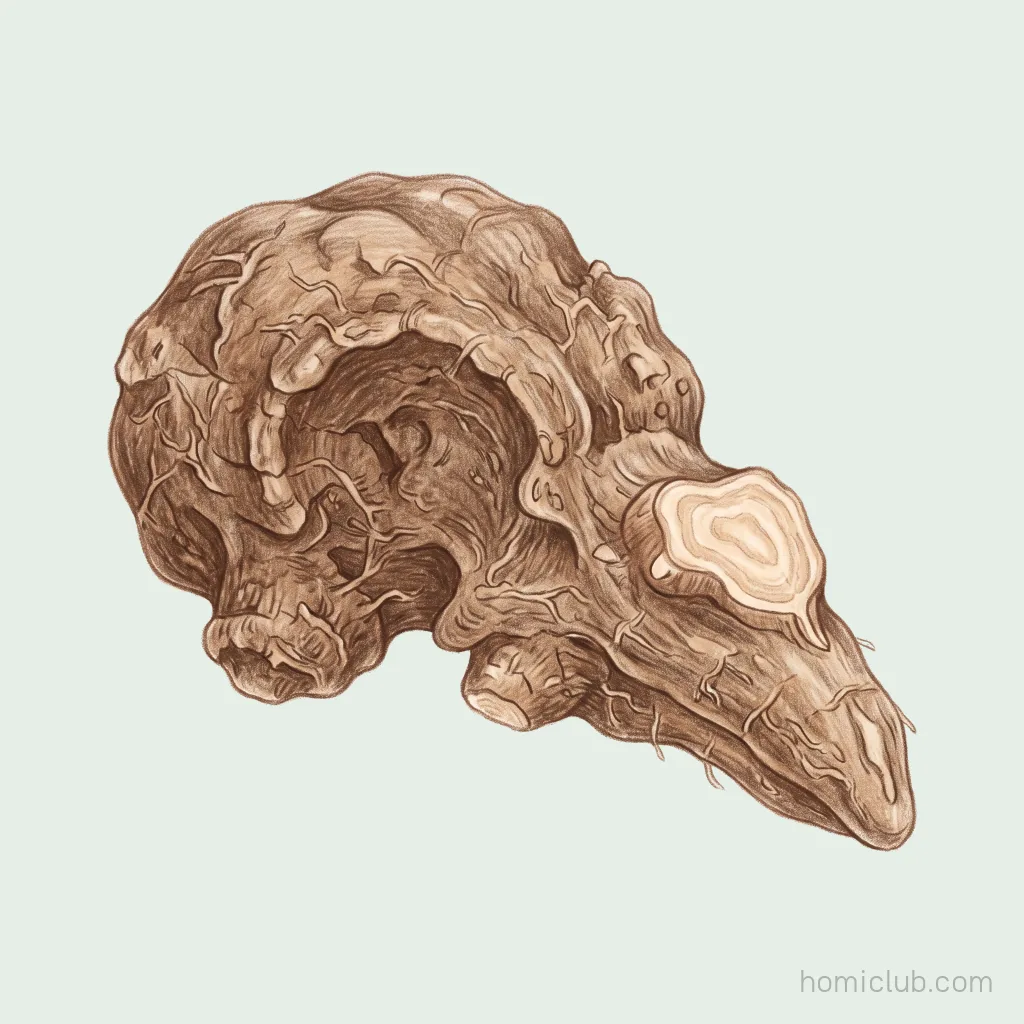
Gunggungi is the rhizome of an umbellifer, sold in herb markets today under the name cheongung. Heavy lumps shaped like a sparrow's head were prized and called jangnoegung. The text warns against taking it alone over a long stretch, advising it be paired with other ingredients.
Original, read line by line 東醫寶鑑 · Tangaek — Decoctions vol. 2
-
性溫, 味辛, 無毒.
Its nature is warm, its taste pungent, and it is non-toxic.
HomiclubGunggungi is the rhizome of a perennial in the carrot family, known in today's herbal markets as cheongung. Cutting a dug and dried lump releases the strong scent characteristic of that family, and it lingers.
-
治一切風ㆍ一切氣ㆍ一切勞損ㆍ一切血. 破宿血, 養新血, 止吐衄血及尿血便血, 除風寒入腦頭痛, 目淚出. 療心腹脇冷痛.
It treats every kind of wind, qi, taxation damage, and blood disorder. It breaks up stale blood and nourishes new blood, stops vomiting of blood and nosebleed as well as blood in the urine and stool, and dispels headache and tearing caused by wind-cold entering the brain. It treats cold pain in the chest, abdomen, and flanks.
-
處處種蒔. 三月九月採根, 暴乾.
It is planted and tended everywhere. Dig the roots in the third and ninth months and dry them in the sun.
-
惟貴形塊重實, 作雀腦狀者, 謂之雀腦芎, 此最有力. 《本草》
Only lumps that are heavy and solid and shaped like a sparrow's head are prized; these are called jangnoegung (雀腦芎, sparrow-brain gung), and their strength is greatest. 《Boncho (本草)》
HomiclubThe cheongung rhizome grows as a knobby cluster of nodes, and a large lump with a small knob attached can indeed look like a sparrow's head. The name jangnoegung in the text comes from that shape.
-
入手足厥陰經ㆍ少陽經本經藥也. 治血虛頭痛之聖藥, 散肝經之風邪.
It is a home-channel medicine entering the hand and foot gworeum and the soyang channels. It is a sagely medicine for headache arising from blood depletion, and it scatters wind evil in the liver channel.
-
貫芎, 治少陽經苦頭痛, 上行頭目, 下行血海, 治頭面風, 不可缺也.
Gwan'gung (貫芎) treats severe headache of the soyang channel, traveling upward to the head and eyes and downward to the hyeolhae (血海, sea of blood), and it treats wind of the head and face, so it cannot be omitted.
-
頂痛腦痛, 須用川芎. 《湯液》
For pain at the crown of the head and pain in the brain, one must use cheongung (川芎). 《Tangaek (湯液)》
-
蕪芎, 卽苗頭小塊也. 氣脉上行, 故能散鬱. 與雀腦芎同功. 《丹心》
Mugung (蕪芎) is the small lump at the head of the shoot. Its qi and vessels travel upward, so it can scatter what is pent up. Its action is the same as that of jangnoegung. 《Dansim (丹心)》
-
芎藭, 若單服久服, 則走散眞氣, 或致暴死. 須以他藥佐之. 骨蒸多汗者, 尤不可久服. 《本草》
If gunggungi is taken alone over a long time, it scatters and drives off the true qi and may even bring sudden death. It must be assisted with other medicines. Those with steaming-bone fever and much sweating especially must not take it for long. 《Boncho (本草)》
-
大塊色白不油者, 佳. 《本草》
Large lumps that are white in color and not oily are the good ones. 《Boncho (本草)》
Related Crop
Cnidium →
Reading on Cnidium
Herbs — more entries
This is a cultural and historical record from a classical text, not a claim about any food’s effects. Nothing here is a health supplement or intended to prevent or treat disease. Consult a medical professional about health concerns. · Text: Korean Medicine Classics DB · Reading: Homiclub