- Type
- Herbs & Aromatics
- Difficulty
- Hard
- Season
- Fall
- Sowing
- From rhizome
Cnidium
Cnidium officinale
Ligustilide · a strongly aromatic rhizome of the carrot family
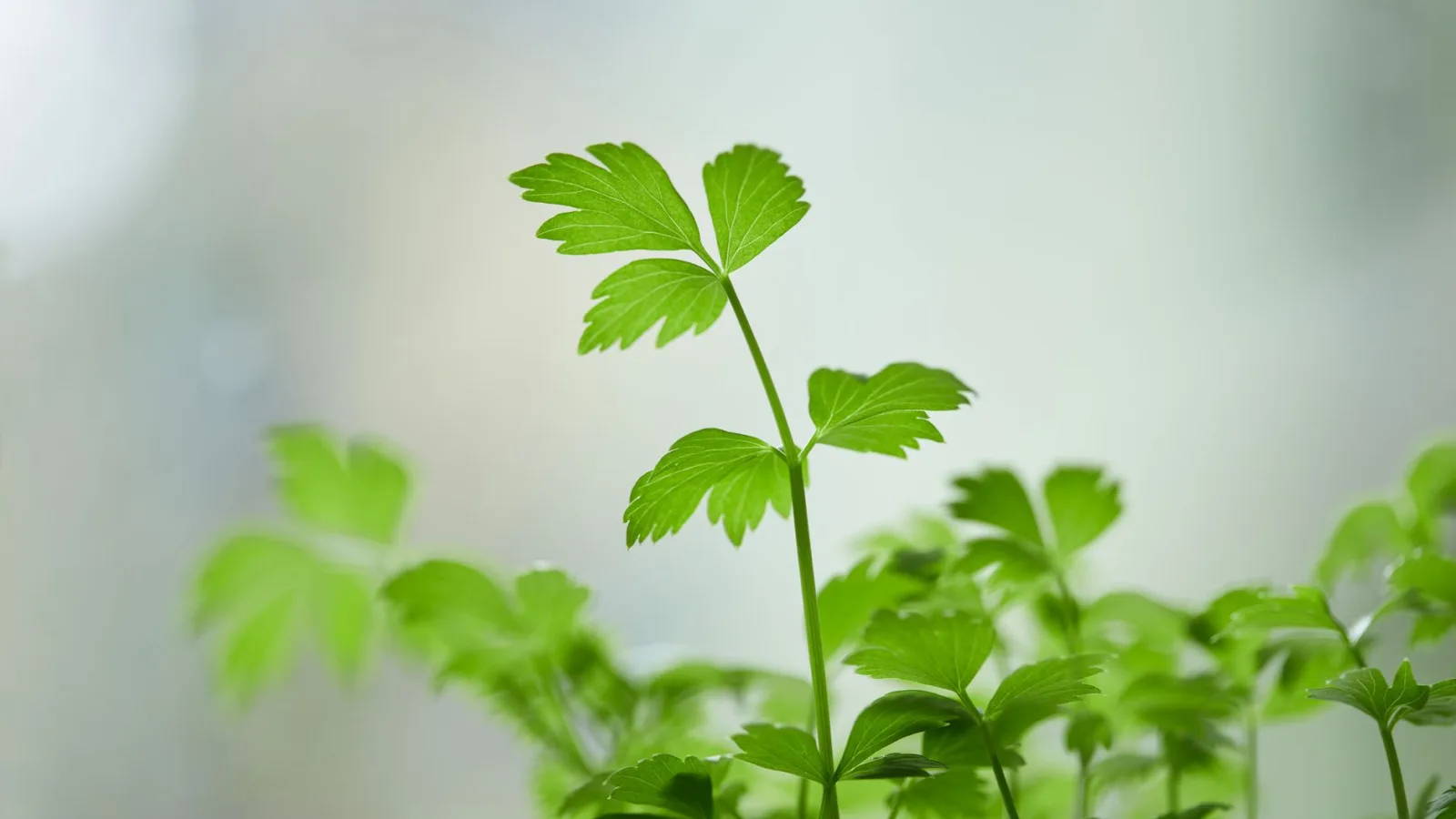
Cnidium is the rhizome of a perennial in the carrot family, known in older Korean as gunggungi. Herb markets sell it as dried slices, and a few go into the pot when boiling chicken or pork trotters to cover the smell. Almost all of the aroma comes from the essential oil, in which phthalide compounds such as ligustilide have long been reported across this group. It is a field crop, but the seed sets poorly, so it is propagated by dividing the rhizome, and it prefers cool ground — most of it is grown in the central and northern provinces and in the highlands. The young leaves of spring are also blanched and dressed as a namul. The Donguibogam lists it in the Herb section as 芎藭 and gives the Korean name as gunggungi, recording a warm nature, a pungent taste and no toxicity. It is planted and tended everywhere, the entry says; the root is dug in the third and ninth lunar months and dried in the sun, and the pieces reckoned best are heavy, solid lumps shaped like a sparrow's head, called jaknoegung (雀腦芎). Small lumps at the tip of the shoot, it adds, go by the separate name mugung (蕪芎).
Year-Round Calendar
- 1
- 2
- 3
- 4
- 5
- 6
- 7
- 8
- 9
- 10
- 11
- 12
- 3
- 4
- 10
- 11
Where It Grows
-
Main producer
The production areas are cool-summer mountain districts such as Bonghwa and Yeongyang in North Gyeongsang Province and Pyeongchang and Jeongseon in Gangwon Province. Harvest October, November
- 10
- 11
- Major producer Ilcheongung (Cnidium officinale) is so named because it is a cultivated strain introduced from Japan, and it is grown in the cool parts of Hokkaido and northern Honshu.
- Major producer The cheongung grown on a large scale in Sichuan is chuanxiong (Ligusticum chuanxiong), a different species.
Two different species go by the same name. The one grown in Korea and Japan, called ilcheongung ("Japanese cheongung"), is Cnidium officinale, while the cheongung produced in Sichuan, China, is a different species, Ligusticum chuanxiong. Both lineages have been brought into Korea, where they are known separately as ilcheongung and tocheongung ("native cheongung"). Because its seed seldom ripens, ilcheongung has no clear wild habitat; it is a cultivated crop passed down by dividing and replanting the rhizomes.
- Optimum
- 15~20℃
- Range
- 5~25℃
- Hardiness
- Hardy
The best sites are mountain areas with cool summers. If heat above 25℃ persists, the leaves wither and the rhizomes are damaged. The rhizomes overwinter in the soil — surviving the winter underground — and because they rot where water collects, growers raise the planting ridges high.
Harvested 1–2 years after planting. Rhizomes are planted in March–April and dug up in October–November of the following year. The planting month and the harvest month do not fall in the same year.
In Korea Mountain areas
The best sites are the central and northern regions with cool summers and highland fields (cool upland farming). Bonghwa and Yeongyang in North Gyeongsang Province and Pyeongchang in Gangwon Province are well known, while in the southern lowlands the plants struggle to make it through the summer.
How to grow
- Light
- A cool spot with half a day of sun. Long hours of midsummer glare scorch the leaves, so part shade is better
- Soil and depth
- Deep, rich, free-draining ground. The rhizome needs soil that does not pack hard
- Spacing
- 25 to 30cm between plants. The foliage spreads wide and crowds itself if planted close
- Watering
- Water when the surface dries. Standing water rots the rhizome, so plant on a raised ridge
- Feeding
- Work in plenty of compost before planting and add nothing after. Excess nitrogen builds foliage and leaves the lump undeveloped
- Harvest
- Lift in October or November of the year after planting, as the foliage begins to die back. Take up the whole plant, shake off the soil and trim the fibrous roots. The Donguibogam records digging the root in the third and ninth lunar months and drying it in the sun
What makes the difference. Wash the lifted rhizome, slice it thin and dry it in the sun; left whole it never dries through and grows mould. When buying, choose pieces that feel heavy, show a pale cream cut face and carry an aroma sharp enough to catch the nose
Why this one is harder. The seed sets poorly, so it is hard to increase from seed and is divided instead. It suffers in heat, and outside the central and northern provinces and the highlands it struggles through summer. In the south it wants part shade and deliberate summer watering
Common problems
- Aphids You will see Colonies on new leaves and flower stems, foliage turning sticky What to do Wash off with a jet of water; if it recurs, use an egg-yolk oil spray. Cut back on sprays where the root is to be used
- Root rot You will see The crown yellows after a wet spell and the lump is soft when lifted What to do Avoid spots where water sits and raise the ridge. Dig out rotted plants and do not grow it in the same ground again
- Leaf scorch You will see Leaf margins brown and dry in the midsummer glare What to do Put up shade netting or move it into part shade. Cut away dried foliage to open up airflow
This page describes how a crop is grown and used. It does not claim health effects for any food, nor is it intended to prevent or treat disease. Component and study notes are references only and do not mean the same result occurs in people. Consult a medical professional about health concerns.
Health Benefits
The old record — gunggung (芎藭). The Donguibogam lists it in the Herb section as 芎藭 and gives the Korean name as gunggungi. It records a warm nature, a pungent taste and no toxicity. The plant is planted and tended everywhere, the entry says, and the root is dug in the third and ninth lunar months and dried in the sun. Heavy, solid lumps shaped like a sparrow's head are graded best and called jaknoegung (雀腦芎), while small lumps at the shoot tip carry the separate name mugung (蕪芎). What an old medical text wrote differs from how it is judged today.
Phthalides in the essential oil. Repeated analyses report the isolation of phthalide compounds, ligustilide among them, from the rhizomes of this group. The same work reports that the volatile profile shifts during drying and storage. This is an analysis of composition.
Plants that share a name. The name cheongung covers both the Cnidium officinale line and the Ligusticum line, while gunggungi (Angelica polymorpha), which grows wild, belongs to another genus and yet shares the old name. It is the reason to check the botanical name when buying. This concerns the history of a name.
Nutrition
- Ligustilide (reported in the essential oil) — the phthalide compound behind this group's aroma
- Essential oil (lost during drying and storage) — the volatile fraction carrying most of the strong aroma
- Ferulic acid (reported in carrot-family roots) — a phenolic acid distributed widely across plants
- Starch (the flesh of the rhizome) — the storage component that makes a lump heavy and solid
The aroma sits in the oil Cnidium's heavy aroma comes almost entirely from its essential oil. Phthalide compounds such as ligustilide have long been reported across this group, and all of them are volatile, so a long boil drives them off. Dried slices fade with time too, so keep them sealed somewhere cool.
Judge it by the weight of the lump The old record already graded heavy, solid lumps as the best. A piece that feels light in the hand and is spongy inside was either dug long ago or never filled out. When buying slices, look for a pale cream cut face with a close grain.
An ingredient used in small amounts The aroma is strong enough that two or three slices flavour a whole pot, and more than that buries whatever else is in it. Aromatic materia medica are used sparingly by nature, so a per-100g composition figure read straight across gives a badly wrong picture of what is actually eaten.
Young spring leaves The young leaves of spring are blanched and dressed as a namul. They carry the carrot-family aroma and are far milder than the rhizome. Identifying this group from leaves alone is difficult, though, so do not pick any that did not come from a cultivated bed.
Pairings
○ Boiling chicken or trotters — Two or three slices in the pot cover the muttony smell of boiled meat. Rather than starting them in cold water and boiling them long, add them once the water is up and lift them out after about twenty minutes; more of the aroma survives. Too much makes the broth bitter.
○ Jujube and liquorice root — Simmered as a drink, it takes jujube well: the sweetness softens the aroma. When simmering a mix, bring it to the boil and then drop to a low, steady heat. Jujube · Licorice
○ Slicing and drying — Wash the dug rhizome, slice it thin and dry it in the sun. Left whole it never dries through and grows mould. Once fully dry, seal it in a container somewhere cool, and freeze anything being kept long.
△ Do not dig carrot-family plants in the wild — The carrot family includes plants such as water hemlock that are lethal to people, and the leaves and umbels are closely alike. Digging a root and trusting aroma to tell them apart is especially dangerous. Cnidium is a field crop, so do not assume that something dug in the hills is cnidium. If you are not certain, do not dig.
△ Do not put much of it in a broth — Past two or three slices the aroma turns a broth bitter and heavy. Start with a single slice the first time and increase it next time. Lift the slices out rather than eating them.
△ Do not double up on a prescription — Cnidium is a common component of herbal prescriptions. If one has been prescribed, check with the prescribing doctor or pharmacist before also adding it to broths or teas. During pregnancy, or while taking blood-thinning medication, do not add it on your own judgement.
Varieties
- Il-cheongung (rhizome) — Cnidium officinale. The most widely grown line in Korea, with rounded lumps and a strong aroma
- To-cheongung (rhizome) — The name given to the Ligusticum chuanxiong line. Harder lumps with a coarser grain
- Gunggungi (the wild plant) (distinction) — Angelica polymorpha, a plant of a different genus growing wild in hills and fields, often confused because the old names overlap
Source: Donguibogam (Treasured Mirror of Eastern Medicine), Herbs section (Chobu), entry on Gunggung (Cnidium)