
Tangaek — Decoctions · Herbs
營實 Multiflora rose
 Related Crop · Multiflora rose →
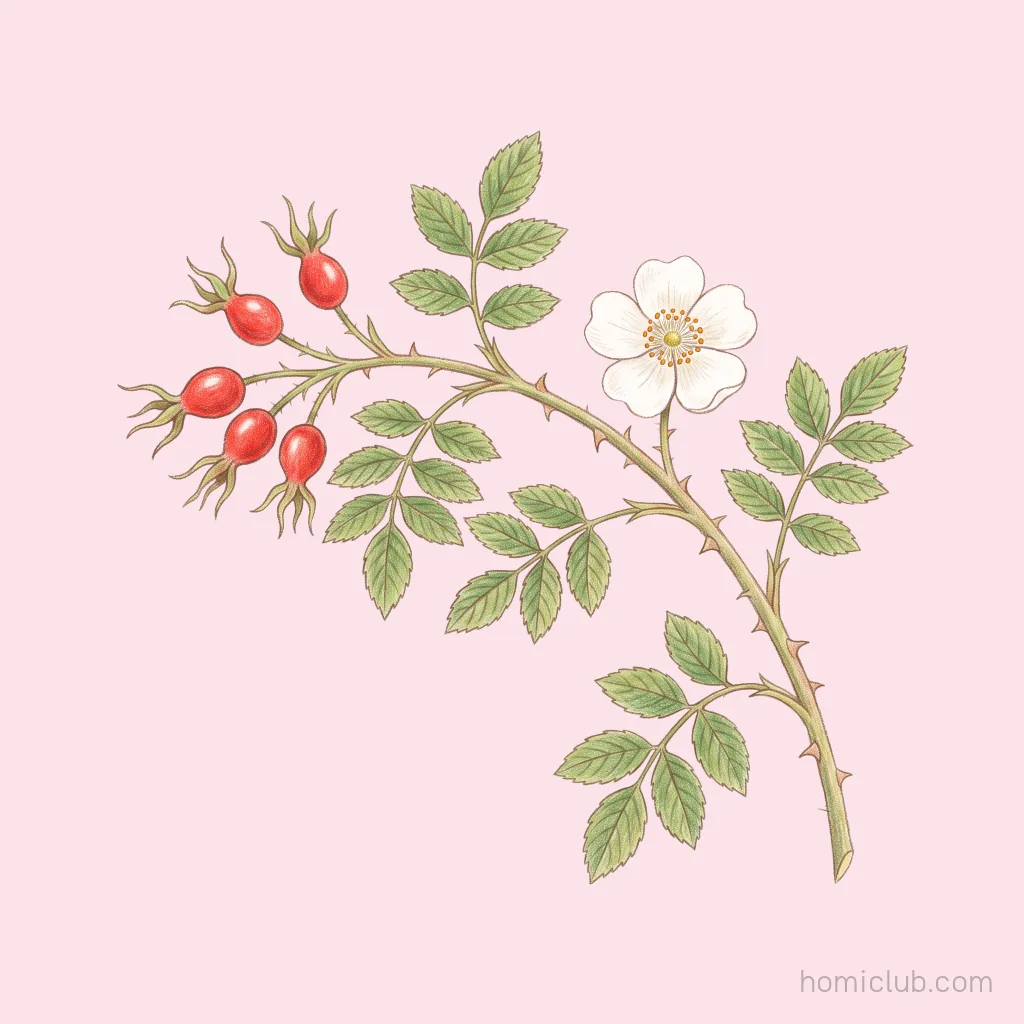
Yeongsil is the fruit of the wild rose. The old Korean gloss, dirwi yeoreum, means the fruit of the briar, and it belongs to the same group as what is sold today as rosehips. Dongui Bogam favours the white-flowered sort and has the fruit picked in the eighth or ninth month, steamed with soured grain water and sun-dried.
Original, read line by line 東醫寶鑑 · Tangaek — Decoctions vol. 2
-
性溫一云微寒, 味酸一云苦, 無毒. 主癰疽惡瘡, 敗瘡, 陰蝕不瘳, 頭瘡白禿.
Its nature is warm, though one account calls it slightly cold; its taste is sour, though one account calls it bitter, and it is non-toxic. It chiefly addresses ongjeo (癰疽, deep abscesses), malign and festering sores, unhealing genital erosion, and head sores with baekdok (白禿, white bald scalp sores).
HomiclubYeongsil is the fruit of the wild rose. The old Korean name means "dilwi fruit," dilwi being the briar rose, and the fruit belongs to the same genus as what the West calls rosehips.
-
營實, 卽野薔薇子也. 莖間多刺, 蔓生, 子若杜棠子, 其花有五, 葉八出六出.
Yeongsil is the seed of the wild rose. Its stems bear many thorns and it grows in trailing canes; its seed is like that of the wild pear, its flower has five petals, and its leaflets come in eights or sixes.
HomiclubThe briar rose is a scrambling wild rose found across Korean fields and hillsides, flowering white in May and ripening red fruit in autumn. Its pinnate leaves, made of several leaflets, match the text's count of eights and sixes.
-
或赤或白, 處處有之, 以白花者爲良. 《本草》
Some are red and some white, and it is found everywhere; those with white flowers are counted the better. 《Boncho (本草)》
-
八九月採實, 漿水拌蒸, 曬乾用. 《入門》
Gather the fruit in the eighth or ninth month, toss it with jangsu (漿水, fermented grain water), steam it, then sun-dry it for use. 《Ipmun (入門)》
Related Crop
Multiflora rose →
Reading on Multiflora rose
Herbs — more entries
This is a cultural and historical record from a classical text, not a claim about any food’s effects. Nothing here is a health supplement or intended to prevent or treat disease. Consult a medical professional about health concerns. · Text: Korean Medicine Classics DB · Reading: Homiclub