- Type
- Berries
- Difficulty
- Moderate
- Season
- Spring·Fall
- Sowing
- Plant a sapling
Multiflora rose
Rosa multiflora
Vitamin C and carotenoids · shoots in spring, red hips in autumn
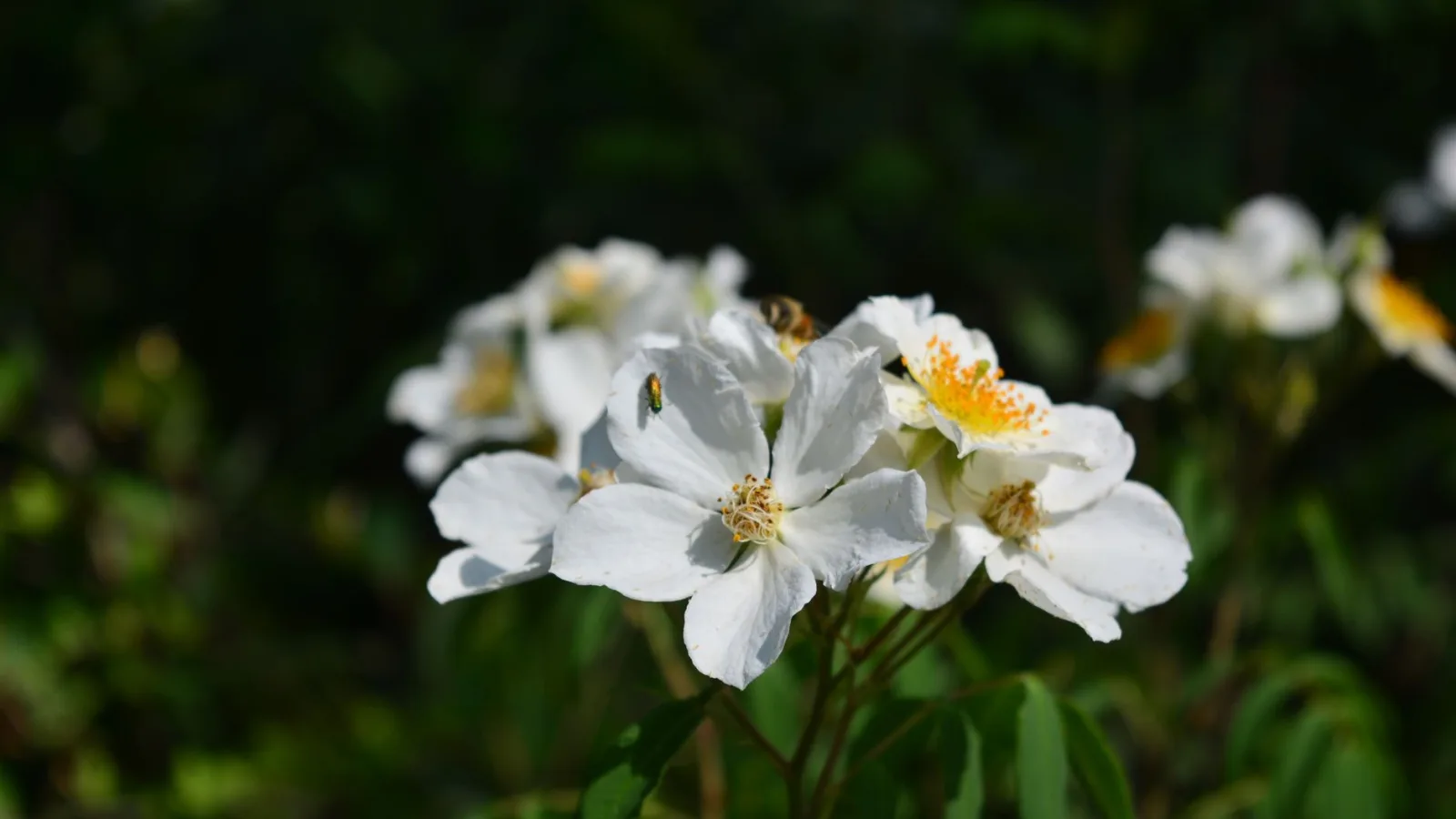
Multiflora rose is a thicket-forming shrub of the rose family, common on hillsides, roadsides and stream banks. In May the white flowers open in masses and the scent carries a long way. In spring the red new shoots were peeled and eaten; in autumn the ripe red hips were gathered. Those hips belong to the same group the West calls rosehips, and repeated analyses report vitamin C in the fruit of Rosa species. The fine hairs around the seeds irritate skin and throat, though, so halve the hips, scrape out seeds and hairs completely before drying, and strain the brewed tea once more through a fine sieve. The Donguibogam lists the fruit in the Herb section as 營實 and gives the Korean name as dirwi yeoreum. It identifies it as the seed of the wild rose, notes the many thorns along the stem and the scrambling habit, and says that of the red-flowered and white-flowered forms the white was reckoned better. The hips were gathered in the eighth and ninth lunar months, steamed with fermented millet water, and sun-dried for use.
Year-Round Calendar
- 1
- 2
- 3
- 4
- 5
- 6
- 7
- 8
- 9
- 10
- 11
- 12
- 3
- 4
- 4
- 5
- 9
- 10
Where It Grows
-
Wild population
Common throughout the country on hillsides, roadsides and stream banks. Harvest September, October
- 9
- 10
- Wild population Common in open country and on hillsides from Honshu to Kyushu.
- Wild population Grows on hillsides and along watercourses in Central and East China.
It is native to East Asia, across Korea, Japan and China, and because it is gathered where it grows wild rather than raised as a field crop, there are no production figures by country. From the 19th century it was taken to North America and Europe as rose rootstock and for hedging, and many places now treat it as an invasive species, so those countries have not been counted as growing areas.
- Optimum
- 15~25℃
- Range
- 5~30℃
- Hardiness
- Hardy
A deciduous shrub found on sunny hillsides and roadsides and on the banks of streams. It is cold-hardy enough to come through winter in inland central Korea and will grow even in dry, gravelly ground, but in shade its flowering and fruiting fall off noticeably.
Harvested 2–3 years after planting. Plant a seedling and it will flower and fruit properly from the second or third year. Branches that touch the ground put out roots, so the thicket widens year by year; old canes are cut in winter to hold it to its bounds.
In Korea Nationwide
Common throughout the country on hillsides, roadsides and stream banks. The shoots are picked in April–May, the fruit in September–October.
How to grow
- Light
- A sunny position. In shade both flowers and hips fall off noticeably
- Soil and depth
- Free-draining ground; otherwise it is not fussy. It does well even on gravelly stream banks
- Spacing
- 1.5 to 2m between plants. The stems run sideways into a thicket, so allow the room from the start
- Watering
- Keep it from drying out through the first year only. Once established it carries itself on rainfall
- Feeding
- A spadeful of compost around the base in early spring. Rich feeding gives long growth and fewer hips
- Harvest
- Shoots in April and May, taken while a red new shoot still snaps cleanly by hand. Hips in September and October, once they have coloured fully
What makes the difference. Halve the hips and scrape out seeds and hairs with a spoon before drying; hairs left in sting the throat. Peel the shoots before eating
Why this one is harder. The stems run in all directions and root where they touch the ground, so the thicket widens every year. Cut out the old stems in winter and train the growth toward a wall or boundary only
Common problems
- Aphids You will see Colonies on shoot tips and flower buds, turning sticky What to do Wash them off with a jet of water; if they persist, use an egg-yolk oil spray. Where shoots are to be picked, observe pre-harvest intervals
- Powdery mildew You will see A dusting of white settles on leaves and new stems What to do Thin the stems for airflow and collect and discard affected leaves. Do not water over the foliage
- Black spot You will see Black blotches on the leaves, which yellow and drop early What to do Clear fallen leaves as they go. It worsens in wet years, so lift the lower branches to stop soil splashing up
This page describes how a crop is grown and used. It does not claim health effects for any food, nor is it intended to prevent or treat disease. Component and study notes are references only and do not mean the same result occurs in people. Consult a medical professional about health concerns.
Health Benefits
The old record — yeongsil (營實). The Donguibogam lists the fruit in the Herb section as 營實 and gives the Korean name as dirwi yeoreum. It records the nature as warm, adding that some call it slightly cold, the taste as sour with a note that some call it bitter, and no toxicity. It identifies it as the seed of the wild rose and notes many thorns along the stem and a scrambling habit. The fruit is said to resemble that of 杜棠, the flowers to have five petals, and the leaves to come in eights or sixes. Red-flowered and white-flowered forms both occur everywhere, and the white was reckoned better. The hips were gathered in the eighth and ninth lunar months, steamed with fermented millet water, and sun-dried for use. This is a historical medical record and differs from how it is judged today.
Rosehips and vitamin C. Repeated analyses report vitamin C in the fruit of Rosa species. Species, origin and ripeness make the levels vary too widely for a single figure, and the same work notes that heat reduces it. This is a compositional analysis.
The hairs around the seeds. The fruit of Rosa species is packed with short, stiff hairs around the seeds. That these irritate skin and throat is widely known, and rosehips are scraped and strained in Western practice for the same reason. This is an account of preparation.
Nutrition
- Vitamin C (reported in the fruit of Rosa species) — a water-soluble vitamin that breaks down with heat
- Carotenoids (the red of the ripe hip) — the fat-soluble pigment family behind red and orange
- Dietary fibre (in the skin of the dried hip) — what gives the skin its tough grain
Vitamin C Repeated analyses report vitamin C in the fruit of Rosa species. Levels differ so much with species, origin and ripeness that no single figure holds. It breaks down with heat, so long boiling reduces it. This entry stays with the compositional record.
The red pigment The red of a ripe hip comes from carotenoid pigments. Drying deepens the colour, and long storage fades it to brown. A hip that has gone brown has lost aroma with the colour, so use the current year's.
The hairs around the seeds Split a hip and short, stiff hairs crowd around the seeds. They sting on skin and in the throat. Scrape them out completely with a spoon when preparing the fruit, and strain the brewed tea once more through a fine sieve or filter.
Shoots picked in spring The red new shoots of spring have not yet turned woody, and peeling them leaves a tender core. The window lasts as long as a shoot snaps cleanly by hand; once it takes effort, it is already tough. The skin carries thorns, so peel it before eating.
Pairings
○ Hot water — rosehip tea — Break up dried hips whose hairs have been scraped out and steep them in hot water. Steep for about five minutes rather than boiling them. Strain once more through a fine sieve afterwards.
○ Hibiscus and apple — Two tart things that suit each other, and the colour comes up red. A little dried apple adds sweetness that softens the acidity. A glass pot lets you judge the strength by eye.
○ Honey — The tartness leads, so a little honey makes it easier drinking. Add it once the tea has cooled slightly rather than while it is scalding. Dried hips are also steeped in honey and stirred into water later.
△ The hairs around the seeds — Do not brew or eat the hips whole. Halve them and scrape out seeds and hairs completely with a spoon before drying, because the hairs sting on skin and in the throat. Strain the brewed tea once more through a fine sieve or filter.
△ Roadsides and field margins — Do not gather from verges where traffic passes or from field edges reached by spraying. Multiflora rose is commonest on roadsides, which makes choosing the site more, not less, important. Take it from further inside the hill, or from plants you grew yourself.
△ Thorns — Curved thorns crowd the stems. Wear thick gloves, cut with secateurs, and clear the cut stems away at once rather than leaving them on the ground. Where children pass, plant it well back from the path.
Varieties
- Multiflora rose (Rosa multiflora) (species) — White flowers in masses and small hips. The commonest thicket on hillsides and roadsides
- Rugosa rose (Rosa rugosa) (species) — The same genus, growing on coastal sand. Larger flowers and much larger hips
- Dog rose (Rosa canina) (species) — The European wild rose, the mainstay of rosehip tea in the West
Source: Donguibogam, Herb Section 營實 · Korea National Arboretum species information system