
Tangaek — Decoctions · Herbs
靑箱子 Feather cockscomb
 Related Crop · Feather cockscomb →
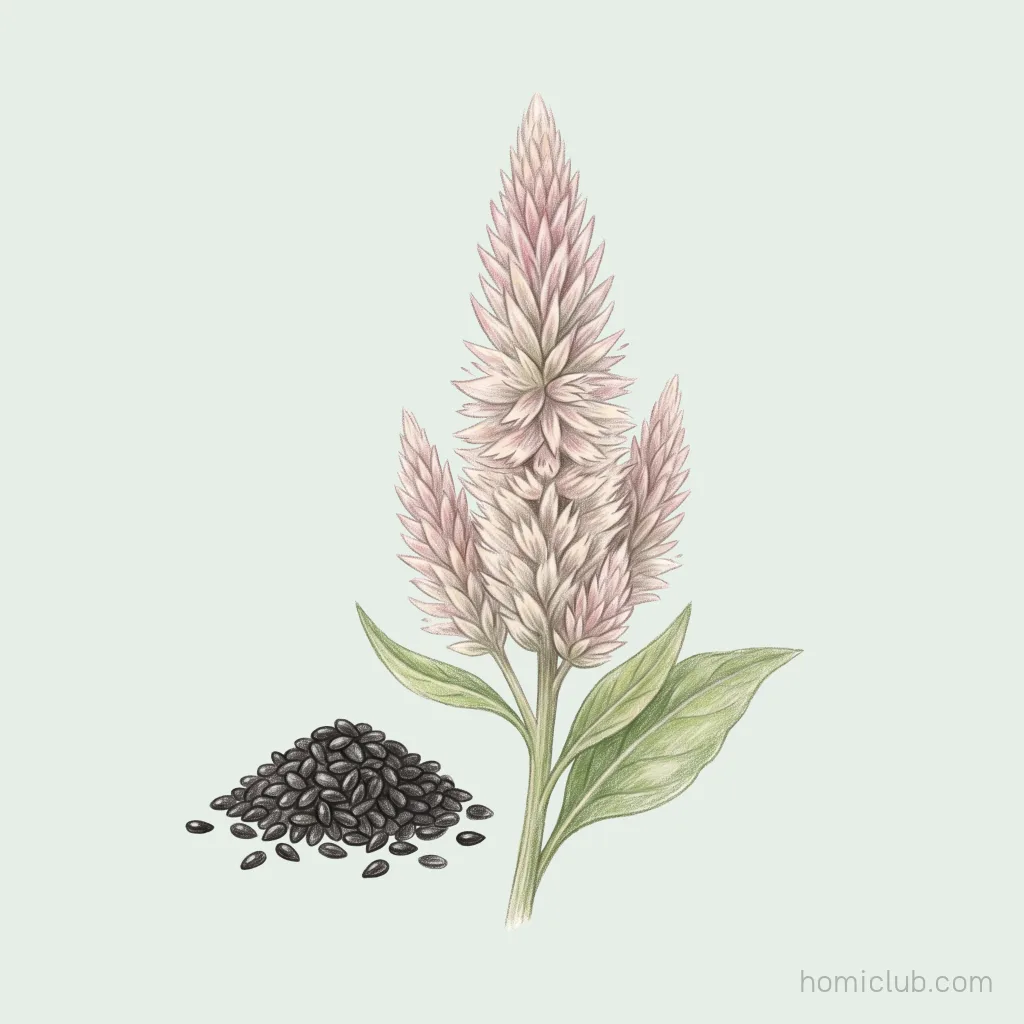
Cheongsangja is the small black seed of silver cockscomb. The plant belongs to the same amaranth group as the garden cockscomb and raises a silvery flower spike in summer. Donguibogam records it as the seed of gyegwanhwa, noting that the flower took its name from a rooster's comb.
Original, read line by line 東醫寶鑑 · Tangaek — Decoctions vol. 3
-
性微寒, 味苦, 無毒. 治肝藏熱毒衝眼, 赤障靑盲瞖腫. 主風瘙身痒, 殺三蟲, 療惡瘡, 下部䘌瘡, 明耳目, 鎭肝.
Its nature is slightly cold, its taste bitter, and it is non-toxic. It treats heat toxin of the liver surging into the eyes, red obstruction, blue blindness, and swelling with corneal film. It governs itching of the body from wind, kills the three worms, treats malign sores and eroding sores of the lower body, brightens the ears and eyes, and settles the liver.
HomiclubCheongsangja is the small black seed of gaemaendeurami (Celosia argentea). It belongs to the same amaranth family as garden cockscomb, sends up an upright silvery flower spike in summer, and seeds itself along field edges and waste ground.
-
卽今雞冠花子也. 六月八月採子, 微炒, 搗碎用. 《本草》
This is the seed of what is now called gyegwanhwa (雞冠花, cockscomb). The seed is gathered in the sixth and eighth months, lightly parched, and crushed for use. 《Boncho (本草)》
Related Crop
Feather cockscomb →
Reading on Feather cockscomb
Herbs — more entries
This is a cultural and historical record from a classical text, not a claim about any food’s effects. Nothing here is a health supplement or intended to prevent or treat disease. Consult a medical professional about health concerns. · Text: Korean Medicine Classics DB · Reading: Homiclub