

- Type
- Roots & Stems
- Difficulty
- Moderate
- Season
- Spring
- Sowing
- From seed
Deodeok (Korean Bonnet Bellflower Root)
Codonopsis lanceolata
Saponins — a deeply aromatic mountain root
Deodeok (Codonopsis lanceolata) is a fragrant root in the bellflower family, closely related to balloon flower (doraji). Cutting the stem releases a milky white sap, which is why old medical texts recorded it as yangyu, "goat's milk," and placed it beside balloon flower root — an old record that differs from present-day judgment. Its distinctive aroma and gentle bitterness come from triterpenoid saponins, and the signature dish is deodeok-gui, the root pounded flat and grilled with a gochujang glaze. Most modern research on deodeok is still at the animal or cell-culture stage, so human evidence remains limited.
Year-Round Calendar
- 1
- 2
- 3
- 4
- 5
- 6
- 7
- 8
- 9
- 10
- 11
- 12
- 3
- 4
- 10
- 11
Where It Grows
-
Main producer
Field cultivation happens almost entirely in Korea. Well-known growing areas include Hoengseong, Hongcheon, and Inje in Gangwon, along with the mountain districts of North Gyeongsang and North Jeolla. Harvest October, November
- 10
- 11
- Wild population It grows wild in the forests of the northeast and Shandong.
- Wild population It grows wild in mountain areas from Honshu southward, but is rarely cultivated.
- Wild population It grows wild in the forests of Primorsky Krai.
Its native range is the temperate forests of East Asia, stretching across the Korean Peninsula, northeastern China, Japan, and Russia's Primorsky Krai. Because it cannot be pinned to any one country, we have not included a country-of-origin row. Korea is the only place where it is grown on a large scale, prepared as a wild green and a root vegetable; in other countries it is mostly just dug from the mountains.
- Optimum
- 15~20℃
- Range
- 5~25℃
- Hardiness
- Hardy
It prefers partial shade on mountain slopes where summers stay cool. Strong sun scorches the leaves, and standing water rots the roots. In winter the vines die back, and the plant carries on from its roots, growing for many years.
Harvested 2–3 years after planting. Seeds are sown in March–April, the plants are grown for two to three years, and the roots are dug in October–November. There is nothing to harvest in the year of planting, so the sowing months and the harvest months never fall in the same year.
In Korea Nationwide
It grows wild in mountains across the country, and cultivation is centered in the mountain areas of Gangwon, where summers are cool. Since it is a climbing vine, growers put up supports for it.
How to grow
- Light
- Part shade. Strong sun scorches the leaves
- Soil and depth
- 30cm deep or more with good drainage
- Spacing
- 20cm
- Watering
- Sparingly. It resents wet feet
- Feeding
- Sparingly
- Harvest
- Lift in autumn after two or three years
What makes the difference. It climbs, so give it support. Damage the root when lifting and the aroma goes with it
Why this one is harder. Two or three years to a crop, and it is intolerant of wet soil
This page describes how a crop is grown and used. It does not claim health effects for any food, nor is it intended to prevent or treat disease. Component and study notes are references only and do not mean the same result occurs in people. Consult a medical professional about health concerns.
Health Benefits
Old record — the name yangyu (羊乳). Old medical texts recorded deodeok under the name yangyu (羊乳), "goat's milk," after the milky white sap that runs from a cut stem. Another old name, sayeopsam (四葉參), points to the four leaves that sit together at the stem tip. It was handled beside balloon flower root, another root of the same family. This is an old record, and it differs from present-day judgment.
Today's view — what is established. The composition has been analyzed: deodeok contains triterpenoid saponins and inulin. Studies in human subjects are scarce, so what can be stated at present goes only as far as composition.
Nutrition
- Triterpenoid saponins (Source of deodeok's signature bitterness and aroma) — The compounds behind its bitter taste and scent
- Inulin and dietary fiber (Soluble polysaccharide) — Dietary fiber that dissolves in water
Saponins The triterpenoid saponins give the root its aroma and slightly bitter taste. The same class of compounds has long been discussed together with balloon flower root, another member of the bellflower family, but evidence in human subjects remains limited.
Inulin and dietary fibre The root holds soluble polysaccharides such as inulin. What is established is that the compound is present.
Digging it in the hills — it is mistaken for pokeweed root Deodeok is dug alongside balloon flower root, and going by the shape of the root alone makes it easy to bring home poisonous pokeweed instead. Four things separate them. A cut stem or root of deodeok weeps white sap and carries its sharp, unmistakable scent; a cut pokeweed root gives neither. Above ground, deodeok twines as a vine with four leaves gathered at one point, while pokeweed stands upright with alternate leaves. Anything short of certainty means leaving it in the ground.
Pairings
○ Gochujang (deodeok-gui) — Pound the root flat, brush it with a gochujang glaze, and grill it; the bitterness of the saponins plays off the sweet-and-spicy seasoning. This is deodeok's signature dish. Chili Pepper (Gochu)
○ Sesame oil and sesame seeds (deodeok-muchim) — Tear raw deodeok into strips and toss it with sesame oil, sesame seeds, and vinegar to highlight its aroma and crisp texture. Sesame
○ Honey (deodeok-jeonggwa) — Steeping the root in honey softens its bitterness, making a soothing snack that is traditionally said to be good for the throat. (Jeonggwa is a Korean candied confection.)
△ Wild-dug roots — the danger is pokeweed — Ground that yields deodeok and balloon flower root also yields poisonous pokeweed, whose thick, pale root looks much the same. A cut pokeweed root gives no white sap and none of deodeok's scent, and the plant stands upright with alternate leaves rather than twining with four leaves gathered at a point. Anything short of certainty means neither digging it nor eating it. If a wild-dug root causes illness, take a sample along when seeking medical care.
Varieties
- Field-grown deodeok (Seed) — Roots run straight and thicken evenly, reaching harvest size in two or three years. Widely sold as seed.
- Wild-type deodeok (san-deodeok) (Seed) — Thin, deeply grooved roots with a much stronger scent, but they take longer to bulk up.
Source: Rural Development Administration (Nongsaro) · traditional materia medica (yangyu)
Stories about Deodeok (Korean Bonnet Bellflower Root)
Three Leaves — Time to Dig?
In much of the United States, wild ginseng can legally be dug only once a plant is five years old with three prongs. New research finds that count says surprisingly little about whether the plant will set seed or survive — a caution worth carrying into your own garden beds.
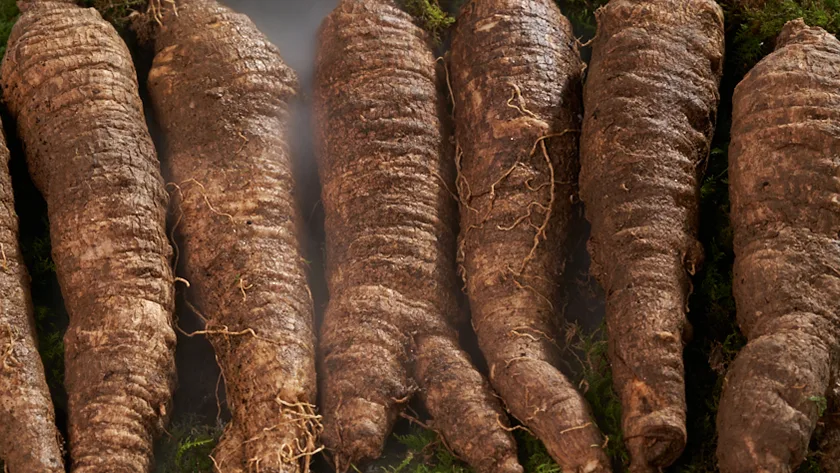
Deodeok: Health Through the Eyes of the Dongui Bogam
Deodeok, a fragrant mountain root that thickens in the garden year after year, was recorded in Korea's Dongui Bogam as "goat's milk" — a mild remedy for the lungs and throat. This column traces how those old records line up with today's nutrition science, and how to bring the root from garden to table.
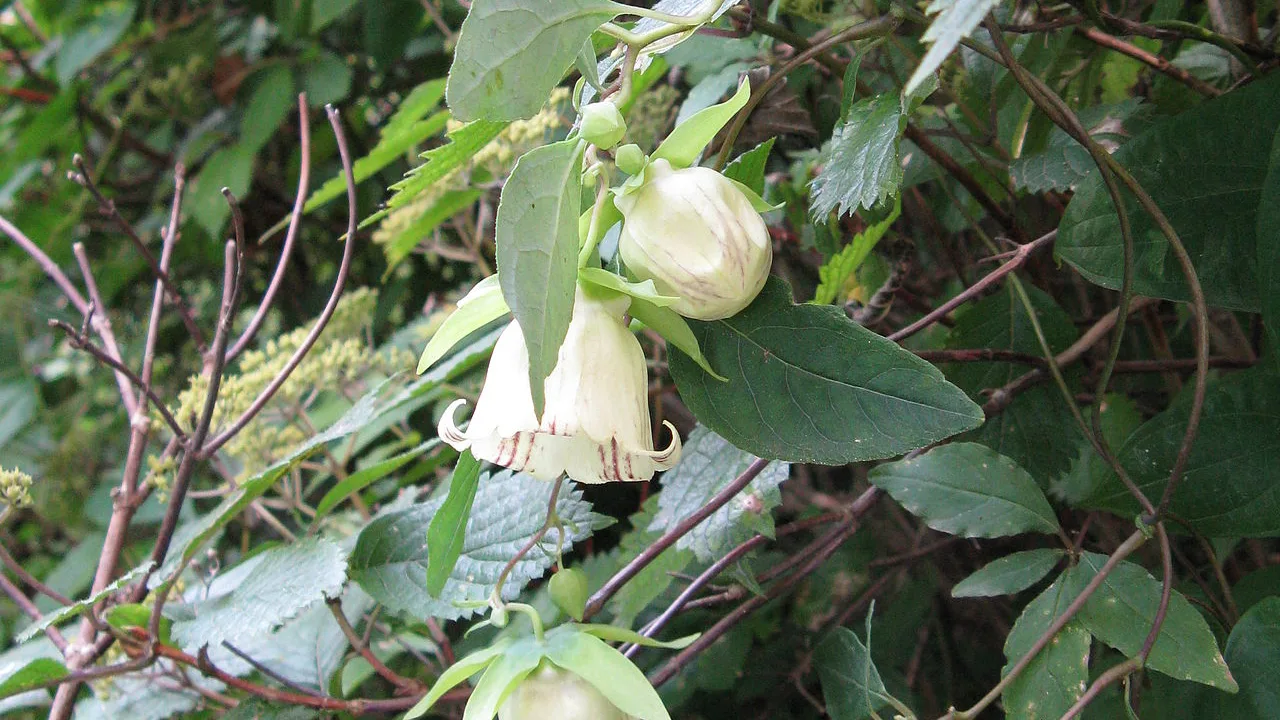
A Single Deodeok Vine on the Balcony, Fragrance and All
Sow deodeok (a bellflower-family root prized in Korean cooking and traditional medicine) in a deep balcony pot, give it a stake to climb, and enjoy its scent for two or three seasons until the roots are ready to harvest.