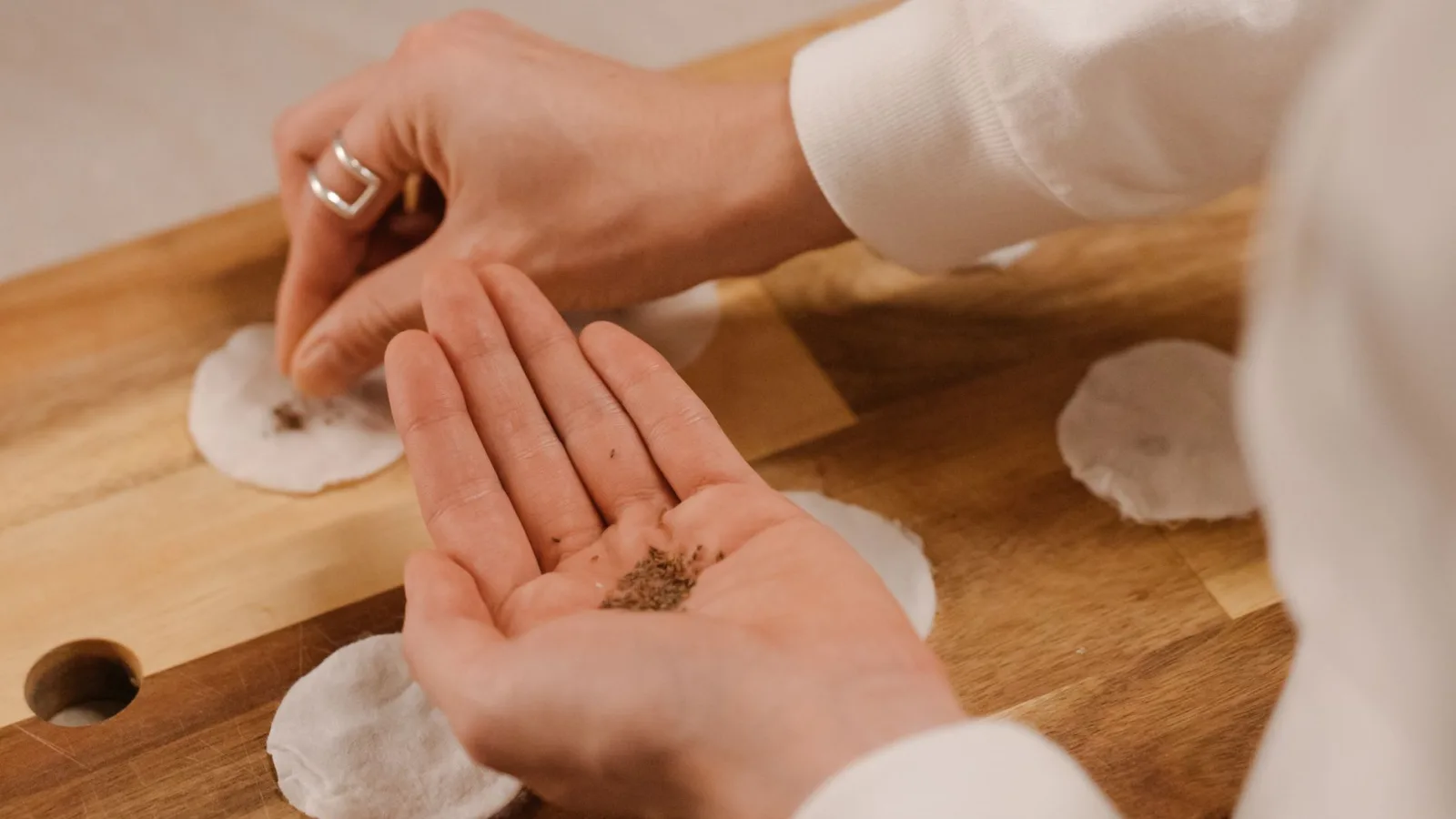
By September, the water pepper standing at the water's edge has seed spikes that have ripened to brown at the tips. Run your hand along one and the seeds rain down. It's an annual that comes up on its own in places that never dry out, like the banks of rice paddies and the edges of ditches. It grows best at 20–28°C (68–82°F), and the stronger the sun, the redder its leaves and stems become. Frost ends its year, and the fallen seeds come up in the same spot the following year. Japan grows the most of it, and in Korea and China it grows wild by the water. The seeds you gather now don't go straight to the table. You soak them to raise red sprouts, then lay two or three strands of those sprouts beside other foods.
Soak the Seeds to Raise Red Sprouts
The Donguibogam, Korea's classic 17th-century medical compendium, lists water pepper seed as yosil (蓼實) in the vegetable chapter (菜部) of its materia medica volume, and it records how to prepare it. Fill a gourd with water, wet the seeds, hang it high over a fire, and keep it warm day and night, the book says, and red sprouts will appear. Today a glass jar or a sprouting kit does the same job. Kept warm and damp, the seeds send up threadlike sprouts that blush red as anthocyanins build up. These are beni-tade (red water pepper sprouts), the garnish that comes with sashimi in Japan.
The same warm, damp conditions that wake up seeds also help bacteria multiply. Follow these four rules before you start.
- Use only seeds sold for eating. Seeds sold for planting are often treated with chemicals.
- Wash your jar or sprouter and let it dry before you use it.
- Rinse two or three times a day, and stand the jar so no water collects at the bottom.
- If the sprouts turn slimy or smell sour, throw them out, however much it hurts to waste them.
Two or Three Strands Beside Sashimi and Grilled Fish
Chew a sprout and the back of your tongue starts to tingle. That comes from polygodial, the compound behind its heat. The heat tamps down fishy odors, which is why in Japan the sprouts are served with sashimi platters and grilled fish. Two or three strands per bite is plenty. Any more and the heat drowns out the fish. Try just a chopstick pinch on grilled white fish or an oily fish like mackerel.
What About the Leaves?
The leaves are ground and mixed with vinegar. That's tadezu (ground water pepper leaves loosened with vinegar), the sauce the Japanese serve with grilled ayu, or sweetfish. Acid softens water pepper's heat. Grind the leaves fine and work them into vinegar, and you get a bright green sauce, but it fades within a few days. So grind only what you need, when you need it. Add half a spoonful to grilled fish, blanched vegetables, or tofu. The tannins in the leaves leave your mouth feeling slightly puckered, so the sauce works well after rich, oily food.
A Plate of Pungent Things
The Donguibogam records that red water pepper sprouts grown in early spring went onto the osinban (五辛盤), or "five-pungent plate." It was a spread of five pungent foods on a single plate, eaten on Ipchun, the first day of spring on the traditional calendar. In the Northern Hemisphere, that falls in early February, near the end of winter. Put the sprouts on a plate with Korean wild chives (dallae), scallions, and garlic, and you have that same lineup again. If you sow seeds in March through May and save seed from those plants between July and October, you can sprout them the following early spring and set this plate yourself.
Use It Sparingly
The same book describes water pepper seed as cold in nature, pungent in flavor, and nonpoisonous, and right beside that it adds a warning: eat too much and you will vomit water. This comes from a 17th-century medical text and is not the view of modern medicine. Its basic point still applies in today's kitchen, though: this is not something to eat by the plateful.
In test-tube studies, polygodial extracted from water pepper has been reported to slow the growth of molds and some bacteria. Those results came from a compound isolated in the lab, so we don't take them as evidence that the few strands on your plate do the same thing inside your body. The sprouts also contain antioxidants such as rutin and quercetin. At garnish amounts, what you can count on is aroma, a peppery bite, and a flash of red.
If water pepper grows near a stream or ditch where you live, strip a few seed heads today, collect the seeds, and dry them in the shade. Soak just a spoonful in a glass jar, and in a few days you'll have sprouts to lay across a plate of fish. Store the rest in a paper envelope until next spring.
Sources: Donguibogam, materia medica volume (Tangaek-pyeon), vegetable chapter (菜部), original entry on 蓼實; National Species List of Korea.