- Type
- Herbs & Aromatics
- Difficulty
- Easy
- Season
- Spring·Summer
- Sowing
- From seed
Water Pepper Seed
Persicaria hydropiper
Polygodial — the seed of water pepper, eaten as a red sprout
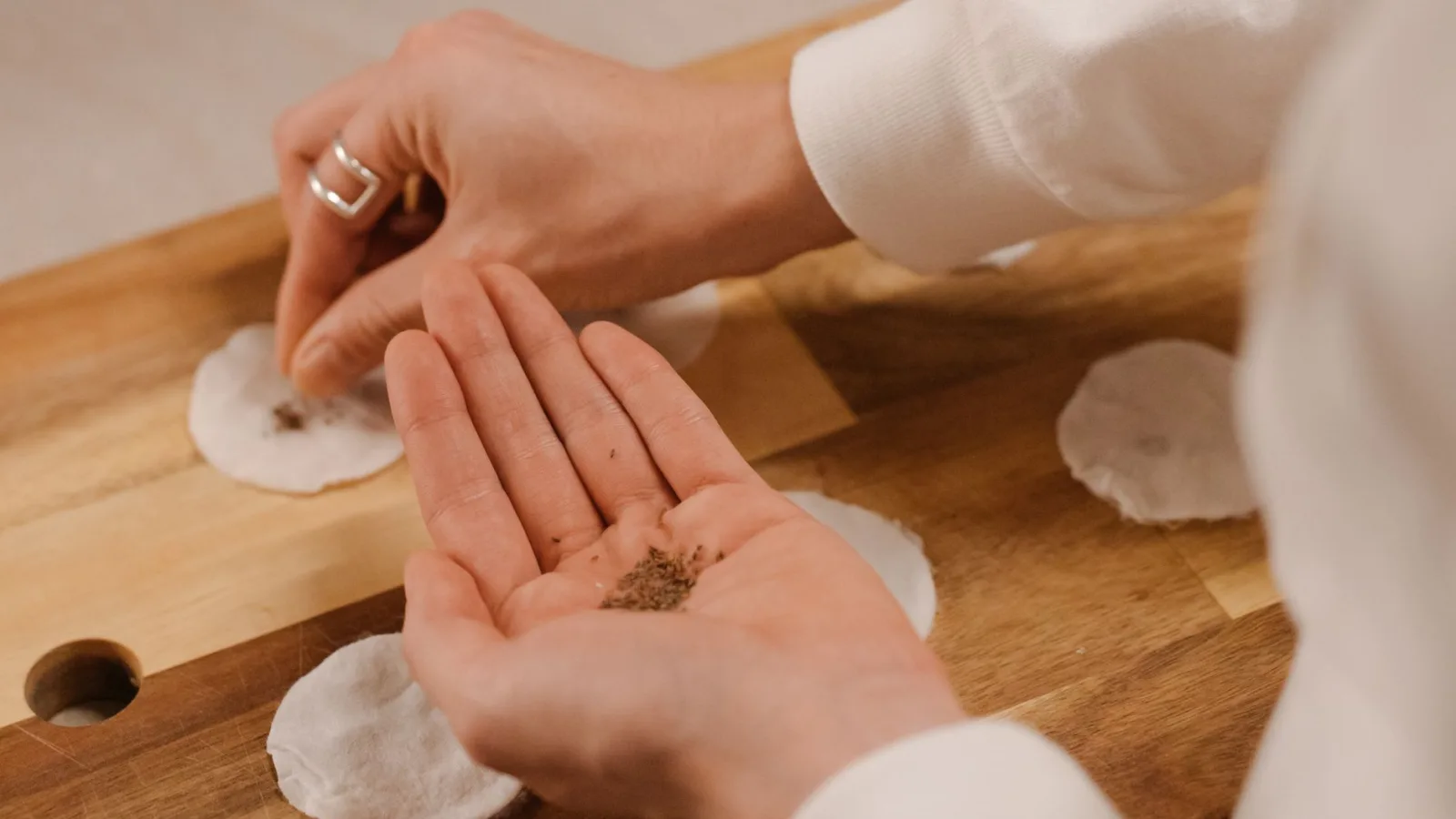
This is the seed of water pepper, an annual that grows thickly along Korean waterways. The Donguibogam describes soaking the seed in a water-filled gourd, hanging it high above a fire and keeping it warm day and night until red sprouts appear, then serving those sprouts on the ohsinban, the platter of five pungent foods eaten at the start of spring. The red threads that come alongside sashimi in Japan, called benitade, are exactly the same thing. Chew a leaf or a sprout and the back of your tongue goes numb and hot, which is polygodial at work. Almost nobody eats the seed itself; the practical use is to soak it, sprout it, and use the sprouts as a garnish. Sprouts rise in warmth and damp, though, and bacteria rise with them. Use only seed sold for eating — seed sold for planting is often treated with a disinfectant dressing — wash and dry the jar or sprouter before each batch, and rinse two or three times a day so no water stands in the bottom. Discard anything slimy or sour-smelling, and let pregnant women, young children and anyone with weakened immunity have them cooked.
Year-Round Calendar
- 1
- 2
- 3
- 4
- 5
- 6
- 7
- 8
- 9
- 10
- 11
- 12
- 3
- 4
- 5
- 7
- 8
- 9
- 10
Where It Grows
- Main producer The red sprouts (benitade) are grown commercially, and the practice of serving them alongside plates of raw fish continues.
-
Wild population
Common on paddy banks, ditch sides and streambanks throughout the country. Harvest September, October
- 9
- 10
- Wild population Common along waterways and in paddy fields.
It grows widely along waterways across temperate Eurasia, so its origin is not pinned to any one country. It is not a field crop, so there are no country-by-country production figures, and commercial growing amounts to little more than the red sprouts of Japan; the list above is therefore not a ranking but a gathering of the places where its use has continued. It was introduced to North America and has naturalized along the water there.
- Optimum
- 20~28℃
- Range
- 10~32℃
- Hardiness
- Not hardy
An annual that grows on permanently wet watersides and paddy banks. It wilts as soon as the soil dries out, and the stronger the sun, the redder its leaves turn. A frost ends the plant for that year, and it comes back the next year from fallen seed.
In Korea Nationwide
Common on paddy banks, ditch sides and streambanks throughout the country. Leaves are taken from June to August, and the seed is stripped from September to October, once the spikes have ripened.
How to grow
- Light
- Four to six hours a day is enough. It will grow in partial shade, and stronger light deepens the red in the leaves.
- Soil and depth
- Poorly draining soil actually suits it. Paddy soil or ordinary potting mix both work; choose on the assumption that you will keep it wet.
- Spacing
- Three or four plants in a 20cm pot. If you are growing it as a sprout crop instead, scatter the seed densely over damp mix.
- Watering
- Let the soil dry out and the leaves wilt almost immediately. Stand the pot in a saucer of water and keep it damp at all times.
- Feeding
- Barely any. Give a weak liquid feed once a month only if the leaf color starts to fade.
- Harvest
- Red sprouts reach about 5cm within seven to ten days of sowing; cut them at the base with scissors and use them the same day. Leaves come from June to August, and the seed is stripped from the spikes in September or October once it has ripened to a dark reddish black.
What makes the difference. You can follow the original method exactly. Soak the seed for a day, wrap it in damp cloth and hold it at 20 to 25C in the dark, and red sprouts will come up. Prolonged light turns them green, so give them only a brief spell of daylight right before cutting. The heat is strong, so eat only small amounts at a time, and do not substitute the common smartweed growing in the fields.
Common problems
- Aphids You will see Curled shoot tips and a sticky film on the leaves What to do Wash them off with water and cut away the affected shoot if they keep coming back. Sprout crops turn over too fast to justify any pesticide.
- Leaf beetles You will see Small holes punched densely across the leaves What to do Pick them off by hand. Move the pot away from the wall so air can pass around it.
- Mold during sprouting You will see White fuzz at the base of the sprouts and a sour smell What to do Sow the seed less densely and change the water twice a day. If mold has already set in, throw the whole batch out and start over.
This page describes how a crop is grown and used. It does not claim health effects for any food, nor is it intended to prevent or treat disease. Component and study notes are references only and do not mean the same result occurs in people. Consult a medical professional about health concerns.
Health Benefits
What the Donguibogam records. Water pepper seed appears in the vegetable section of the Donguibogam under the name yosil (蓼實). The entry records it as cold in nature, pungent in taste and free of toxicity, and attaches the caveat that eating a great deal of it brings on vomiting. It also describes the handling — soaking the seed in a gourd of water and hanging it high above a fire until red sprouts rise — and notes that those sprouts were served on the platter of five pungent foods at the start of spring. A separate entry in the herb section, suryo (水蓼), carries the old Korean name yeotgwi and describes a plant of shallow water with red stems and leaves larger than those of the field species. This is a seventeenth-century medical record, not a modern medical assessment.
Research on polygodial. In vitro studies using polygodial isolated from the plant have reported observed activity against fungi and some bacteria. Those results come from an isolated compound in the laboratory and are not evidence that the same thing happens at the amounts a person eats as a garnish.
Nutrition
- Polygodial (The pungent compound of leaves and young shoots) — Leaves a tingle at the back of the tongue
- Rutin and quercetin (Flavonoids) — Antioxidant compounds
- Anthocyanins (The pigment of the red shoots) — Turn the sprouts red
- Tannins (The astringency) — A drying feel in the mouth
Polygodial, the source of the heat The heat in water pepper is neither capsaicin nor the isothiocyanates of mustard. It comes from polygodial, a sesquiterpene compound that sets the back of the tongue tingling. It concentrates in leaves and young sprouts, which is why sprouting the seed is what brings the flavor out. It is heat-sensitive, so blanching drives much of it off.
Flavonoids and red pigment Rutin, quercetin and related flavonoids have been identified in the leaves and seeds. The red of a dark-grown sprout comes from anthocyanin pigments. The quantity that reaches a plate is tiny, so treat this as flavor and color rather than as a source of nutrition.
Seed versus sprout The seed itself is hard, astringent and only mildly pungent. Soaking and sprouting is what brings up both the heat and the color, which is why the old record tells you to eat the sprout and not the seed. Think of the seed as planting stock rather than as an ingredient.
Pairings
○ Raw and grilled fish — In Japan the sprouts go on sashimi, and crushed leaves whisked into vinegar make tade-zu, the sauce served with grilled ayu. The sharp heat cuts through the smell of the fish. Two or three threads per piece is plenty.
○ The ohsinban platter — The Donguibogam records early-spring red water pepper sprouts being set out on the ohsinban. It was a plate of five pungent foods eaten at ipchun, the first day of spring by the old calendar. Arrange the sprouts with wild chives, jjokpa and garlic and you have essentially the same composition. Garlic · Jjokpa (Korean Bunching Onion) · Korean Wild Chive (Dallae)
○ Vinegar — Acid rounds off the plant's edge. Grind the leaves fine and stir them into vinegar and you get a green sauce, though it loses its color within a few days. Make only as much as you will use.
△ Home-grown sprouts - mind the seed and the hygiene — Sprouts rise in warmth and damp, and bacteria rise with them. Use only seed sold for eating; seed sold for planting is often treated with a disinfectant dressing and is not seed to sprout for the table. Wash and dry the jar or sprouter before each batch, rinse two or three times a day, and let no water stand in the bottom. Discard the whole batch if it turns slimy or smells sour. Pregnant women, young children and anyone with weakened immunity should have them cooked.
△ Plants picked by the water - mind where they grew — Water pepper is common along paddy banks and ditches, but those places may have been sprayed with herbicide, and there is no telling where the water came from. What goes on a plate should be grown yourself or bought as food.
Varieties
- Water pepper (Seed) — Narrow leaves and the sharpest heat. This is the edible smartweed the original text meant.
- Benitade (red sprouts) (Seed) — Germinated in the dark and grown red. These are the sprouts served alongside sashimi.
- Fragrant smartweed (Seed) — Strongly aromatic; one of the three edible smartweeds listed in the old records.
Source: Donguibogam, Vegetable Section (蓼實) · National List of Species of Korea