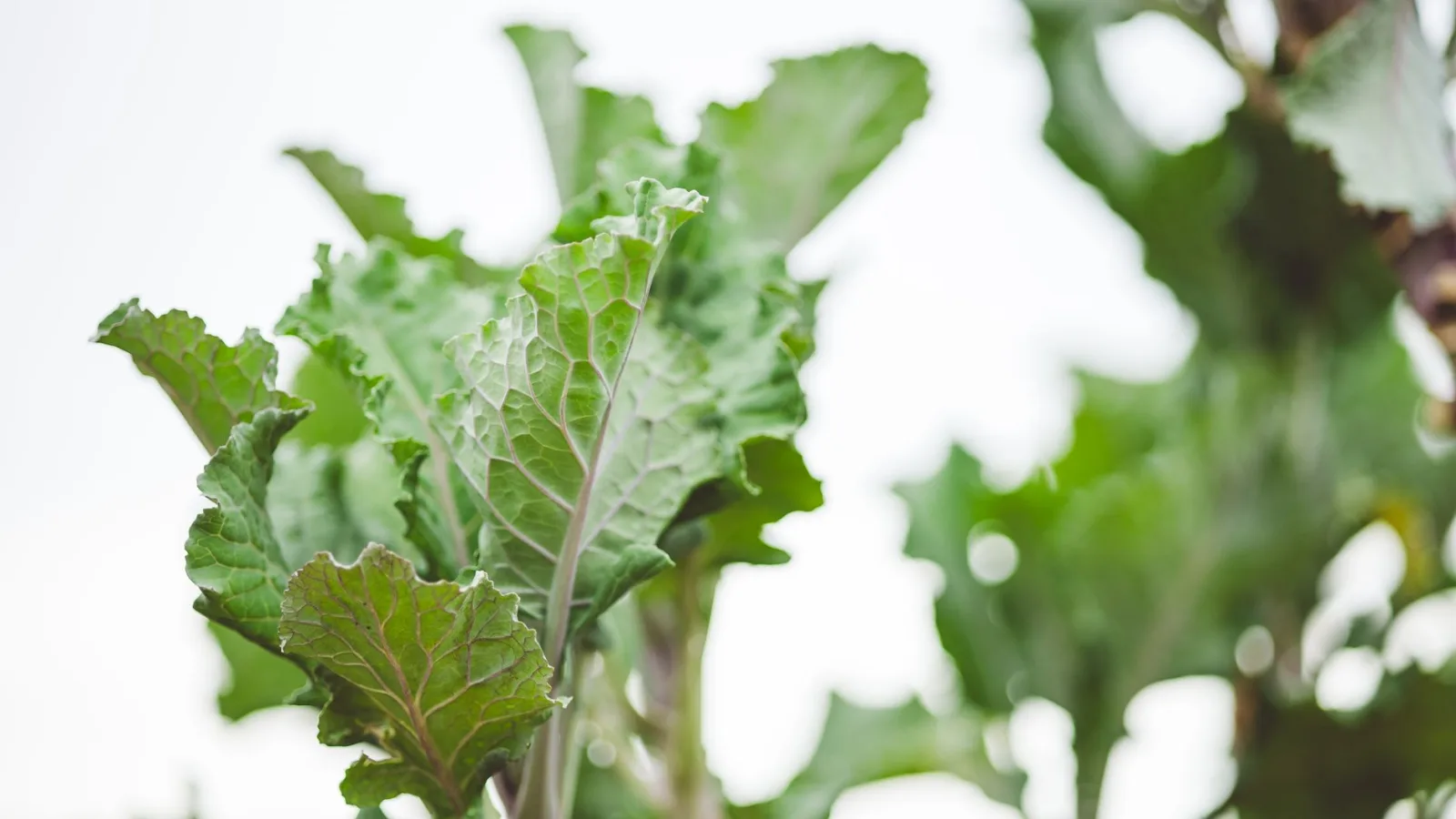
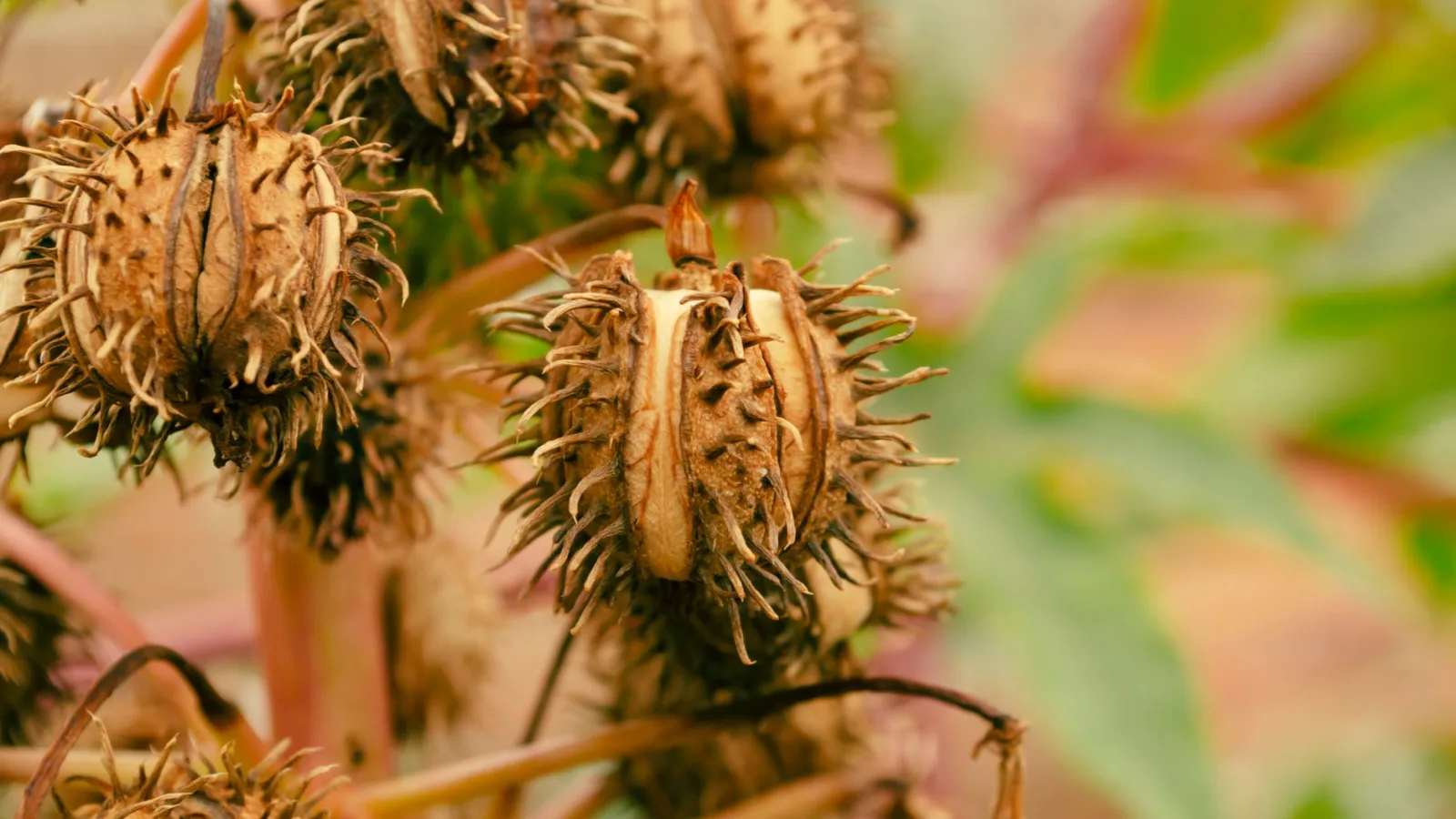
After a frost or two, the castor bean's huge leaves turn black and droop, and all that's left at the stem tips are spiny brown pods. As the pods dry, they split open on their own and scatter seeds across the soil around the plant. Castor bean can't handle frost, so in temperate climates it's grown as an annual. In the Northern Hemisphere, if you sowed in April or May and picked leaves from July through September, late fall is when the most seeds end up on the ground. Commercial growers raise castor for oil mostly in India, Mozambique, China, Brazil, and Ethiopia. Home gardeners usually plant just a few, either to harvest the leaves (a traditional cooked green in Korea) or to show off the dramatic foliage.
A Seed That Looks Like a Bean, or a Tick
Castor seeds are oval, about the size of a pinky fingernail, with a glossy coat mottled in brown, gray, and white. To a child they look like beans or marbles, so they're easy to pick up. The Dongui Bogam, Korea's 17th-century medical classic, notes that the seed resembles the ticks that latch onto cattle and describes it as mildly toxic. The genus name, Ricinus, is also Latin for "tick."
Today we know the toxin is ricin, a protein inside the seed. The U.S. Centers for Disease Control and Prevention (CDC) notes that accidental ricin exposure is rare except when someone eats castor beans. A seed swallowed whole, with its coat intact, is thought to release less toxin. A chewed or cracked seed releases more. But even someone standing right beside a child or dog may not be able to tell whether a seed was chewed. Don't assume everything is fine just because you think it went down whole.
If You See It Go in Their Mouth: What to Report When You Call
If you see someone swallow a seed, or even suspect they did, call your local emergency number or poison control center right away, even if there are no symptoms. Remove any pieces still in the mouth and have them rinse with water. Don't try to make them vomit unless the poison center tells you to. When you call, be ready to share the following:
- How many: If they pulled apart a pod that wasn't fully dry, count the seeds left over. Each pod holds three, so you can estimate how many are missing.
- Chewed or not: Check whether anything was spit out, and look for bits of cracked seed coat around the mouth.
- When: Write down the time it was swallowed.
- Who: Give the person's age and weight.
- What: Say it was castor bean (castor oil plant), Ricinus communis.
If you head to the hospital, bring any remaining seeds or pods in a bag. Once the medical team sees the actual plant, you won't have to spend time describing it.
Why You Shouldn't Wait for Symptoms
According to the CDC, the first symptoms after swallowing ricin usually appear within 10 hours. Vomiting and diarrhea come first, and they can progress to bloody diarrhea, severe dehydration, and low blood pressure. For the first few hours, the person may seem perfectly fine. Deciding they're okay during that window only delays the call. The CDC states that there is no antidote for ricin. Hospital care means replacing fluids and treating symptoms as they appear. If you're already at the hospital before symptoms start, that care can begin from the very first sign.
Swallowing castor oil from the drugstore is a different matter. Ricin is a protein that doesn't dissolve in oil, and commercial castor oil is processed so the protein doesn't carry over into it. The main fatty acid in castor oil is ricinoleic acid. The leaves are a different part of the plant, too. They're boiled, soaked, and dried to make muk-namul (preserved dried greens), and we've laid out the preparation steps in the castor bean entry in the Homiclub Crop Guide. The seeds, however, are never food, no matter how they're prepared.
Dogs, Cats, and Castor Meal Fertilizer
The American Society for the Prevention of Cruelty to Animals (ASPCA) lists castor bean as toxic to dogs, cats, and horses. If your pet swallowed or chewed a seed or pod, gather the same details: how many, what time, and the animal's weight. Then call your veterinarian or an animal poison control hotline. Animals can be slow to show symptoms, too.
Even if you don't grow castor bean, there's something to check. Castor meal, the residue left after oil is pressed from the seeds, is used in organic fertilizers, and ricin can remain in that residue. If the ingredient list on a fertilizer bag includes castor meal or castor pomace, keep it out of yards and containers your dog can reach. Granules scattered on the soil are easy for a dog to snap up.
Take a photo each of the leaves, the spiny pods, and the mottled seeds, and save them on your phone labeled "castor bean (castor oil plant), Ricinus communis." That way, even if you're making a call in the middle of the night, you won't be fumbling for the plant's name.
Sources: U.S. Centers for Disease Control and Prevention (CDC), "Facts About Ricin" · ASPCA Animal Poison Control, Toxic and Non-Toxic Plants List · Dongui Bogam, Herbs section (草部), Castor Seed (萆麻子) · Homiclub Crop Guide