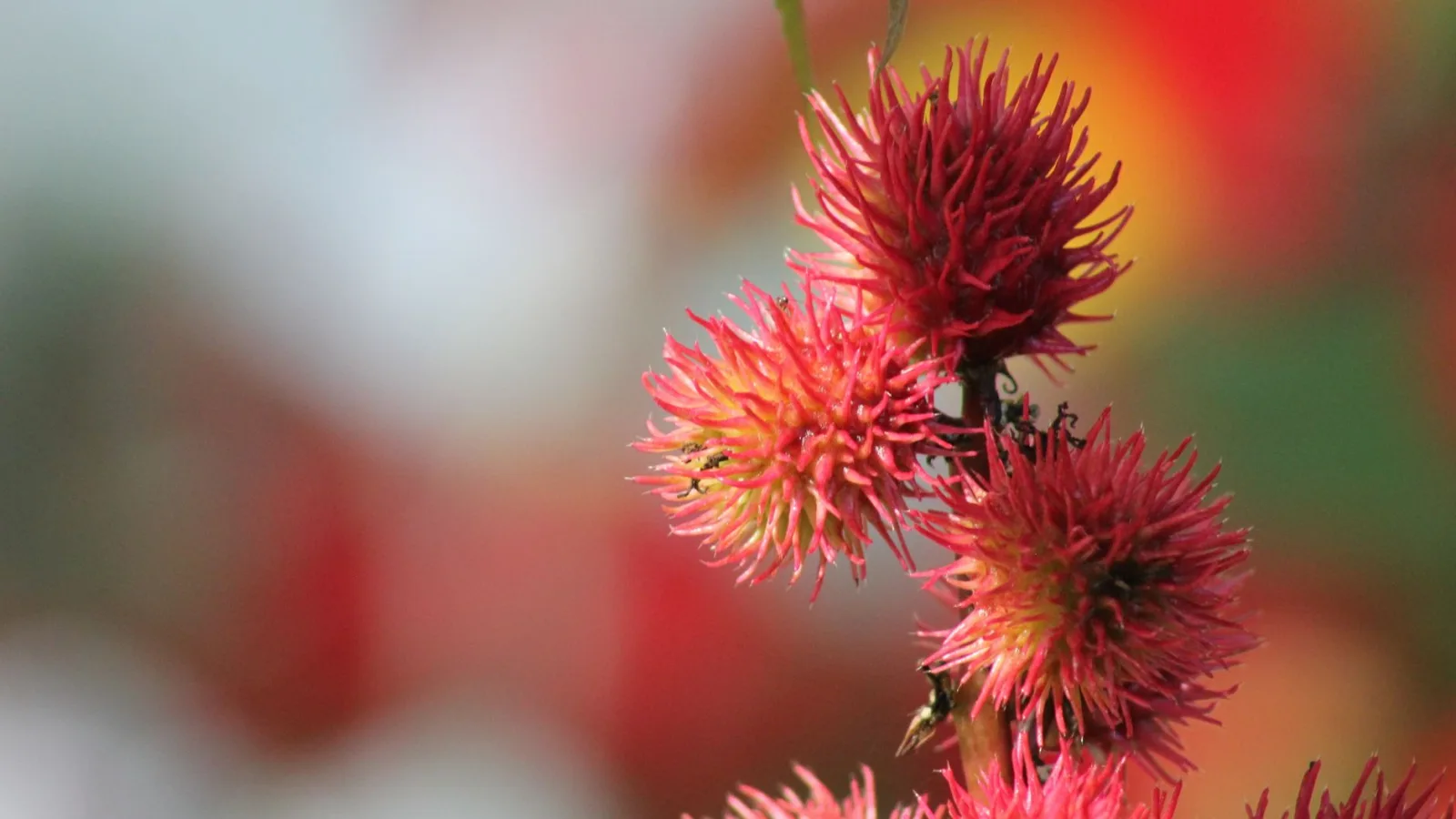
Come September, the castor plants along the edge of the field are setting fruit. The bristly pods dry to a dull red, and inside them the mottled seeds harden. The leaves you picked back in summer have already been boiled, dried, and tucked away in a sack — but standing in front of what's left on the plant, a lot of gardeners find their hands stop.
The questions people ask about castor bean (Ricinus communis) tend to land in the same place. If the leaves are eaten as a vegetable, why is everyone told never to touch the seeds? And castor oil has been in use forever — what makes that different? The answer changes depending on which part of the plant you're holding, so let's take them one at a time.
The seed — don't eat it
Castor seeds contain ricin, a protein toxin. Poisonings from chewing and swallowing no more than a few seeds have been reported in several countries. So: don't eat the seeds, don't shell them, don't grind them, and don't chew them. No amount of preparation turns this part of the plant into food.
The mottled pattern is handsome enough that children really do pick the seeds up thinking they're beans. Once the fruit ripens, cut the pods off whole and clear them out, and never leave seeds within reach. They're dangerous to dogs, cats, and farmyard animals too, so don't plant castor at all where animals come and go.
Why the pressed oil is a separate story
The fatty acid that makes up castor oil is ricinoleic acid. Ricin is a protein; ricinoleic acid is a fat. They come out of the same seed, but they behave nothing alike. Commercial pressing includes a dedicated step to keep that protein from carrying over into the oil. Which is why using pressed castor oil and eating a seed outright are two different conversations entirely. Crushing or grinding seeds at home to squeeze out oil skips that step. Don't.
The Dongui Bogam, the seventeenth-century Korean medical compendium, lists the plant in its herb section as bimaja (萆麻子), with the vernacular name written as ajukkari. It calls the seed neutral in nature, sweet and pungent in flavor, and slightly toxic, and it even records a preparation: boil in salt water, slip off the hull, use only the kernel. What the old medical books wrote down is not what we'd conclude today.
The leaf — boil, soak, dry
Castor leaves are never eaten raw. You boil them, rinse them several times, soak them in water to leach them, and then dry them. Throw the boiling water out. Nothing that uses the raw leaf as it comes — ssam wraps, quick-dressed salads — has any place here. Castor also contains an alkaloid called ricinine. What the old records don't tell us is exactly which compounds the boiling and soaking reduce, or by how much. Which is reason enough not to skip any part of the process.
Mungnamul — dried greens stored through winter and rehydrated to eat — is made just this way. The chewy, slightly tough bite of the dried leaf comes from its fiber.
- Heat a little perilla oil, add the soaked leaves and turn them in the pan, then splash in a bit of water, cover, and let them steam through. It takes the rough edge off.
- Season with guk-ganjang (Korean soup soy sauce) rather than salt. Add minced garlic, work it through with your hands, then stir-fry.
- Wrapping the leaves around ogokbap, five-grain rice, like a ssam has been part of the Jeongwol Daeboreum table — the first full moon of the lunar year — for generations.
If you've planted it, deal with the fruit first
In the Northern Hemisphere, castor goes in the ground in April or May, with leaves harvested from July through September. If leaves are what you're after, you're better off not letting the plant fruit at all. Cutting the flower stalks early also keeps seeds from dropping and coming up wherever they please the following year. Planting months, harvest months, and the full preparation sequence are laid out in the castor bean entry in our crop guide.
Stripping ripe pods bare-handed drives the spines into your skin and sends seeds flying. Put on gloves and cut the pods off whole with scissors. Don't toss the cut pods on the compost pile — bag them with the household trash. The places that grow castor at scale for oil are India, Mozambique, China, Brazil, and Ethiopia. In a home garden, a few leaves is plenty.
If there's a castor plant standing at the edge of your garden today, start with gloves and scissors and cut the ripe pods away. The leaves can wait until next summer.