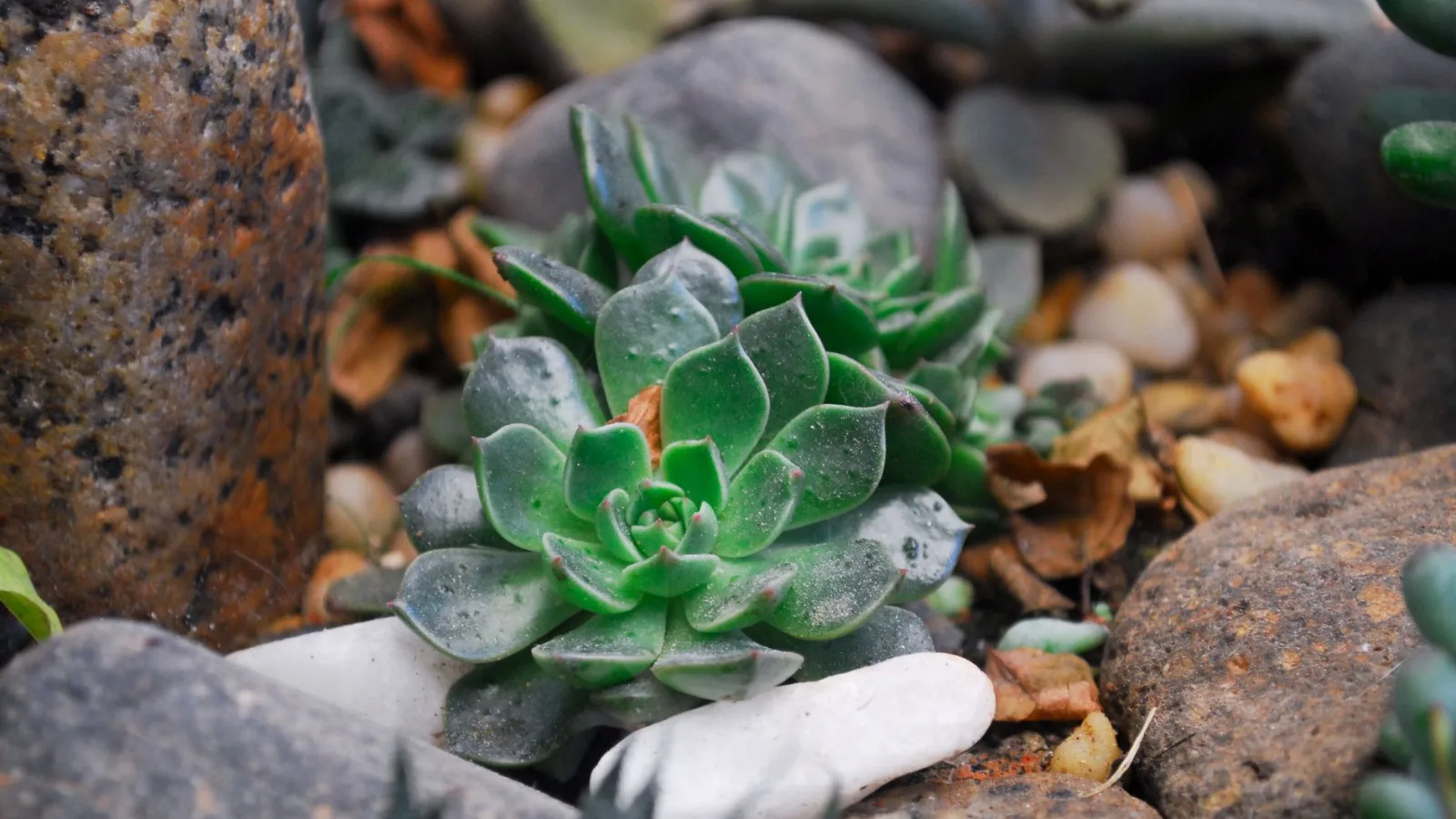
A rooftop planter in September tells you exactly how it handled the summer. The lettuce went mushy under the monsoon rains; the perilla shot up leggy and its stems turned woody. But one shallow pot in the corner is a different story. The rock pine, leaves folded tight in overlapping layers, is sitting right where you left it — and it has had almost no water all season. Now is the time to bring it in.
Start by Making a Dry Place
Bawisol, or rock pine (Orostachys japonica), is a perennial succulent in the stonecrop family. It makes its living where soil is thin and dries fast: rock crevices, the tiles of an old roof. Korea is its main home, and it also grows wild in China, Japan, and Russia. Which means your pot does not need to be deep. Use a shallow one and mix in more than half coarse sand or granite grit (masato) so water runs straight through. A south-facing windowsill or a rooftop with long hours of sun is all it asks for.
Transplants are easier than starting from seed. In the Northern Hemisphere, set the rosettes out in April or May, covering them with just enough soil to bury the roots. The plant's sweet spot is 15–25°C (59–77°F), and it will grow anywhere between 0 and 32°C (32–90°F). In the cool of spring and fall, the leaves plump up.
You're Better Off Forgetting the Watering Can
The leaves are thick because they are holding water inside them. Let the roots sit wet and they rot in no time. Wait until the soil is bone dry, give it another day or two, and then water once — just enough that it runs out the bottom of the pot. Empty the saucer every single time.
Chew a rock pine leaf and you'll taste something sour. That flavor comes from the same habit of clinging to dry places. The plant opens its stomata at night to take in carbon dioxide, stores it as organic acids like malic acid, and spends that down during the day. It's crassulacean acid metabolism — CAM for short — common throughout the stonecrop family. It loses less water that way, but the acids accumulate overnight, so leaves picked early in the morning will taste noticeably sharper.
Getting Through Monsoon Season and Winter
The riskiest stretch of the year is jangma, the summer monsoon. Roots that stay wet for days on end will rot from the crown down. During a long rainy week, move the pot under the eaves or bring it onto an enclosed balcony. On midsummer days above 32°C (90°F), shift it into shade so that wet soil and scorching sun don't gang up on it.
Winter is less of a worry. Rock pine curls its leaves inward and rides out the cold outdoors. This is a plant that used to overwinter on old tile roofs. A pot does freeze more readily than open ground, though, so tuck it against a wall or lay fallen leaves over the soil.
Harvest and Dry, Starting in September
Harvest runs September through November in the Northern Hemisphere. To use a whole rosette, cut it close to the soil and leave the small offsets growing beside it — they'll fill the spot next year. The Donguibogam, the 17th-century Korean medical compendium, says to dig the plant in the sixth or seventh lunar month and dry it in the sun.
Spread the pieces in a single thin layer, not overlapping, and dry them all the way through so mold can't take hold. Once fully dry, store them in an airtight container somewhere cool. Dust settles between the leaves, so any rosette you plan to eat fresh should be rinsed under running water, turning it over as you go.
At the Table
- Raw — Rinse the young rosettes and scatter them over a salad. The sourness and the crisp snap are pronounced enough that you don't need a heavy dressing.
- Pickled in vinegar or maesil-cheong (green-plum syrup) — All those organic acids make it a natural for pickling. Wash the leaves and dry them completely before they go into the jar, or they'll turn soft; after about two weeks the sourness spreads evenly through.
- Dried, as tea — Steep a small amount of thoroughly dried leaves in 200 ml (about 7 oz) of hot water.
The Donguibogam lists the plant in its Herbs section (草部) under the name jagyeophacho (昨葉何草). It describes the plant as neutral in nature, sour in taste, and non-toxic, and it records where another of its names came from: because it grows on old tile roofs and looks like a pine tree from a distance, it was called wasong (瓦松), "roof pine." This is the account of a historical medical text and differs from modern medical judgment. Compositional analyses have identified flavonoid glycosides in the kaempferol and quercetin families, along with findings that total amounts vary widely depending on where the plant grew and when it was picked. That is an analysis of composition only, and has nothing to do with preventing or treating disease.
Sources: Donguibogam, Herbs section (草部), jagyeophacho (昨葉何草) · Rural Development Administration, Nongsaro
Today, start by emptying the water standing in the saucer. If the September sun has fattened up the leaves, rinse a few of the young ones for tonight's salad — and spread the rest out thin to dry. You'll want them come winter.