
Tangaek — Decoctions · Herbs
葫蘆巴 Fenugreek
 Related Crop · Fenugreek →
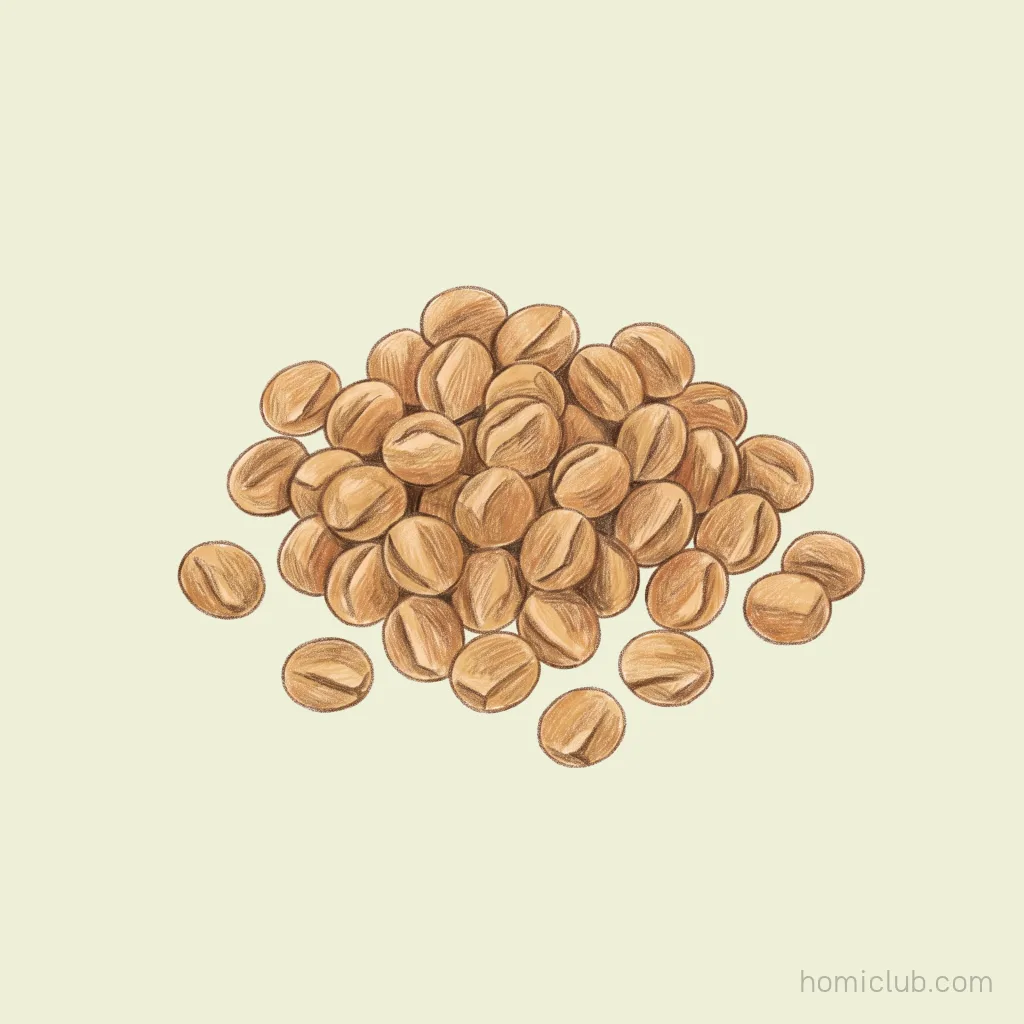
Horopa is the seed of a legume. The text passes on a claim that it is the seed of a radish from the southern barbarian lands, and marks it 【唐】 as an import from China. It is fenugreek, the seed still blended into Indian curry powders.
Original, read line by line 東醫寶鑑 · Tangaek — Decoctions vol. 3
-
性溫, 味苦, 無毒.
Its nature is warm, its taste bitter, and it is non-toxic.
HomiclubHoropa is the seed of an annual legume known today as fenugreek. It goes into Indian curry blends and Middle Eastern spice mixes, and toasting brings out a sweet aroma resembling maple syrup.
-
治腎虛冷, 腹脇脹滿, 面色靑黑.
It treats vacuity cold of the sin (腎, kidney), distension and fullness of the abdomen and flanks, and a blue-black complexion.
-
又云, 治元藏虛冷氣, 爲最要.
It is also said that for treating vacuity cold qi of the wonjang (元藏, root viscus) it is the most essential.
-
或云, 南蕃蘿葍子也. 酒洗, 微炒用. 《本草》
Some say it is the radish seed of the southern barbarian lands. Wash it in liquor and use it lightly parched. 《Boncho (本草)》
HomiclubNambeon was the old term for the lands beyond the southern sea routes. Fenugreek is native to the Mediterranean and West Asia and is a legume, not a radish, so the old identification seems to rest on the similar look of the seed.
-
得茴香ㆍ桃仁, 治膀胱氣作痛, 甚效. 《湯液》
Combined with hoehyang (茴香, fennel) and doin (桃仁, peach kernel), it is highly effective for treating pain arising from bladder qi. 《Tangaek (湯液)》
Related Crop
Fenugreek →
Reading on Fenugreek
Herbs — more entries
This is a cultural and historical record from a classical text, not a claim about any food’s effects. Nothing here is a health supplement or intended to prevent or treat disease. Consult a medical professional about health concerns. · Text: Korean Medicine Classics DB · Reading: Homiclub