
Tangaek — Decoctions · Herbs
馬勃 Puffball Mushroom
 Related Crop · Puffball Mushroom →
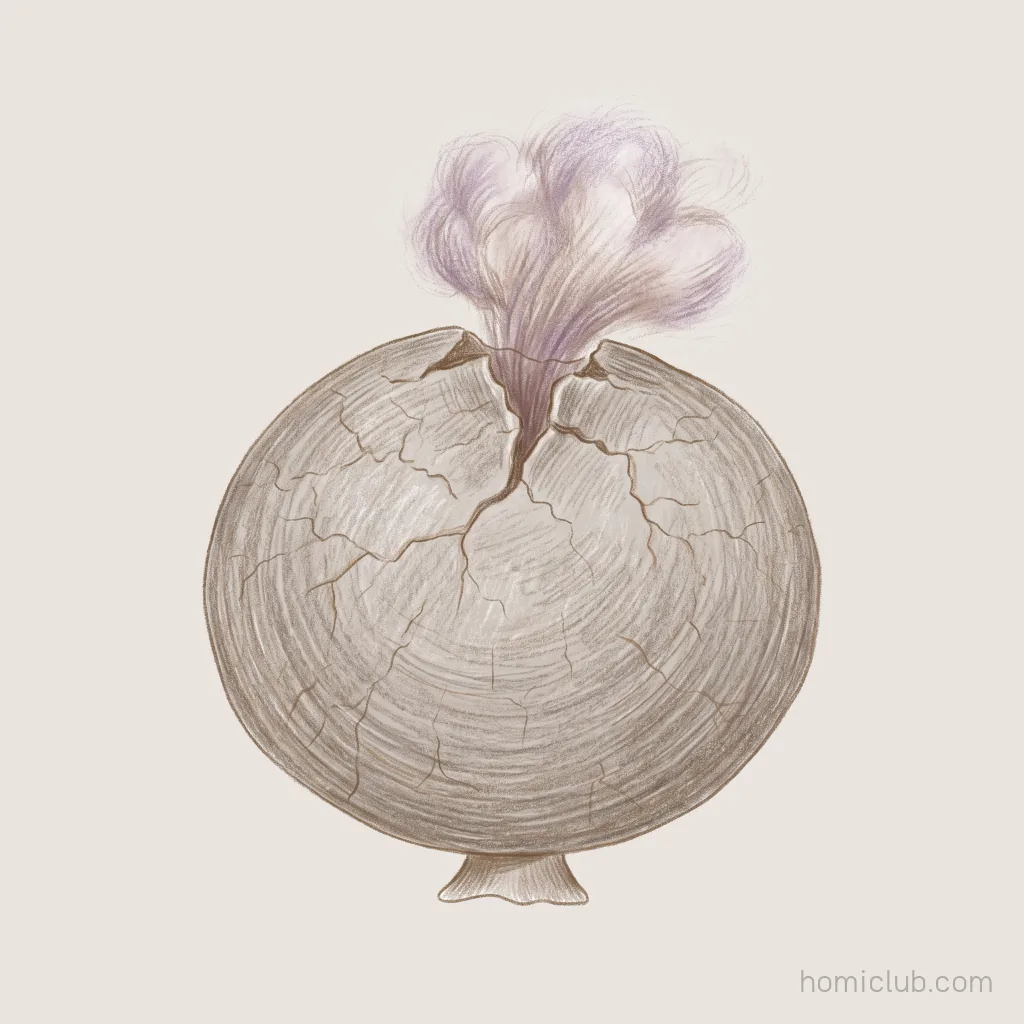
Mabal is the dried puffball mushroom. It springs up on damp ground and rotting wood, soft and wadded inside; press a ripe one and a purple cloud of spores puffs out. Dongui Bogam ranged their size from a peck measure down to a pint measure.
Original, read line by line 東醫寶鑑 · Tangaek — Decoctions vol. 3
-
性平, 味辛, 無毒.
Its nature is neutral, its taste pungent, and it has no toxicity.
-
主喉閉, 咽痛, 及惡瘡.
It is used chiefly for throat obstruction (喉閉), sore throat, and malignant sores (惡瘡).
-
生濕地及腐木上,
It grows on damp ground or on rotting wood.
HomiclubPuffballs grow almost all over the world, and in Korea they come up after rain from July to October.
-
虛軟如紫絮,
It is hollow and soft, like purple floss.
HomiclubA puffball whose inside has turned soft as cotton and taken on color has fully ripened its spores. Only young ones that are plain white throughout when cut lengthwise are edible; if the outline of a cap and stem shows inside, it is the young egg of a deadly Amanita and must be thrown away.
-
大如斗, 小如升,
The large ones are the size of a mal (斗, peck) measure, the small ones a doe (升).
HomiclubThe common puffball (Lycoperdon perlatum) is only a few centimeters across. The large ones said to be the size of a mal measure look like giant puffballs that grow to tens of centimeters, so the original may have grouped several species of different sizes under one name. The Chinese Pharmacopoeia likewise lists three species together as mabo.
-
彈之紫塵出. 《本草》
When flicked, a purple dust comes out. 《Boncho (本草)》
HomiclubInhaling a large amount of spores from ripe puffballs at once can inflame the lungs. In Wisconsin in 1994, eight teenagers who inhaled and chewed puffballs were treated for cough, fever and shortness of breath, and five of them were hospitalized. Even when children stamp on puffballs for fun, faces are kept well away.
Related Crop
Puffball Mushroom →
Reading on Puffball Mushroom
Herbs — more entries
This is a cultural and historical record from a classical text, not a claim about any food’s effects. Nothing here is a health supplement or intended to prevent or treat disease. Consult a medical professional about health concerns. · Text: Korean Medicine Classics DB, collated with the Jangseogak copy of the 1613 wooden movable-type edition · Reading: Homiclub