

- Type
- Alliums
- Difficulty
- Easy
- Season
- Fall·Summer
- Sowing
- From bulb
Rakkyo
Allium chinense
Soluble fiber — the bulb that gets pickled as rakkyo
Rakkyo looks like a Korean chive above ground, but underneath it forms a plump white bulb, and the plant comes back year after year. Most people meet it as the tart little pickle served beside sushi or Japanese curry. The Donguibogam describes it as a field crop resembling chives but with broader leaves, more white at the base and no fruit, and notes that although it is pungent it leaves no lingering odor, which is why Taoist practitioners ate it regularly. Plant the bulblets in autumn, let them sit through winter, and dig them the following early summer; almost nothing is required in between, which makes it a good fit for a balcony pot.
Year-Round Calendar
- 1
- 2
- 3
- 4
- 5
- 6
- 7
- 8
- 9
- 10
- 11
- 12
- 8
- 9
- 6
- 7
Where It Grows
- Origin Known in China as xie or jiaotou; Hunan, Jiangxi, and Hubei are its growing areas. It is grown for pickling on the largest scale.
-
Main producer
Known in Japan as rakkyo; the sand dunes of Tottori and the sandy fields of Mikuni in Fukui are its celebrated growing areas. Harvest May, June
- 5
- 6
-
Major producer
It is grown on a small scale in Jeju, South Jeolla, and South Gyeongsang. Harvest June, July
- 6
- 7
The plant is native to south-central China and reached Korea and Japan long ago. Commercial cultivation today is almost entirely confined to these three countries, and among them it is China that grows the crop in bulk as raw material for pickles. A substantial share of the raw rakkyo for pickling on the Japanese market is also Chinese-grown.
- Optimum
- 12~22℃
- Range
- 0~28℃
- Hardiness
- Hardy
Rakkyo grows during the cooler months and rests in midsummer, when its leaves die back. It is highly cold-hardy, overwintering (staying in the field through winter) with its leaves still attached, and from the following spring its bulbs begin to swell. In well-drained sandy soil the bulbs set evenly, which is why coastal sand dunes have long been its growing grounds.
In Korea Central Korea and south
It is grown on a small scale in the southern regions — Jeju, South Jeolla, and South Gyeongsang. Only in well-drained sandy loam do the bulbs grow large, and since the crop must overwinter, areas from central Korea northward, where the ground freezes deep, are unfavorable.
How to grow
- Light
- Six hours a day or more. Too little light and you get long leaves over bulbs that never fatten.
- Soil and depth
- Use a free-draining sandy loam. It tolerates acidic ground reasonably well. Choose a pot at least 25cm deep.
- Spacing
- Twelve to fifteen centimeters between plants. Set one bulblet per station for large bulbs, or two to three together if you want lots of small ones. Plant them 5cm deep.
- Watering
- Keep it damp for the first two weeks after planting. Through winter it needs almost nothing. Only during April and May, while the bulbs are swelling, does it matter that the soil not dry out.
- Feeding
- Mix a slow-release base fertilizer in at planting, then top-dress once in March and once in April. Too much nitrogen and you get leaves instead of bulbs.
- Harvest
- Dig the following June or July, once about half the leaf has yellowed. Three days later the bulbs sprout again and soften, so clean and salt them the same day you lift them.
What makes the difference. This is a crop you bury in autumn and then forget about all winter. There are exactly two days of work: planting day and digging day. Put a few bulbs straight back in the soil when you harvest and you will have next year's planting stock without buying any.
Common problems
- Onion maggot You will see Leaves yellow and wilt; lift the plant and the base of the bulb is soft and rotting What to do Do not use compost that has not finished breaking down. Remove affected plants together with the soil around them.
- Onion thrips You will see Silvery-white streaks on the leaf surface What to do They multiply in dry conditions, so mist the leaves, and hang sticky traps if the problem persists.
- Downy mildew You will see Hazy white mold on the leaves, drying back from the tips What to do Keep prolonged rain off the plants and leave space between them. Cut damaged leaves away immediately.
This page describes how a crop is grown and used. It does not claim health effects for any food, nor is it intended to prevent or treat disease. Component and study notes are references only and do not mean the same result occurs in people. Consult a medical professional about health concerns.
Health Benefits
What the Donguibogam records. Rakkyo appears in the Donguibogam's vegetable section as hyaechae, recorded as warm in nature, pungent and bitter in taste, and free of toxicity. The entry also explains an old name, chaeji, calling it the lingzhi among vegetables. This is a record from a seventeenth-century medical text, not a modern medical judgement.
Research on fructan. In vitro and animal studies on rakkyo fructan have reported that it serves as a fermentation substrate for gut bacteria. That does not mean the same result follows from the few pickled bulbs a person actually eats.
Research on saponins. Studies on saponins isolated from rakkyo have reported observed antioxidant activity at the in vitro level. The finding comes from an isolated compound and should be kept separate from what eating the vegetable does.
Nutrition
- Fructans (soluble fibre) (18.6 g per 100 g) — Reach the large intestine and ferment there
- Sulphur compounds (The pungent, odorous fraction) — The scent that rises when you cut it
- Saponins (In the bulb) — Leave a bitter finish
- Potassium (About 230 mg per 100 g) — An electrolyte mineral
18.6g of soluble fiber per 100g Raw rakkyo carries 20.7g of dietary fiber per 100g, and 18.6g of that is soluble (Japan Standard Tables of Food Composition, 8th revision). Very few vegetables have a soluble share anywhere near that high. Most of it takes the form of fructan, which human digestive enzymes cannot break down, so it travels intact to the large intestine. Bear in mind that a realistic serving is a few pickled bulbs, not 100g.
Sulfur compounds Cut a rakkyo bulb and you release the same family of sulfur compounds found in garlic and onion, which is where the smell comes from. The Donguibogam recorded it as a pungent vegetable that nonetheless leaves no lingering odor, and its aroma is indeed lighter than garlic's. The compounds dissolve readily in water, so in a long pickle the aroma migrates into the brine.
Saponins The bulb contains saponins, which is why eating it raw leaves a bitter finish. The two-stage pickle, salt first and then vinegar, is partly a method for drawing out that bitterness and the harsh edge along with it. Changing the brine once partway through reduces it further.
Pairings
○ Rich, oily dishes — Two or three rakkyo beside a Japanese curry or a plate of tempura is composition, not habit. The vinegar sharpness and the crunch cut the oily finish. It sits next to pickled ginger at a sushi counter for the same reason.
○ Vinegar, sugar and salt — Salt the bulbs first to draw out water, then move them into vinegar and sugar. Reverse the order and the texture goes soft. Three days after digging, the bulbs start sprouting again and lose their firmness, so begin the pickle the day you harvest.
○ Leaves in soup or porridge — The bulb is not the only edible part; the leaves work too. They are broader and thicker than chive leaves, so they keep some bite in a soup or a rice porridge. The Donguibogam likewise records eating it in soups and porridges, and blanching it for kimchi and pickles. Jjokpa (Korean Bunching Onion) · Korean Chive (Buchu / Garlic Chive)
△ Several bulbs on an empty stomach — The sulfur compounds and saponins in rakkyo irritate the stomach when a lot arrives on an empty one. The pickle is tart enough that you keep reaching for another, but three or four with a meal is about right.
△ If you bloat easily — Nearly all the fiber in rakkyo is fructan, a sugar that gut bacteria ferment in the large intestine. Anyone with irritable bowel symptoms may feel bloated after even a small amount. Start with a little and find out where your own limit sits.
△ Digging it from the wild — Rakkyo is a cultivated field crop. Go looking for similar-looking leaves on a hillside and you risk bringing home a toxic bulb such as a spider lily or a daffodil. If a cut leaf does not smell of the garlic and onion family, do not eat it. Korean Wild Chive (Dallae)
Varieties
- Rakuda (Bulb) — Japan's main variety. Large bulbs, pickled whole.
- Tama-rakkyo (Bulb) — Small and firm. For bite-sized pickles.
- Escharotte (Bulb) — Not a variety but a growing method: hilled up to blanch it, then eaten young and raw.
- Korean landrace (Bulb) — Carried on by saving one's own bulbs. Small and sharply pungent.
Source: Donguibogam, Vegetable Section (薤菜) · Standard Tables of Food Composition in Japan, 8th edition
Stories about Rakkyo
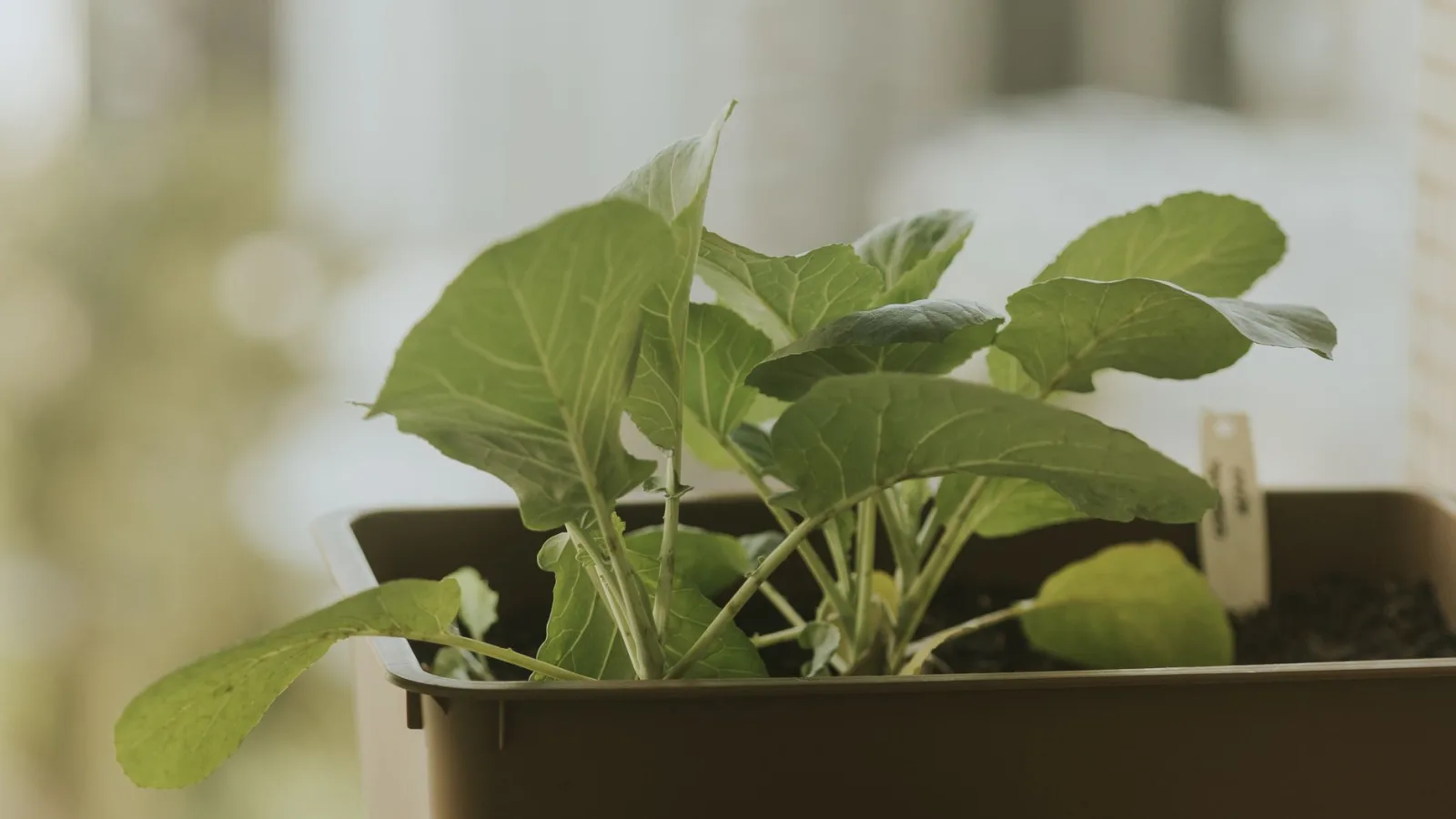
When Rakkyo Leaves You Bloated: Fructans and Finding Your Own Serving
Most of the fiber in Chinese onion is fructan, a soluble fiber that slips past your digestive enzymes and ferments in the colon — which is why a few pickled bulbs can leave you bloated. Here's how to tell stomach irritation from gas, and how to find the serving that works for your body.
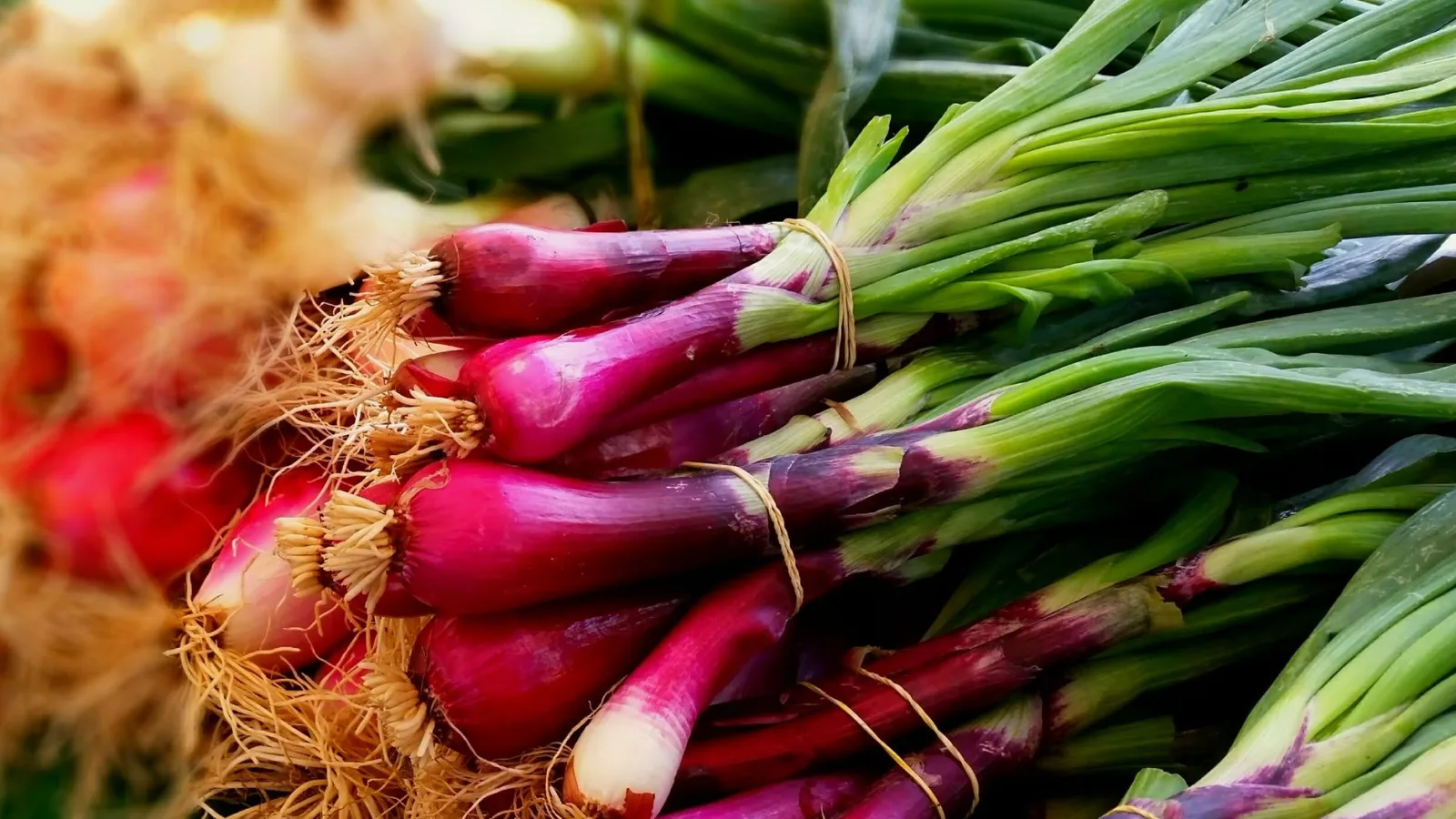
Rakkyo: What Two or Three Pickled Bulbs Do in the Body
Rakkyo (yeomgyo) is the tart little pickle served beside sushi and Japanese curry — and a nearly hands-off perennial you plant in late summer and dig the following June. Here's how to grow it, why it tastes the way it does, and what the research on its fructans and saponins does and doesn't show.