In the Northern Hemisphere, sesame stalks are cut in September and stood upright in bundles to dry. By October, you can turn a bundle upside down, give it a few good taps, and watch tiny seeds pour from the dried pods. Seeds sown in May or June have grown for three or four months and ripened back into seed. When the smell of those seeds toasting fills the kitchen, it's a sign that the year's sesame harvest is done. Toasted and pressed into oil, sesame holds on to its nutty aroma for a surprisingly long time, even after the bottle is opened. People who grow or cook with sesame often ask why it keeps so well and how to store an opened bottle.
The Lignans in Sesame Seeds
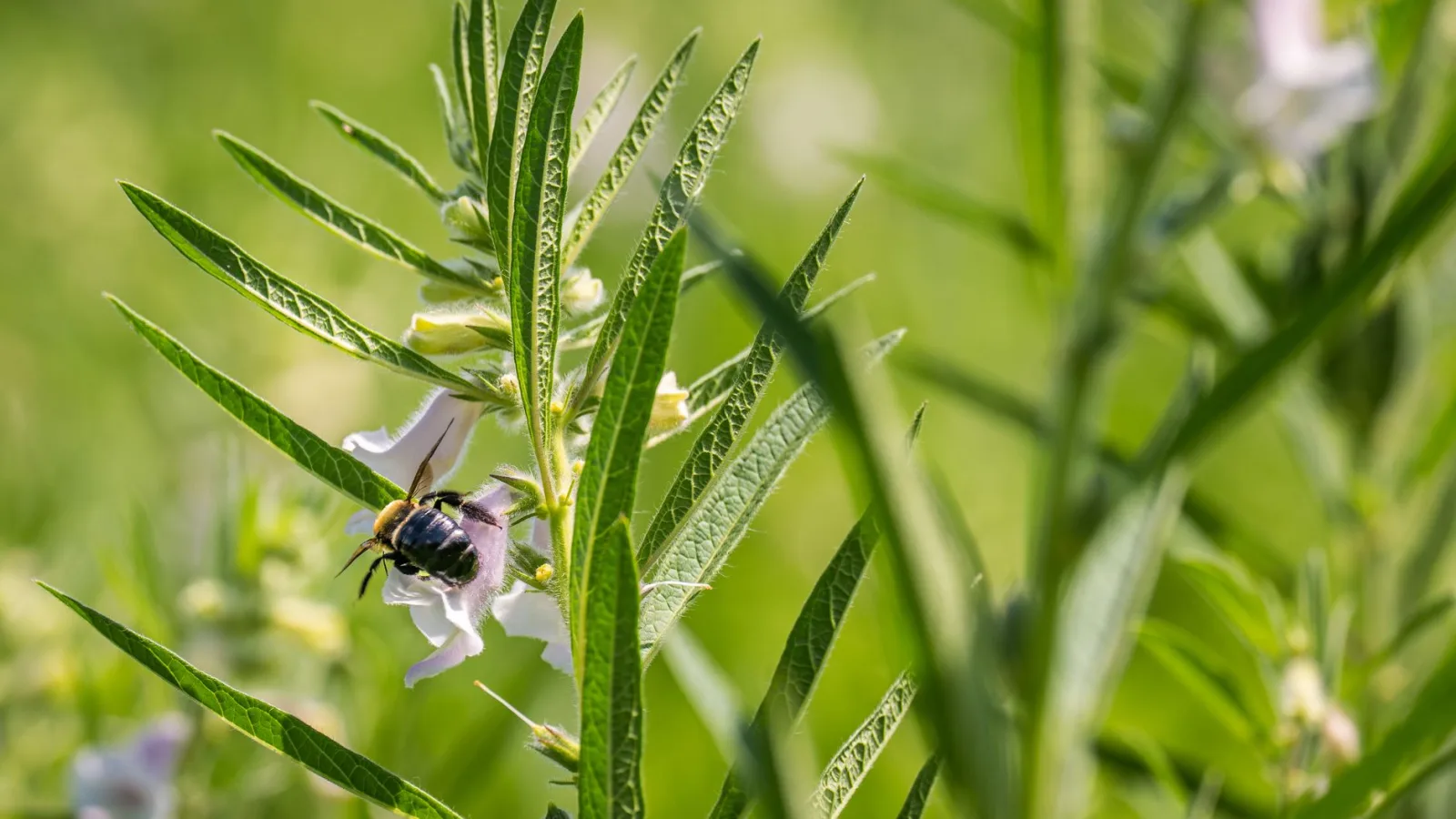
Sesame (Sesamum indicum) looks a lot like a grain, but it's an oilseed crop, not a cereal. It's grown widely in hot regions such as Sudan, India, Myanmar, Tanzania, and Nigeria. You'll find planting and harvest months in the Homiclub Sesame Crop Guide. Traditional East Asian medicine called it homa (胡麻), and the Shennong Bencao Jing, an ancient Chinese pharmacopeia, placed it in its top grade of herbs. Those are names and rankings from old texts, not a modern assessment of health benefits.
The compounds that set sesame apart belong to a family called lignans, including sesamin, sesamol, and sesaminol. The oil also contains unsaturated fats and vitamin E. Unsaturated fats change readily when they meet oxygen in the air, so the more of them an oil contains, the more vulnerable it tends to be to oxidation. The nutty aroma comes from flavor compounds that form as the seeds toast.
"Slower to Spoil": How Far Does That Hold?
In test-tube experiments, sesamin, sesamol, and sesaminol slowed the oxidation of oil. Sesame oil is rich in unsaturated fat, yet it's relatively slow to go rancid, and these lignans are often cited as the reason. Rancidity is what happens when oil breaks down from exposure to oxygen, light, and heat. The smell changes before the taste does: the nutty aroma fades, and a stale, old-oil odor creeps in.
Keep in mind, though, that all of this describes what happens to oil in a bottle. There isn't yet enough evidence to say the same compounds do the same thing inside the human body. A meta-analysis of trials in which people took sesamin as a supplement did report a trend toward lower blood lipid and blood pressure readings. But the studies varied in method and length, and their results were mixed. And because participants took supplements, the findings can't simply be applied to the sesame on your plate. For now, what we can say is this: sesame contains these lignans, and they help slow the oxidation of oil.
How to Store Your Sesame Seeds and Oil
Lignans may slow oxidation, but they don't stop rancidity altogether. The longer oil is exposed to oxygen, light, and heat, the faster it turns, so good storage comes down to limiting all three.
- After threshing, pick out any bits of dried leaf and soil, then give the seeds one more spell in the sun to dry them thoroughly. Store them untoasted in a tightly sealed jar in a cool, dark place.
- Toasted seeds and ggaesogeum (Korean toasted sesame salt) lose their aroma quickly, so make only what you'll use in a few days. Ground sesame has more surface exposed to air, so it goes stale faster than whole seeds.
- Keep sesame oil in a dark glass bottle, and cap it as soon as you're done using it. Avoid warm spots, such as right next to the stove.
- Before cooking, open the bottle and take a sniff. If you smell stale oil instead of a nutty aroma, it's best to leave it out of your food.
Stored this way, sesame oil reaches the table with its unsaturated fats and vitamin E much closer to their original state.
A Finishing Touch for Namul and Seaweed
Well-kept sesame oil and seeds earn their place in vegetable side dishes. One of the most basic banchan (side dishes) in Korea is spinach namul: blanched spinach tossed with ggaesogeum and sesame oil. The oil adds a nutty richness and helps your body absorb the fat-soluble nutrients (nutrients that dissolve in fat) in the vegetables. Add sesame oil after you've turned off the heat, or as the last step when seasoning. The less time it spends over heat, the more aroma it keeps.
Ggaesogeum is made by grinding toasted sesame seeds with salt, and a little goes a long way. A drizzle of sesame oil and a sprinkle of seeds also brings out the flavor of miyeok-guk (seaweed soup) or miyeok-muchim (seasoned seaweed salad).
Today, start by opening the bottle of sesame oil in your cupboard and giving it a sniff. If the aroma is still there, cap it tightly and move it somewhere dark. As for this year's harvest, keep the seeds untoasted and toast just what you need, a little at a time.