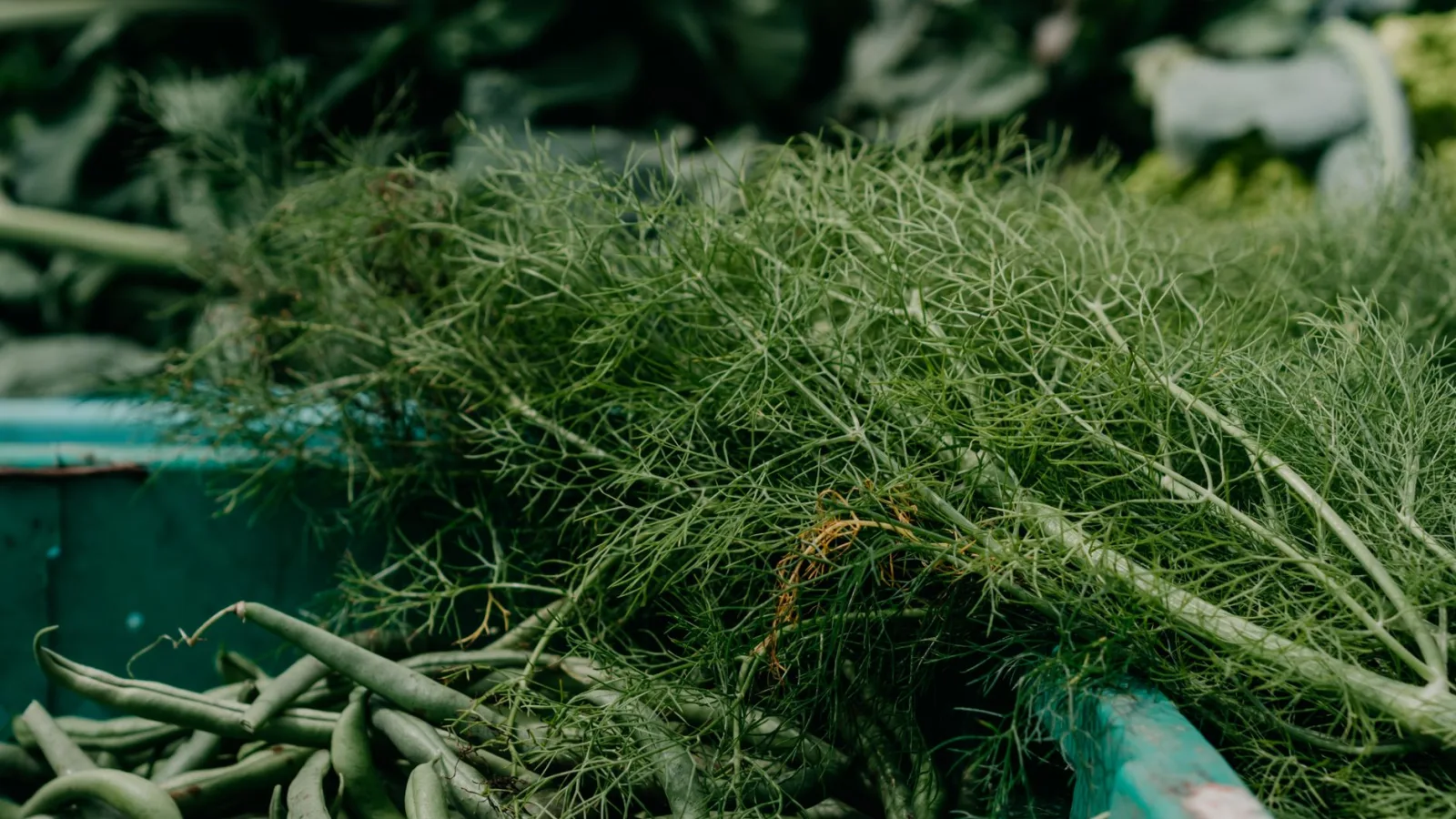
By late August, the fennel in the garden has reached its full height. The flat, spreading umbels typical of the carrot family have lost their yellow and dried to brown. In their place sit tight clusters of green fruit. Run your fingers over them and a sweet scent lifts off. In the Northern Hemisphere, plants sown in April or May set fruit sometime between July and October — and this is that window.
What the Dongui Bogam Recorded About Fennel
Fennel appears in the herb section (草部) of the Dongui Bogam, Korea's great medical compendium, under the name hoehyang (茴香). The text calls it neutral in nature, pungent in flavor, and free of toxicity. It also left a description of the plant: leaves like those of mature cilantro but far sparser and finer, growing in clumps; fruit like barley but smaller and green. It even set down when to gather — pick the fruit in the eighth or ninth lunar month and dry it in the shade. This is a historical medical record, not a modern medical judgment. You can read the original passage and its translation at the Dongui Bogam fennel entry. If you grow cilantro too, set a sprig of each side by side. You'll see exactly what the old writer was looking at.
Why Star Anise Got Its Own Entry
The same entry sets palgak hoehyang (八角茴香), star anise, apart on its own, calling its character and flavor drier and more forceful. Modern botany agrees they are separate plants: star anise is the fruit of a tree in the genus Illicium, while fennel is an herb in the carrot family. The old record had already drawn that line. A shared aroma wasn't reason enough to file them together.
Where the Old Notes Meet Modern Chemistry
Studies analyzing the essential oil extracted from fennel seed find trans-anethole as the dominant constituent, with fenchone and estragole (methyl chavicol) also present. The sweetness comes from trans-anethole; the sharp, camphor-like edge comes from fenchone. That's where the old note about a pungent flavor overlaps with the compounds actually doing the work. The same research is clear, though, that total oil yield and the ratio among constituents vary widely by cultivar, growing region, and harvest timing. Estragole is also a compound whose intake limits are still under discussion. This describes chemical composition, and has nothing to do with treating disease.
Chew the seeds whole and you take in insoluble fiber along with the flavor. The leaves and leaf sheaths go on the plate as a vegetable; the seeds go in the spice jar. One plant, two entirely different uses.
Growing and Harvesting Now
In the Northern Hemisphere, sow in April or May; the harvest runs from July through October. To save seed, wait until the umbels turn brown and the fruit hardens, then cut whole stems and hang them to dry in the shade. Drying in the shade is the same method the Dongui Bogam prescribed. Our sowing and harvest calendar, along with companion-planting notes, is on the fennel page in the crop guide.
Bringing It to the Table
Here's how to use what you've harvested.
- White fish: around the Mediterranean, cooks have long laid fennel stalks and fronds over fish on the grill. Spread dried stalks under the grate and the smoke carries the scent into the flesh. The fronds are delicate, so add them at the very end.
- Pork and sausage: Italian sausage takes ground fennel seed worked into the meat. One teaspoon (about 5 ml) of seed per 500 g of meat is plenty — any more and the flavor takes over.
- Citrus salad: toss thinly shaved leaf sheaths with orange or mandarin segments and olive oil. The acidity reins in that strong aroma and brings the dish into balance. Salt at the very end, so the fennel weeps less.
If you head out to the garden today, cut one brown, dried umbel and hang it in the shade. About ten days from now, you'll have this season's spice in hand.