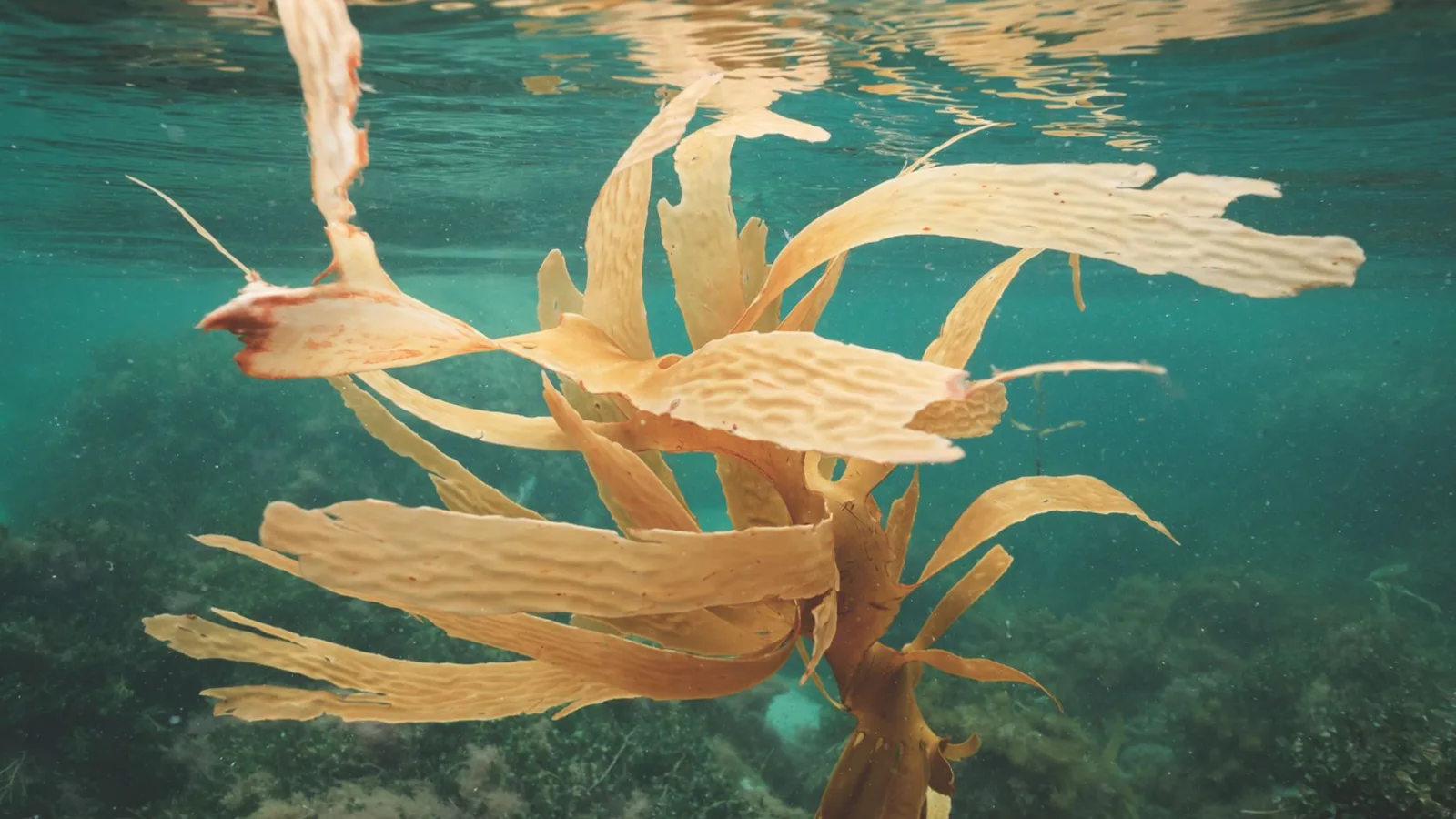
In late September, the napa cabbage in the garden opens its leaves and the Korean radishes fatten up. Anyone getting ready for kimjang (the yearly tradition of making a whole winter's supply of kimchi in one go) sets aside a bag of dried seaweed between garden chores. That seaweed is cheonggak. Dried, it's deep green, with branches that fork again and again. Soak it in water and it plumps back up and turns tender.
It's harvested from July to September in the Northern Hemisphere. You don't grow it in a garden bed. It's gathered from the sea and dried. The garden's cabbage, cucumbers, and radishes meet cheonggak in the kitchen.
An old medical text called it "deer-antler greens"
The entry for nokgakchae (鹿角菜) in the Vegetables (菜部) section of the Dongui Bogam, a classic Korean medical text from the early 1600s, covers this seaweed in a few short lines. It says the seaweed is very cold in nature and non-toxic, then adds that some describe it as slightly toxic. It says the seaweed grows in the seas off Korea's east coast. Nokgak (鹿角) means "deer antler," a name taken from its forking shape. The entry also records one caution: don't eat it over a long period.
This description comes from an older system that sorted foods by their nature and flavor. It shouldn't be read as a claim that the seaweed cures illness, and it doesn't match how we judge food today.
The name alone doesn't pin down the species
Citing folk prescriptions (俗方), the original text says the seaweed is "probably what is now called cheonggakchae" (疑是). "Probably" is a hedge. Even the source doesn't claim to know exactly which seaweed it means. Seaweeds that branch like deer antlers exist among both green and brown algae, so the name alone can't narrow things down to one species. Opinions differ on whether nokgakchae is the same plant as today's cheonggak.
So here is exactly what this piece covers: the green seaweed sold in markets today as cheonggak and mixed into kimchi seasoning, scientific name Codium fragile.
What today's analyses actually measure
Researchers have reported isolating polysaccharides that carry sulfate groups from the cell walls of green algae, including the genus Codium. The same reports include data on its mineral and dietary fiber content. Reference guides list insoluble fiber; minerals such as calcium, magnesium, and iodine; and chlorophyll, which gives the seaweed its green color.
Still, these figures tell us what's in it and how much, and nothing more. The old text's "very cold" and today's list of components are two separate vocabularies, and neither can be translated into the other. The two records agree on just one point: both treat cheonggak as something gathered from the sea and eaten, and as a supporting ingredient used in small amounts. Current evidence gives no grounds for claiming any benefit from cheonggak beyond general prevention or support.
How to use it in your kitchen this fall
Soak dried cheonggak well, then rinse it before using. Salt water and sand tend to cling to it, so change the rinse water a couple of times.
- In kimchi filling: Finely chop the soaked, rinsed cheonggak and mix it into the seasoning paste you spread between the cabbage leaves. It softens the heavy aftertaste of jeotgal (salted, fermented seafood) and makes the kimchi brine taste more even. If you add it whole instead of chopped, you'll notice its slippery texture as you chew.
- Chilled cucumber or radish soup (naengguk): Cut soaked cheonggak into short pieces and float them in a cold soup with thin strips of cucumber. Season with nothing but vinegar and salt. The color stays bright and the seaweed keeps its pleasant chew, which suits an early-autumn soup.
- Vinegar-dressed side dish (chomuchim): Toss it with vinegar, soy sauce, and sugar. The tartness tones down the briny ocean smell. Shake off excess water just before dressing so the seasoning doesn't turn thin.
When you come back in from checking on your cabbages today, put a handful of dried cheonggak in water to soak. Before you make your kimchi, take a look at our cheonggak crop guide, which covers its harvest season, ways to eat it, and its components in one place.
Sources: Dongui Bogam, Vegetables (菜部) section, entry on nokgakchae; published analyses of cell-wall polysaccharides in green algae.