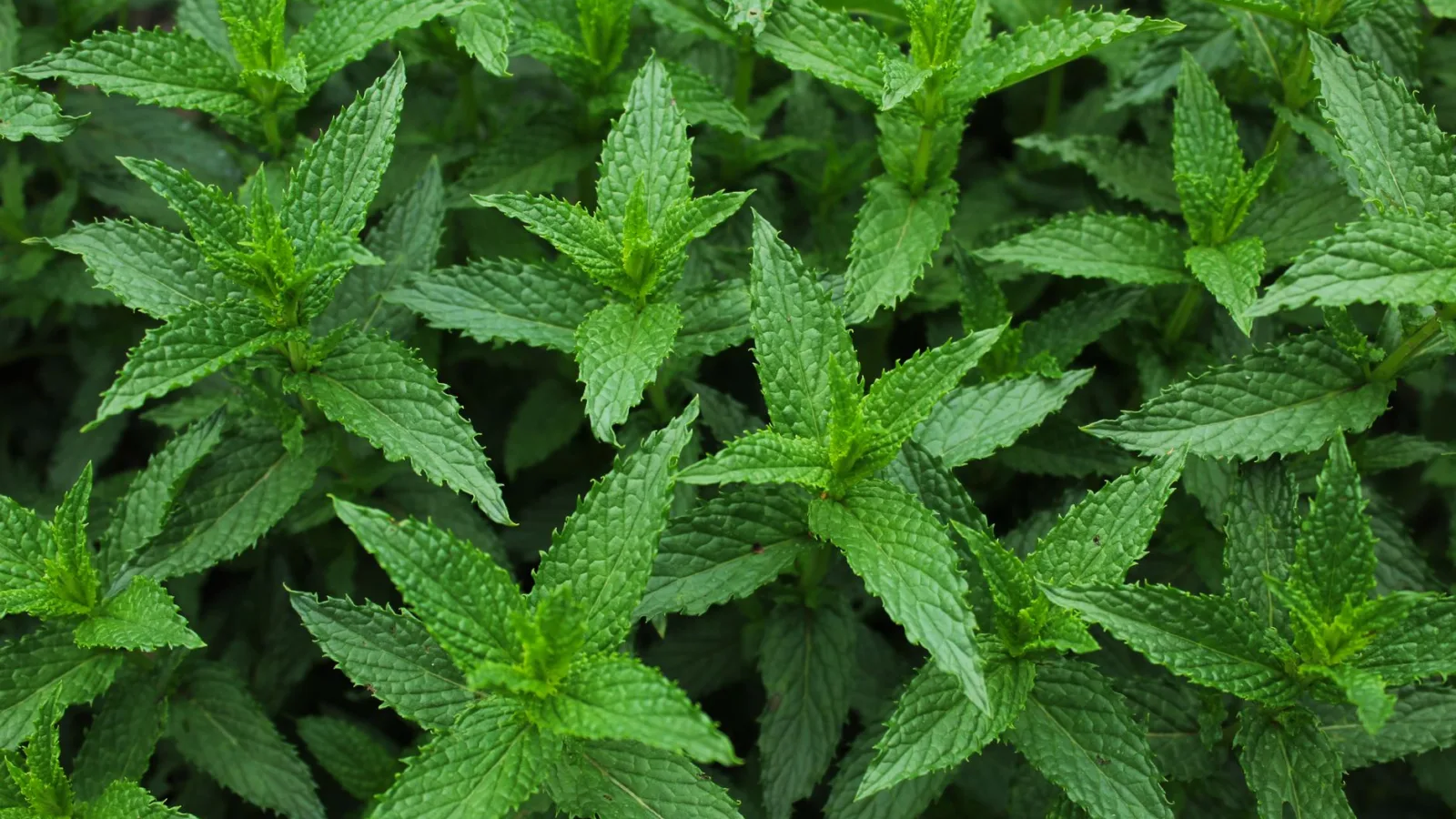
If you've ever grown two pots of spearmint side by side on your balcony, you may have noticed that the leaves don't smell quite the same when you rub them. Maybe one came from the store and the other was a gift from a neighbor. Both are spearmint, yet one is intensely fragrant and the other is faint. Why the difference? A study from Iran, which gathered spearmint from eight regions and grew them all in one place, offers a clear answer.
Where It Comes From Shapes Scent and Yield
The researchers collected spearmint from eight regions of Iran: Qom, Zanjan, Qazvin, Alborz, Kermanshah, Lorestan, Gilan, and Kerman. They planted all of it in the same field and repeated the trial three times. Every plant belonged to the same species, but the results varied widely from region to region.
- Dried flowering-shoot yield: from 1,537 kg to 3,453 kg per hectare
- Essential oil content (the source of the aroma): from 0.94% to 2.36%
- Essential oil yield per hectare: 21.3 kg from the Gilan plants, 54.8 kg from the Qom plants
The highest shoot yield was more than double the lowest, and the Qom spearmint produced more than twice as much oil as the Gilan spearmint. Two plants can share a name, but the regional line they come from can make a big difference in how strong they smell and how much you can harvest.
Leaf Color and Compounds Vary, Too
The differences went beyond aroma. Each region's plants had clearly different levels of chlorophyll, which keeps leaves green, and carotenoids, which add a yellowish tint. They also differed in flavonoids and phenolic compounds, which are linked to antioxidant activity. The plants got the same soil and the same water, yet each line built up its own mix of compounds in its leaves. For cooking, a more aromatic line may be the better choice. If you grow mint for tea or for its health benefits, a line rich in antioxidants may suit you better. Either way, it's hard to treat all spearmint as one and the same.
Some Plants Even Have Different Chromosome Counts
The most striking finding was that chromosome numbers differed by region. Six of the regional lines had 24 chromosomes (diploid), while the Gilan line had 36 (triploid) and the Kerman line had 48 (tetraploid). Spearmint is a hybrid that arose from natural crosses among several mint species, so this kind of variation comes about easily. Lines with more chromosomes sometimes have larger leaves and more concentrated compounds, which makes them useful for breeding new varieties with better fragrance or higher yields. Home gardeners don't need to act on this right away, but it's worth knowing that each spearmint plant we grow has its own distinct background.
So the next time you bring home spearmint, don't stop at a single plant. If you can, get starts from two or three different sources and grow them side by side. Rub the leaves between your fingertips and smell them. Then pick the plant with the strongest scent and sturdiest leaves, and multiply it from cuttings. Before long, you'll have a spearmint suited to your household's taste. Start today by smelling the mint on your balcony.