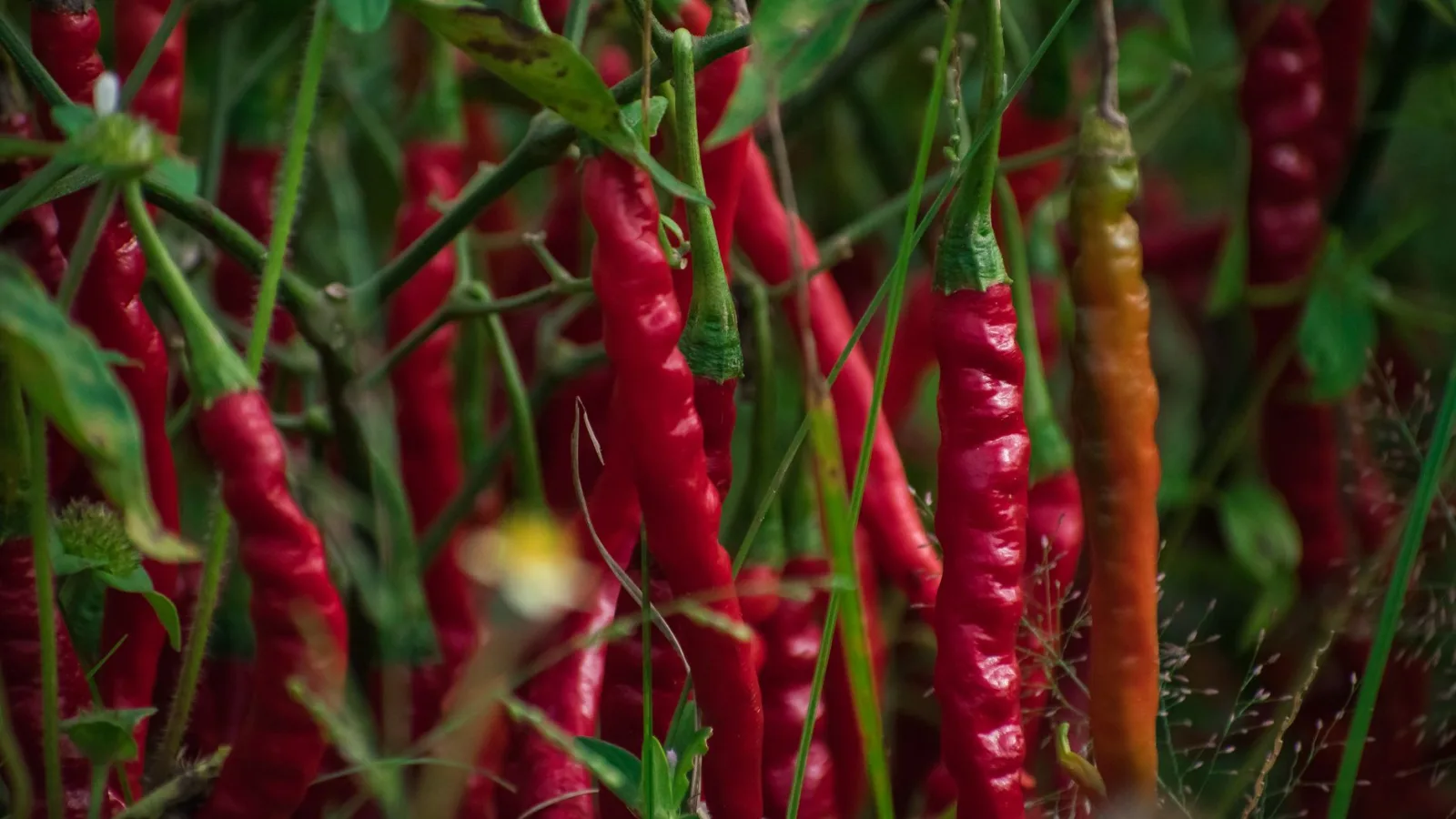
It's the first week of August, and after you skip watering for two days, the chili pepper leaves have curled inward. Give them a deep soak in the evening, and by morning they've opened back up. Even so, the plants set fewer peppers than usual that year. The leaves recover, but the nourishment they couldn't make in the meantime never comes back. The same thing happens in irrigated rice paddies.
What Happens Inside a Leaf When Water Runs Short
When water is scarce, plants close the stomata, the tiny pores on their leaves. They lose less moisture that way, but they also take in less carbon dioxide. That much you can guess just by looking at a curled leaf. The damage that lasts comes afterward. As a drought drags on, the chloroplasts inside leaf cells stop developing properly. Chloroplasts are where the plant captures light and turns it into sugar. When their development is disrupted, photosynthesis becomes less efficient, and less nourishment reaches the fruit or grain.
That's how a brief dry spell in summer ends up shrinking the fall harvest. As climate change makes droughts more frequent and longer, reducing this loss has become one of the biggest challenges in agriculture worldwide.
A Rice Gene That Does Double Duty
Breeding drought-tolerant crops has always come at a price. Varieties that put their energy into withstanding stress tended to yield less in normal years, when rain was plentiful. Breeders had to pick one: a crop that holds up in drought, or one that yields well.
The rice gene the researchers reported plays a role in both. When water is short, it helps keep chloroplast development on track. Because photosynthesis keeps running, grain yields take a smaller hit. The researchers also reported that yields held steady when water was plentiful. For the first time, there's a path that doesn't force a trade between toughness and harvest.
That said, these results come from experimental plots. The gene still has to go through field trials across several regions and several years before it can become a variety farmers actually plant. It will be a while yet before it reaches the dinner table.
What You Can Take Back to Your Garden
You can't tinker with genes in a backyard plot, but the principle works just as well there: keeping leaves photosynthesizing is how you protect the fruit. And it takes far less effort if you do the work before the drought arrives.
- Water deeply and less often, rather than giving frequent light sprinkles. Roots grow deeper and handle the next dry spell better.
- Try covering the soil with straw, dried grass, or fallen leaves. The mulch keeps the topsoil cooler in midsummer and cuts down on evaporation.
- Water early in the morning. If you water at midday, much of it simply evaporates.
- On days when the leaves are curled, hold off on side-dressing (the mid-season boost of fertilizer). When a plant is short on water, fertilizer puts extra strain on the roots.
When you head out to the garden this evening, tuck a handful of dried grass around the base of your peppers and tomatoes. Few things you can do before the next drought are this easy.