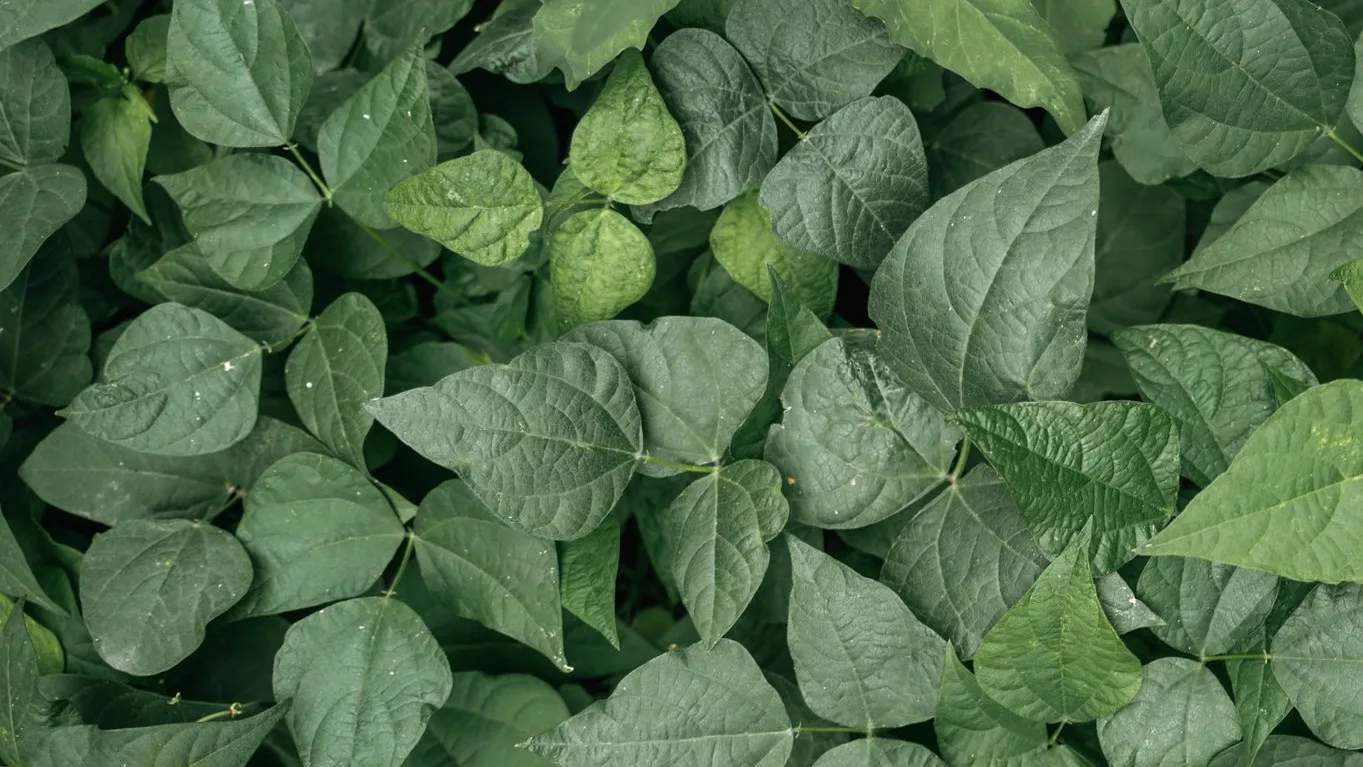
It's late September, and a few pods on my adzuki plants have turned brown. I sowed the beans in June, in the bed where I'd just dug the potatoes. The rest of the pods are still green. Adzuki pods don't ripen all at once, so you pick them in two or three rounds, taking the brown ones first. If it rains often while they're ripening, the beans can sprout right inside their pods. When rain is in the forecast, pick the brown pods before it arrives.
The adzuki bean is an annual legume. In the Northern Hemisphere it's sown in June or July and harvested in October or November. It's grown widely in China, Japan, and Korea. It does best at 20–25°C (68–77°F) and dies at the first frost. Adzuki is a short-day plant, which means it flowers as the days get shorter. So even when you sow it late, after the potatoes or garlic come out, it still ripens in time for fall. That lets one garden bed give you two crops in a single year.
Korean cooks have seldom served these beans on their own. They've usually cooked them with rice, other grains, and salt.
What's Inside an Adzuki Bean
Dried adzuki beans have about 68g of carbohydrate per 100g, including more than 10g of dietary fiber. Most of the carbohydrate is starch, and the beans have a higher share of fiber than grains do. They also contain plant protein.
When you first boil adzuki beans, the water turns red and tastes astringent. This is generally put down to polyphenols in the skins, proanthocyanidins and catechins, which leach out along with saponins, the compounds that make the water foam. That analysis tells us what the beans contain. It doesn't tell us what those compounds do in the body.
The Dongui Bogam, Korea's 17th-century classic of traditional medicine, lists the adzuki bean in its section on grains (穀部) as jeoksodu (赤小豆, "small red bean"). It calls the bean's nature neutral, and it also records other views that the bean is slightly cold or warming. It describes the flavor as sweet and sour and says the bean is not toxic. It also warns that eating it for a long time makes the body darker and thinner and the skin dry and rough. This is what a classical medical text recorded, and it differs from the view of modern medicine.
With Rice: Cook the Beans First
Patbap, rice cooked with adzuki beans, is a common dish at Korean meals. The beans add lysine, an essential amino acid that rice is low in. The same holds if you use glutinous (sweet) rice.
If you put dry beans and rice in the pot together at the start, though, the rice will be done while the beans are still hard. So parboil the beans on their own until they're about half cooked, then cook them with the rice. Make patbap in this order:
- Rinse 50g of dried adzuki beans, cover them with water, and bring to a boil. As soon as the water boils, pour off this red, astringent first water.
- Add 500ml of fresh water and simmer until a bean pressed between your fingertips is soft outside but still a little firm in the center.
- Lift out the beans. Let the cooking liquid cool and use it as the water for your rice, topping it up with plain water only as needed.
- Put the beans on top of 300g of rinsed rice and cook the rice as you normally would. The rice will turn a soft reddish color from the beans.
With Sorghum and Foxtail Millet: Grains That Tame the Astringency
Sorghum and glutinous foxtail millet have a nutty, toasty flavor that makes the bean skins taste less astringent. That pairing is the basis of susu-patteok, dumplings of sorghum flour rolled in cooked, mashed adzuki beans, which Korean families have long made for children's birthdays. You can get much the same flavor by cooking sorghum or foxtail millet into rice with the beans.
These grains cook faster than the beans do. Start the beans first, and add the grains once the beans are about half done. If you add everything at once, the grains will turn mushy while the beans stay underdone.
A Pinch of Salt for Sweet Bean Paste
Danpat is sweet red bean paste, made by cooking adzuki beans down with sugar into a filling. Made with sugar alone, it tastes flat. Add a very small amount of salt, just what you can pick up between your fingertips, and the sweetness becomes sharper. The time to add it is right before you turn off the heat. Don't add it with the sugar at the start. Add it at the end, stir once, and taste.
This week, pick the pods that have turned brown and set them out to dry. When you make your first pot of patbap, start with the parboil and pour off that first water.
Sources: Dongui Bogam, 穀部 (Grains), 赤小豆 (Adzuki Bean) · Nongsaro, Rural Development Administration of Korea · Korean Food Composition Table (National Standard)