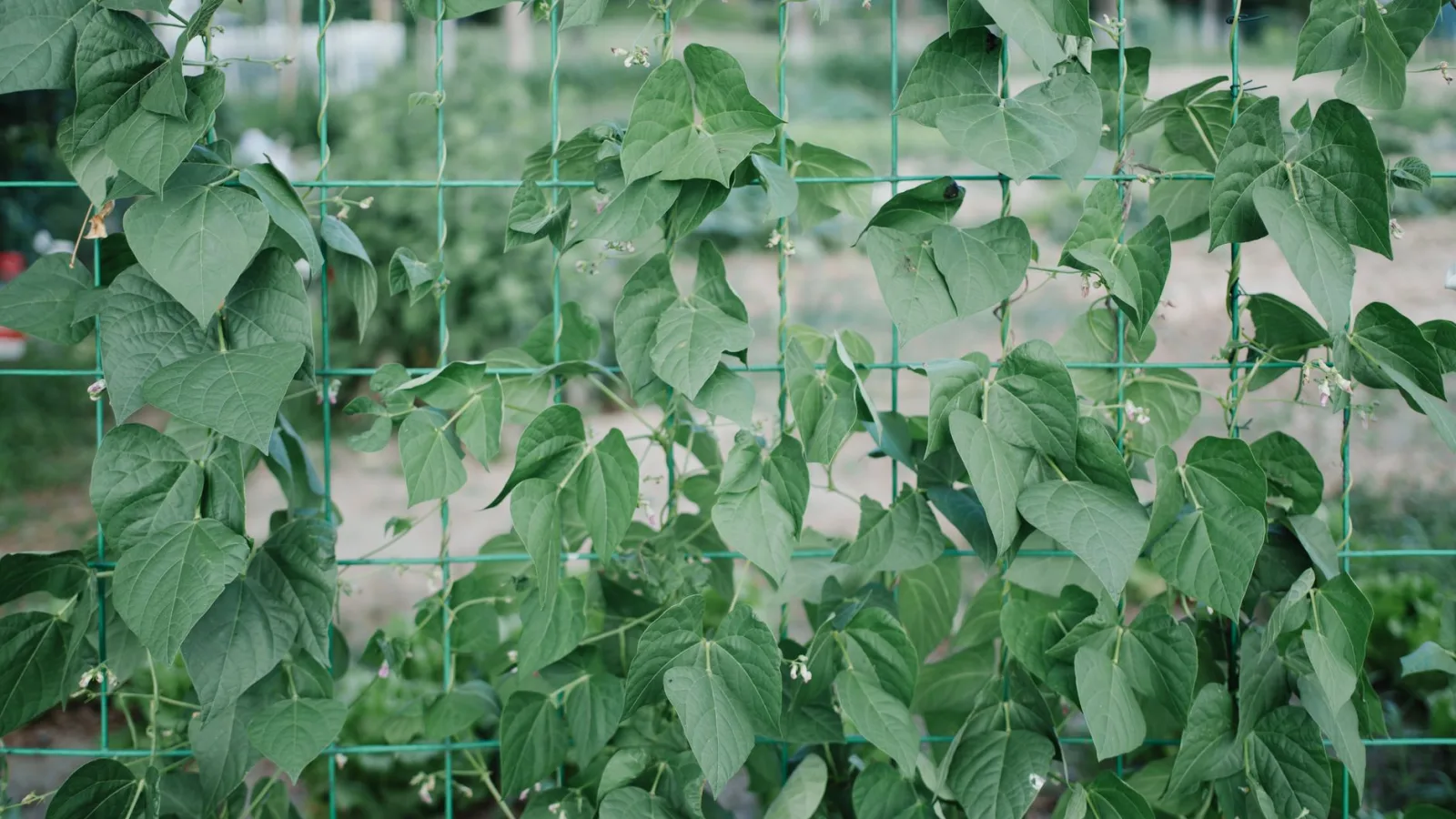
By September in the Northern Hemisphere, the vines have climbed to the top of their supports and tender pods keep coming. If you sowed seed in April or May, you started picking in July and you're still picking now. Even a small plot gives up more beans than you'd expect, and the same side dish night after night gets old fast. Pair them with garlic, sesame, and salad greens, and a single basket turns into several different meals.
A Climbing Bean You Eat Pod and All
Pole beans are the vining varieties of the common bean (Phaseolus vulgaris). You eat the young pods whole, before the seeds inside have filled out, which is why they also go by green beans or snap beans. They grow best between 18 and 25°C (64–77°F) and are easily killed by frost. China is the leading producer, with large crops also coming from Indonesia, India, Türkiye, and France.
The pods carry plant protein, dietary fiber, and vitamin K. That faint squeak you feel when you chew is insoluble fiber. As the beans mature, more of the protein moves into the seeds and the pod itself turns stringy, so for cooking it's best to pick before you can see the seeds bulging. For the nutrition of mature dried beans and the research behind it, see our companion piece on kidney beans.
Never Raw — Cook Them Through
Beans in the kidney bean family contain a protein called lectin. For that reason, pole beans are never eaten raw; they're cooked all the way through. Lectins are known to break down with enough heat. Whether you're headed for a stir-fry or a salad, blanching first takes the guesswork out.
Snap off the stem ends, and if a tough string runs along the seam, pull it away as you go. Bring 1L of water to a boil, stir in 10g of salt, and add the beans. Thicker pods take longer, so fish one out partway through and bite into it. When it's tender to the center with no raw, grassy taste, drain them all and cool them in cold water. That cold bath is what keeps the green vivid.
Sautéed with Garlic and Oil
Cooked in oil with garlic, the beans keep their snap and pick up the garlic's fragrance. Vitamin K is fat-soluble, so eating it alongside oil helps your body take in more of it.
- 200g blanched pole beans
- 2 cloves garlic (about 10g), thinly sliced
- 15ml cooking oil
- a pinch of salt
Put the oil and garlic in the pan together and cook over low heat. Once the edges of the garlic turn pale gold, add the beans, turn the heat to high, and toss for 1 to 2 minutes, then season with salt. They're already blanched, so they need no more than that. Serve them with rice tonight, or alongside grilled meat.
Dressed with Sesame Seeds and Sesame Oil
Korean tables see a lot of namul — vegetables blanched or sautéed, then tossed with seasoning. Pole beans make a nutty one with sesame seeds and toasted sesame oil.
- 200g blanched pole beans, cut into 4–5cm lengths
- 5g toasted sesame seeds
- 5ml toasted sesame oil
- a pinch of salt
Pat the beans dry with a paper towel, then toss them with the salt and sesame oil first. Save the sesame seeds for last, crushing them between your fingers as you scatter them over. Crushed seeds give off far more of their toasty aroma.
Tossed into a Salad
Blanched pole beans add color and a bit of bite to a salad. After the cold-water bath, pat them dry and cut them into bite-size pieces. They're good with peak-season tomatoes, boiled potatoes, and eggs. Finish with a dressing of olive oil and vinegar, and that fat-soluble vitamin K comes along with it.
Blanch today's whole pick at once, then sauté half with garlic and dress the other half with sesame — and taste them side by side.
Source: crop information from Nongsaro, the agricultural technology portal of Korea's Rural Development Administration