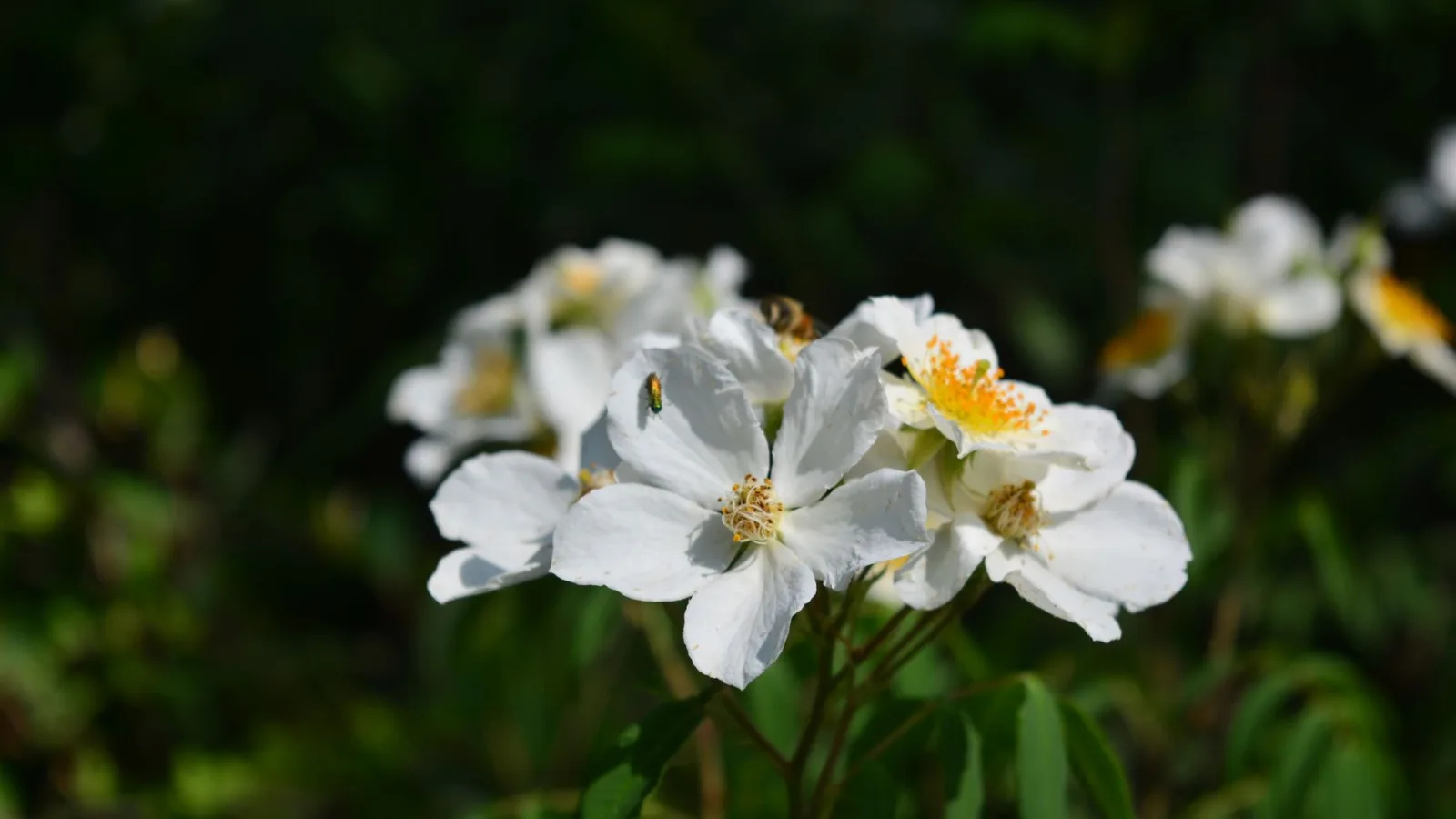
As autumn deepens, multiflora rose vines that have climbed the garden fence start to ripen small red fruits. They form at the tip of every branch, where the white flowers faded in late spring. The hips stay on the vine for a good while after the leaves yellow and fade, so you can reach out and pick them while you do fall chores in the garden.
Multiflora rose (Rosa multiflora) is a wild rose that grows freely on hillsides and along streams in Korea, Japan, and China. It belongs to the same genus, Rosa, as the roses that give Europe the rose hips it has long brewed into tea. So how did an old medical text describe these little fruits, and how do its notes compare with modern nutritional analysis?
Yeongsil (營實) in the Dongui Bogam
The Dongui Bogam (Treasured Mirror of Eastern Medicine), a 17th-century Korean medical classic, lists the fruit of the multiflora rose in its chapter on herbs under the name yeongsil (營實). It also gives the fruit's native Korean name, dilwi yeoreum. Dilwi was an old name for the multiflora rose, and yeoreum was an old word for fruit. The book describes yeongsil as the seed of the wild rose.
The text calls the fruit warm in nature and adds that some sources call it slightly cool. It gives the flavor as sour, noting that others call it bitter, and it lists the fruit as nontoxic. It describes a thorny, vining plant with five-petaled flowers. Some plants bear red flowers and some bear white, and the book rates the white-flowered plants more highly. It doesn't explain why.
The book also explains how to harvest and prepare the fruit. The hips were picked in the eighth and ninth months of the lunar calendar and tossed with jangsu (漿水, a sour liquid made by fermenting grain). They were then steamed and dried in the sun before use. You can read the original text and a commentary in the yeongsil entry of Homiclub's Dongui Bogam. Keep in mind that this comes from an old medical text about herbal ingredients and doesn't reflect modern medical judgment. It shouldn't be used as grounds for treating illness. It's better read as a record of how people in another era saw this fruit.
How It Compares with Modern Analysis
Analyses have repeatedly found vitamin C in the fruit of the Rosa genus. Vitamin C is a water-soluble vitamin that breaks down with heat, and because the human body can't make it, we have to get it from food. The hips get their red and orange color from carotenoids, a group of fat-soluble pigments, and their tough skins get their texture from dietary fiber.
On flavor, the old record and modern analysis agree. The Dongui Bogam calls the fruit sour, and the chemical name for vitamin C is ascorbic acid. Some of the sourness people noted centuries ago probably came from this compound.
On preparation, they disagree. The old record calls for steaming the hips and then drying them. Modern analysis has found that vitamin C is sensitive to heat and declines with long boiling. The record alone can't tell us how much of it survives steaming and drying.
The amount of vitamin C is also hard to pin down to a single number. It varies widely with species, growing region, and ripeness, and there isn't yet enough evidence to say how much a handful of multiflora rose hips contains. That's why Homiclub presents this fruit as a seasonal food rather than a medicine.
Growing and Harvesting in the Garden
Multiflora rose has very thorny stems and sends out long, rambling canes. Plant it in a sunny spot where the canes have something to lean on, such as a fence or the edge of your garden. In the Northern Hemisphere, the best time to plant is March through April. Put on heavy gloves before you prune.
Keep in mind that it spreads quickly. Outside its native range, including North America, it has escaped into the wild, and some places don't allow it to be planted. Check your local rules before you plant.
You get two harvests a year. In the Northern Hemisphere, pick the tender young shoots in April and May and the ripe red hips in September and October. Many Koreans tell stories of snapping off the young shoots in spring, peeling them, and eating them. For a month-by-month list of tasks, see the calendar in our multiflora rose crop guide.
Straining Out the Hairs and Brewing Tea
Inside a rose hip, the seeds are packed in short, stiff hairs. These hairs can irritate your skin and throat, so rose hips in the West are also scraped and strained before use. Multiflora rose hips need the same treatment, so the first step is removing the fine hairs.
- Split the hips open, scrape out the seeds and hairs, and dry the hips in the sun.
- Coarsely crush the dried hips and add them to hot water. Don't boil them for long; steep for about 5 minutes.
- Pour the tea through a fine-mesh strainer one more time to catch any remaining hairs.
You can add ingredients that play up the tartness or soften it. Hibiscus is sour too, so it pairs well and makes the tea a deeper red. A little dried apple adds sweetness and tones down the tartness. If you use honey, stir it in after the tea has cooled a bit. A glass teapot lets you watch the color, which makes it easier to tell how strong the tea is.
This fall, pick a handful of multiflora rose hips from your fence and start by scraping out the hairs.