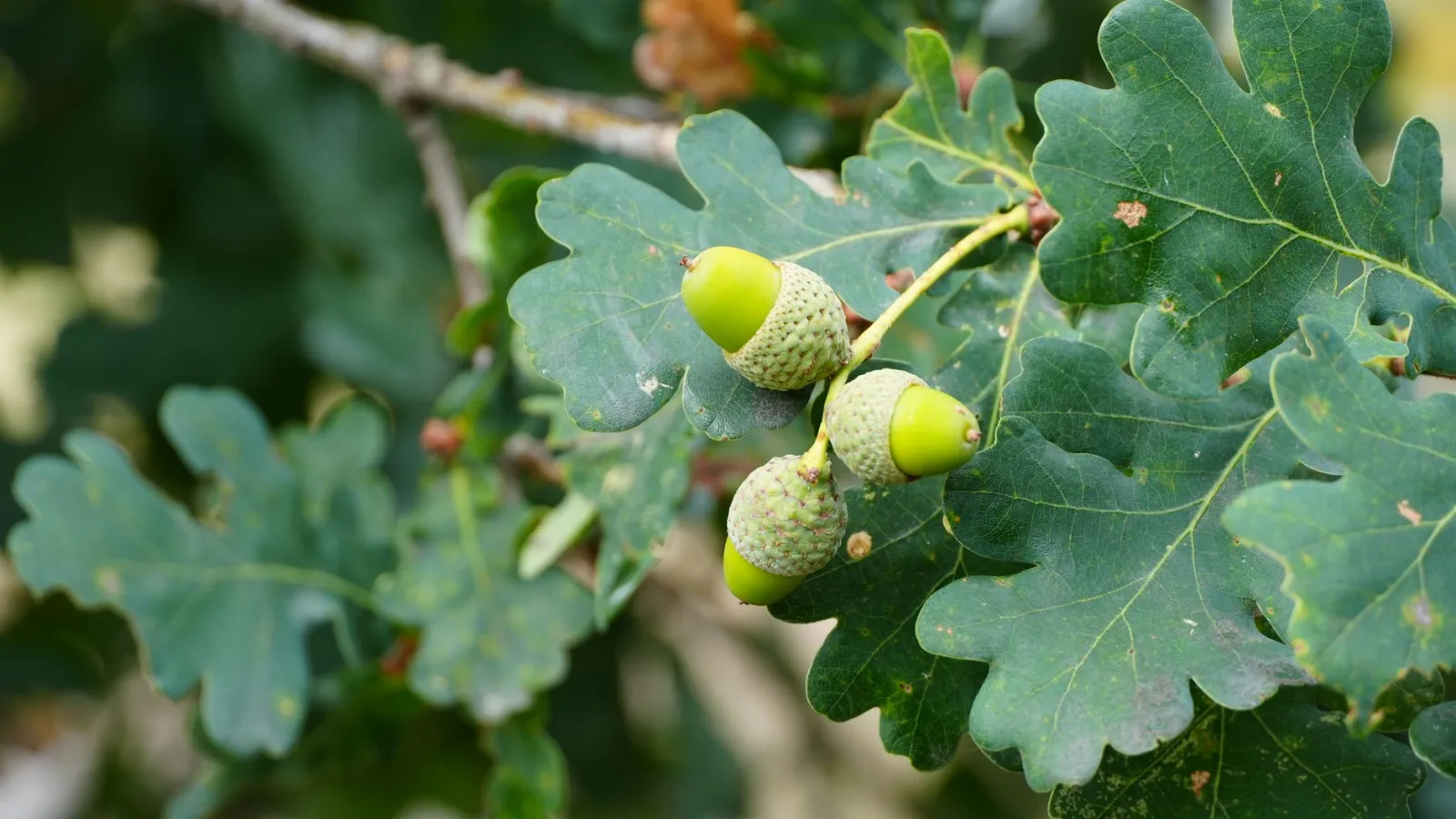
In the Northern Hemisphere, September and October leave acorns scattered on the ground under oak trees. Bring home a handful of those shiny nuts and you'll soon wonder: can you just eat them? Acorns are the nuts of oak trees, including the sawtooth oak (Quercus acutissima). Korea, China, Japan, Spain, and Portugal all harvest them in large amounts. In Korea, people know them best as the main ingredient in muk, a soft jelly you can slice. But nobody eats a fallen acorn straight off the ground. As soon as you bite into one, a strong astringent taste dries out your whole mouth. Let's start with what that astringency does once it's in your body.
What Happens When You Eat Them Raw
The astringency of a freshly gathered acorn comes from tannins, which belong to a family of compounds called polyphenols. Tannins bind to the proteins in your saliva and leave your mouth feeling dry and rough.
The effect doesn't end in your mouth. If you eat acorns without leaching them first, whether you chew them whole or grind them and cook them right away, they can upset your stomach. A single nut is usually so astringent that you'll spit it out. Unleached acorn flour mixed into food is a different story: you end up eating many acorns at once, and the discomfort gets worse. That's why people in places with a long history of eating acorns have never eaten them raw. They soak the astringency out with water first, which works because tannins dissolve easily in water.
Sorting the Keepers From the Rejects
Picking good acorns starts in the woods. The old rule is to collect only nuts that have already fallen, not to beat the branches to shake more down. In Korea, the law bans collecting acorns and other forest products inside national parks and natural parks, and you can't walk onto private woodland and collect them without permission either. Many other countries set their own foraging rules for parks and protected areas, so check the local guidelines before you start. Acorns are also winter food for squirrels, wild boar, and other animals, so leave some behind rather than taking every one from a single spot.
Once you're home, sort them like this:
- Drop them in water and throw out any that float. Those are hollow or have insects inside.
- Check the shells of the ones that sink, too. If you see a white, powdery coating or black spots, assume they're moldy and throw them out as well.
- While the keepers dry, turn them once a day so they don't get damp.
How to Tell When the Astringency Is Gone
Shell the sorted acorns, dry them, grind them, and soak the meal in water. Over time the tannins dissolve into the water, and the water on top turns dark reddish brown. Each time, pour that water off and add fresh water. How many changes you need depends on the condition of the nuts and how much meal you're soaking, so go by taste rather than by count.
Start by watching the color of the water you pour off. Once the dark reddish color fades, touch a fingertip to the starchy sediment at the bottom and taste it. If your tongue still picks up astringency, change the water one more time. When the astringency is gone, what's left is mostly starch. Boil this sediment with water and let it cool, and it sets into dotorimuk, Korean acorn jelly. That happens because the starch absorbs water and loosens as it heats, then binds back together as it cools. The jelly's soft texture comes from all the water it absorbs along the way.
If you don't have time for all that, try store-bought dotorimuk powder (acorn starch). It's simply leached sediment that has been dried, so most of the leaching is already done for you. Acorn jelly tastes very mild on its own, so spoon a sauce over it: soy sauce mixed with sesame oil, gochugaru (Korean chili flakes), and chopped scallions. Sliced jelly starts to leak water as it sits, so cut it just before serving.
What an Old Medical Text Said About Acorns
The Trees section (Mokbu) of the Dongui Bogam, a 17th-century Korean medical classic, lists acorns under the name sangsil (橡實). It gives the Korean name as "gulgeun dotori," or "large acorn." The text says acorns are warm in nature, bitter and astringent in taste, and not poisonous. It calls the cup that holds the nut jodu (皂斗). According to the text, the husk and the nut were used together, but only after roasting. So even back then, acorns were prepared before use rather than taken raw. The entry also notes that acorns helped people get through famine years.
Keep in mind that this is a historical record, not modern medical advice. Acorns are best treated as food rather than medicine: leach out the astringency and cook them into muk. For acorn nutrition, food pairings, and a growing calendar (plant in March–April, harvest in September–October in the Northern Hemisphere), see the acorn entry in the Homiclub Crop Guide.
Source: Dongui Bogam, Trees section (Mokbu), entry "Sangsil (橡實)."
If you brought acorns home today, start by putting them in a bowl of water and picking out the floaters.