
Tangaek — Decoctions · Trees
橡實 Acorn
 Related Crop · Acorn →
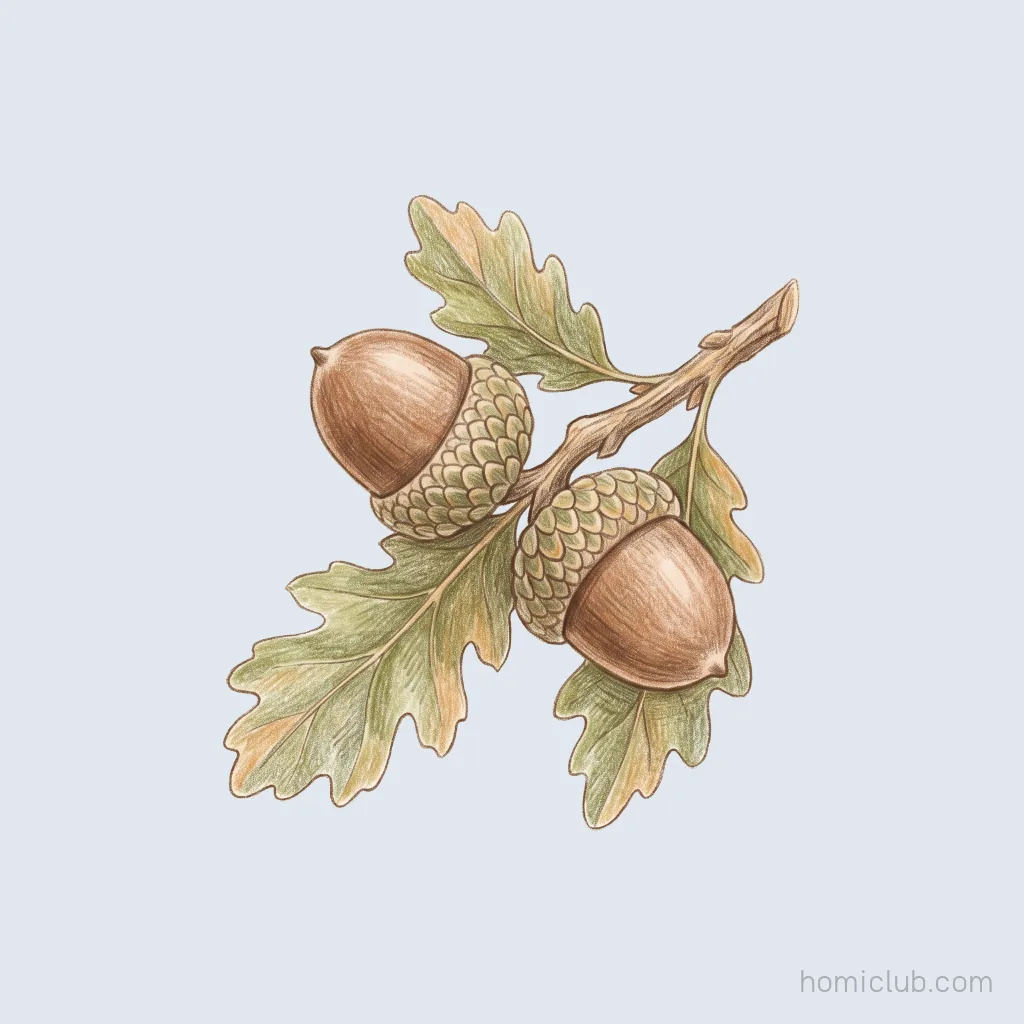
Sangsil is the acorn of the sawtooth oak, the plump kind. Gathered with the cup still on and roasted before use, it is the same nut ground and settled into acorn jelly today. Donguibogam noted that jak, yeok, jeo and hu were all general names for the oak.
Original, read line by line 東醫寶鑑 · Tangaek — Decoctions vol. 3
-
性溫, 味苦澁, 無毒. 主下痢.
Its nature is warm, its taste bitter and astringent, and it is non-toxic. It chiefly governs hari (下痢, downward dysentery).
HomiclubAn acorn is the fruit of the oaks, the sangsuri oak foremost among them. Its puckering taste comes from tannin, and the repeated rinsing of the ground starch when making acorn jelly is the step that draws that substance out.
-
厚腸胃, 肥健人, 澁腸止瀉, 充飢禦歉.
It thickens the intestines and stomach, makes a person stout and sturdy, binds the bowels to stop diarrhea, and fills an empty belly so that a lean year can be endured.
-
橡實, 櫟木子也. 處處有之. 其實爲皂斗. 槲櫟皆有斗, 而以櫟爲勝.
Sangsil is the fruit of the yeok (櫟) tree. It is found everywhere. Its fruit is called jodu (皂斗). Both the gok (槲) and the yeok bear a du (斗, cup), but that of the yeok is reckoned the better.
HomiclubSangsuri, tteokgal, galcham, and singal oaks are all called chamnamu in Korean. The little cup that holds the acorn differs among them: on the sangsuri oak its scales flare out coarsely, while on the tteokgal oak they stretch further back.
-
不拘時採, 皮幷實用, 入藥幷炒.
Gather it without regard to season, use the shell together with the fruit, and roast them together when putting them into medicine.
-
柞也, 櫟也, 杼也, 栩也, 皆橡櫟之通名也. 《本草》
Jak (柞), yeok (櫟), jeo (杼), and heo (栩) are all general names for the oak. 《Boncho (本草)》
Related Crop
Acorn →
Reading on Acorn
Trees — more entries

This is a cultural and historical record from a classical text, not a claim about any food’s effects. Nothing here is a health supplement or intended to prevent or treat disease. Consult a medical professional about health concerns. · Text: Korean Medicine Classics DB · Reading: Homiclub