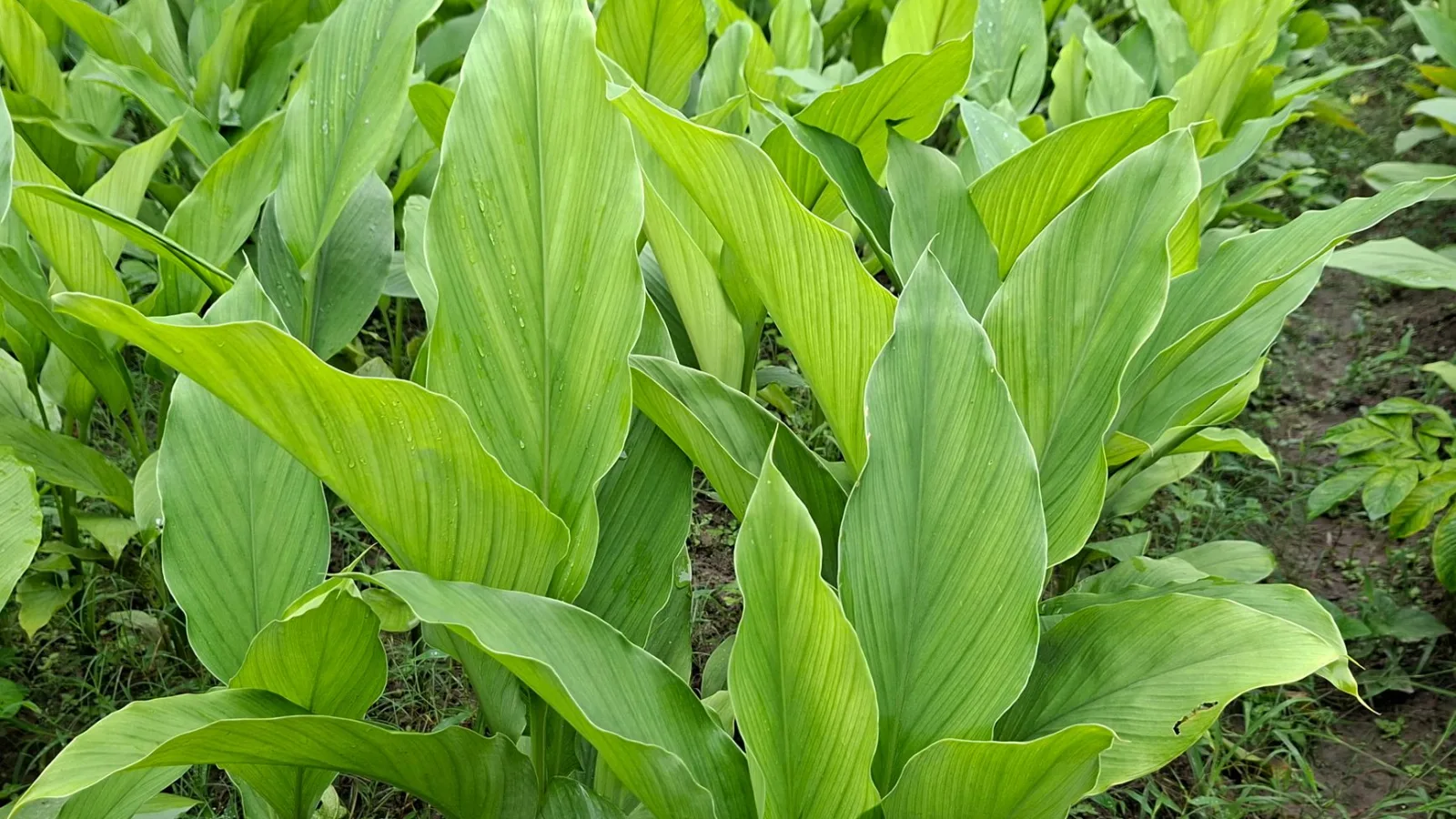
In October in the Northern Hemisphere, turmeric in a large container still holds up the broad leaves it grew all summer. Once the first frost knocks those leaves down, it's time to dig into the soil and harvest the rhizomes. Cut one open and the inside is a deep yellow that quickly stains your fingertips and cutting board. The compound behind that color is curcumin. But how much of it your body actually takes in depends on what you eat the turmeric with.
Rhizomes That Need a Long, Hot Season to Grow Plump
Turmeric is a perennial in the ginger family. The part we eat is the rhizome, which swells underground. The plant is native to India and is widely grown in Bangladesh, Myanmar, Indonesia, China, and Nigeria. It does best at 20–30°C and can grow anywhere from 15 to 35°C. The rhizomes only fill out when a hot, rainy season lasts more than eight months. If the ground freezes, the buried rhizomes freeze and die too.
That's why gardeners in temperate climates with real winters grow it as an annual. In the Northern Hemisphere, plant seed rhizomes (pieces of rhizome planted the way you'd sow seed) from late April through May. Dig them up in October or November, once frost has flattened the leaves. In Korea, turmeric grows in open ground in the southern provinces and on Jeju Island. In colder areas it goes into large containers at least 30 cm deep. On harvest day, pick out the rhizomes you'll plant next year and store them somewhere they won't freeze.
The Compounds Behind the Color and the Earthy Aroma
Turmeric's yellow comes from polyphenol pigments called curcuminoids, a group that includes curcumin and demethoxycurcumin. In analyses comparing dried rhizomes across cultivars and growing regions, curcuminoid content was generally 2–5%. Even within a single cultivar, it varied widely depending on where the plants were grown and how they were dried.
The characteristic earthy, slightly bitter aroma comes from turmerone and zingiberene, components of the plant's essential oil (the volatile oils that carry its scent). The rhizome also contains starch, a storage carbohydrate, and dietary fiber. The yellow powder in curry is simply this rhizome, dried and ground. Pharmacopoeias (each country's official drug standards) list the plant's parts separately, with the rhizome as ganghwang (薑黃) and the tuberous root as ulgeum (鬱金). Korean gardeners usually call turmeric ulgeum, but by pharmacopoeia standards the rhizome they dig up is ganghwang.
Curcumin Barely Dissolves in Water
Curcumin is fat-soluble, so it barely dissolves in water but mixes readily into oil. Several pharmacokinetic studies (research that tracks how a compound enters and leaves the body) have also found that blood levels of curcumin rose when it was taken with piperine, a compound in black pepper.
Keep in mind that these studies only measured how much of the compound got into the body. Higher blood levels alone don't show any particular health benefit. Also, cases of liver injury have been reported with high-dose products such as capsules and tablets that are designed to boost absorption. The amount you add to food as a spice and the amount in a supplement are two very different things. If you take a turmeric supplement or plan to, talk to your doctor or pharmacist first.
The Dongui Bogam Listed Ulgeum (鬱金) and Ganghwang (薑黃) Separately
The Dongui Bogam, a classic of Korean traditional medicine, gives 鬱金 (ulgeum) and 薑黃 (ganghwang) separate entries in its herb section (草部). It also describes the two as having opposite natures: ulgeum is cold and ganghwang is hot. The ulgeum entry says it tastes pungent and bitter and is not toxic. It also records how to prepare it: rinse it in water and dry it over low heat before use. Although the two are easily confused and have a similar color, the book treated them as different medicinal herbs. This record comes from a 17th-century medical text and does not reflect the views of modern medicine.
Try It with Oil, Black Pepper, or Milk
To use freshly dug rhizomes, peel off a thin layer of skin, then grate or thinly slice them. Turmeric stains your hands, so wear gloves while you work. To keep it longer, slice it thin, dry it completely, and grind it into a powder to store.
- With oil: Because curcuminoids are fat-soluble, cooking turmeric in oil spreads its color and aroma evenly. That property is one reason curry recipes start by frying the spices in oil. Turmeric powder loses its aroma if it cooks too long, though. In a stir-fry, add it last, after everything else is done, and stir it in briefly.
- With black pepper: Grind in a generous amount. Try sprinkling turmeric powder and black pepper together over scrambled eggs or fried rice.
- With milk or coconut milk: Warming the powder in milk or coconut milk, both of which contain fat, lets the color dissolve smoothly and softens the earthy flavor. Golden latte is made this way. One teaspoon (5 ml) of powder is plenty for a mug. Any more and it turns noticeably bitter.
Tonight, at the end of a stir-fry, add half a teaspoon (2.5 ml) of turmeric powder and some black pepper to the oil. As for the turmeric in your container, leave it alone until frost knocks the leaves down, then dig it up.
Sources: Dongui Bogam, herb section (草部), entries for 鬱金 and 薑黃 · Nongsaro (crop information from Korea's agricultural research agency) · Studies on curcuminoid content and on absorption when taken with piperine