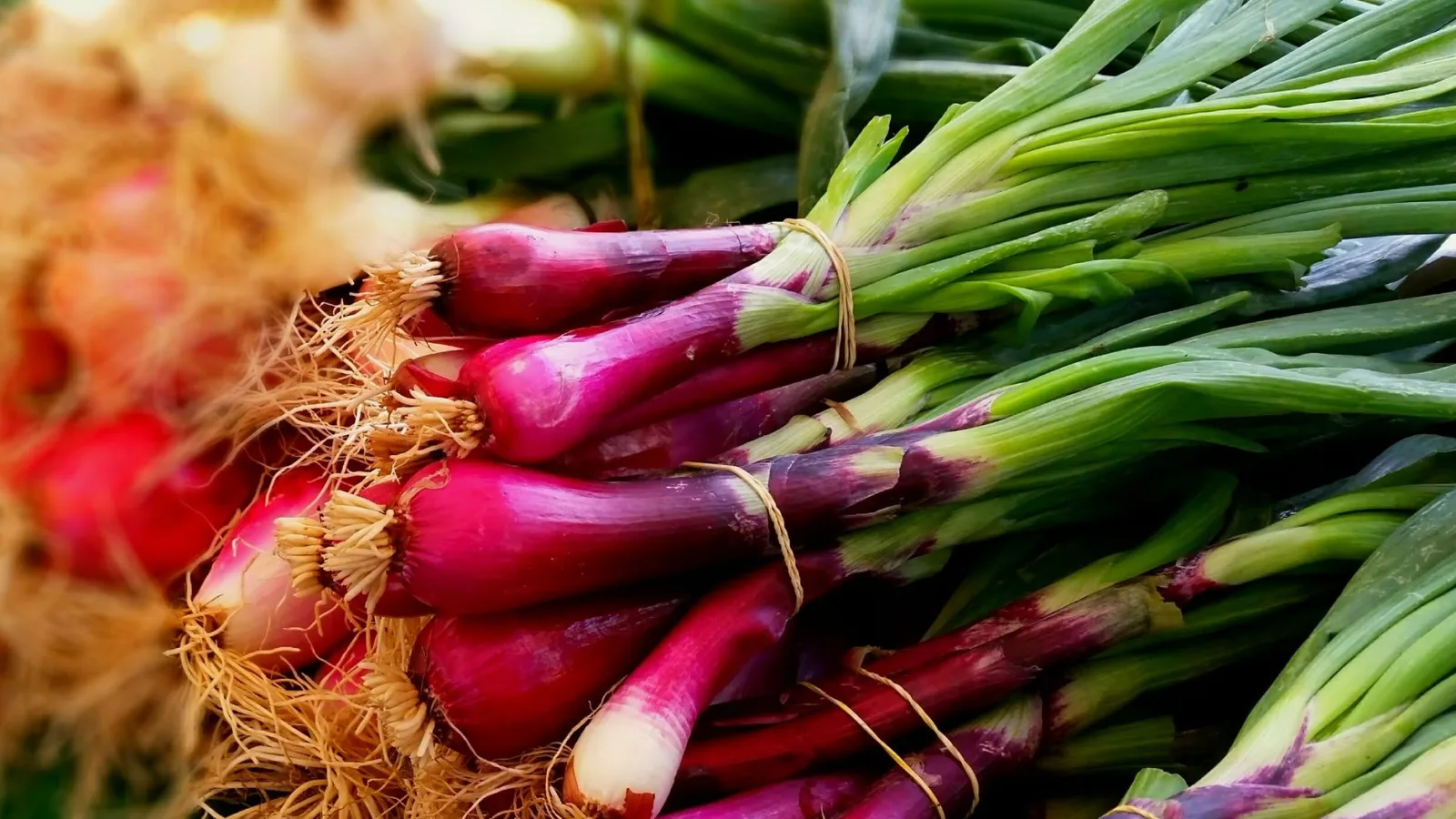
By August the peppers and eggplants in the garden are winding down. In one corner of that bed, in sandy soil that drains fast, I tuck in a few rakkyo bulbs. The Korean name, yeomgyo, may not ring a bell — but the tart little pickle that shows up beside sushi or a plate of Japanese curry probably does. That's rakkyo. In the Northern Hemisphere, August and September are the planting months, and once the bulbs are in the ground they ask almost nothing of you until early the following summer. They'll size up in a balcony pot, too.
Plant in late summer, dig in early summer
Rakkyo is a perennial allium with chive-like leaves above and a fat white bulb below. It grows in cool weather and rests through the heat of midsummer, when the foliage dries back. Its ideal range is 12–22°C (54–72°F), and it tolerates anything from 0 to 28°C (32–82°F). It's cold-hardy enough to overwinter with its leaves still on, and the bulbs fatten from spring onward. Harvest lands in June or July.
Bulbs size up most evenly in sandy, free-draining ground, which is why coastal dunes have been prime rakkyo country for centuries. The plant is native to China, Japan is the main producer, and it's widely grown in Korea as well. If your bed is heavy and holds water, work in sand and raise the row.
Cut one open and the aroma comes up; the bitterness arrives last
Halve a bulb and the smell rises right away. That's sulfur compounds — the shared signature of the allium family, the same chemistry you know from garlic and Asian chives. The faint bitterness that lingers after you chew comes from saponins. The fiber in rakkyo takes a soluble form called fructan. There's potassium in there too, an electrolyte.
Aroma, bitterness, and that snapping crispness aren't three separate things — they all live in the same small bulb. How much of each survives the pickling jar is what decides the flavor.
The evidence stops at test tubes and animal studies
Fructans resist human digestive enzymes, so they travel intact to the large intestine, where gut bacteria ferment them. That's what in vitro and animal studies on rakkyo fructans have reported. It does not follow that eating a few pickled bulbs produces the same effect. The same caution applies to saponins: antioxidant activity has been observed in saponins isolated from rakkyo, at the test-tube level. Those results come from purified compounds, which is a different matter from eating the vegetable as food.
The Donguibogam, the 17th-century Korean medical compendium, lists it in the vegetable section (菜部) under the name 薤菜. It records the plant as warm in nature, pungent and bitter in taste, and free of toxicity, and it passes along an old nickname: 채지 (菜芝), "the lingzhi among vegetables." Another line notes that although rakkyo is a pungent vegetable, it leaves no lingering odor on the breath, which is why Daoist practitioners ate it regularly. This is the record of a historical medical text, and it is not the same as a modern medical judgment.
Start the pickle the day you dig
Three days after harvest, the bulbs begin sprouting again and the flesh goes soft. Start the pickle the same day you dig them. Salt them first to draw out the water, then move them into vinegar and sugar. Reverse that order and the texture collapses.
- Alongside rich food: set two or three rakkyo next to Japanese curry or something fried, and the vinegar's sharpness and the crisp bite cut straight through the fat. It's the same logic that puts them beside the pickled ginger at a sushi counter.
- The leaves: broader and thicker than Asian chives, so they keep some chew in soup or rice porridge. The Donguibogam says as much — eat it in soups and porridges, or blanch it for kimchi and pickles.
Today's job is a single one. Tuck a few rakkyo bulbs into a pot of free-draining soil, or into one corner of a bed. Plant in August, dig them in June of the following year, pickle them that same day, and you'll have two or three ready to set beside your next rich meal.
Sources: Donguibogam, Tangaek section, vegetables (菜部), original entry for 薤菜; Standard Tables of Food Composition in Japan (8th revised edition).