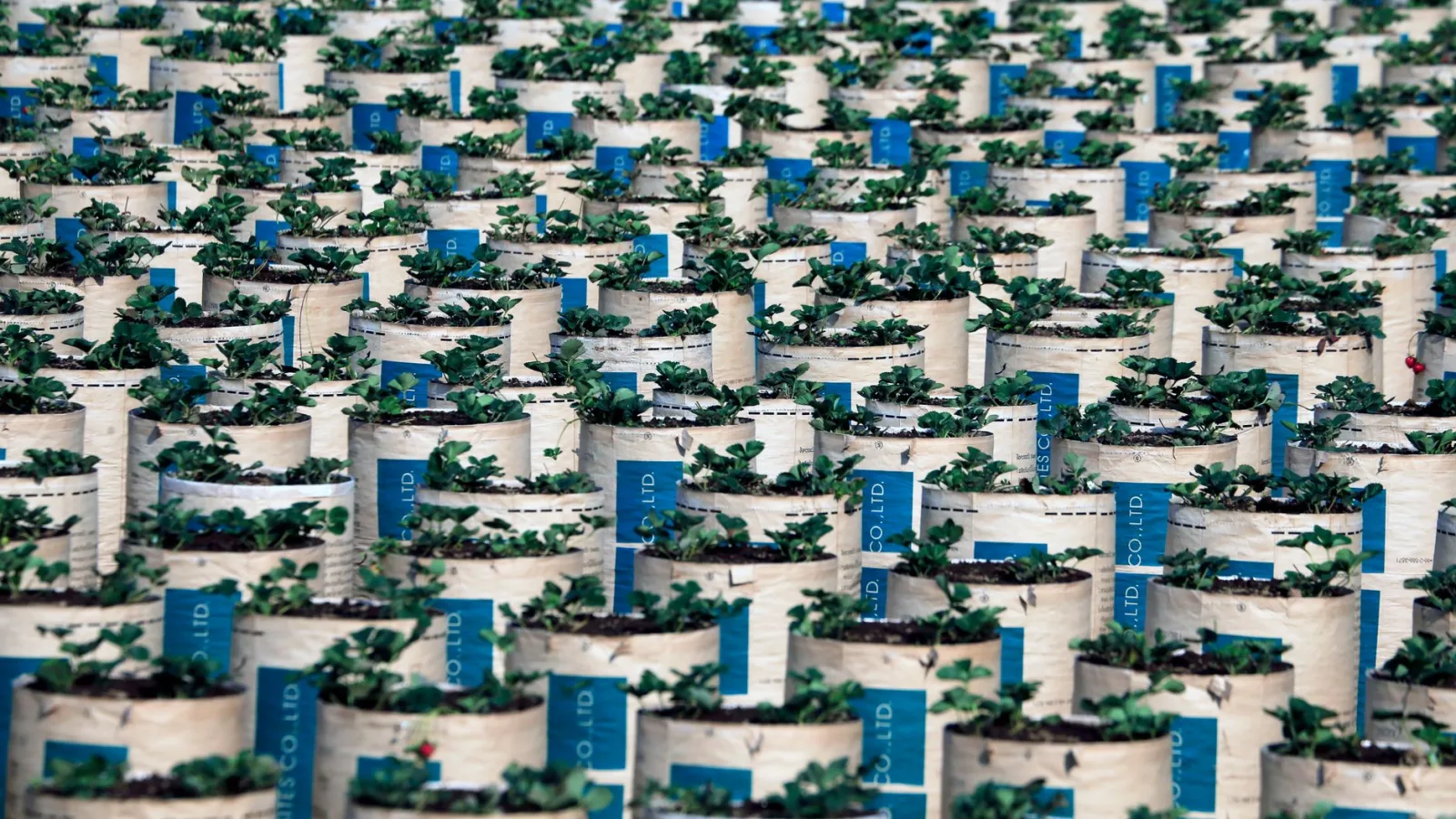
By mid-October, the rakkyo bulbs you tucked into pots in August or September have sent up leaves that look a lot like garlic chives. In the Northern Hemisphere these leaves stay green right through winter, and the white bulbs are dug the following June or July. Around the same time, you may notice clumps of long, slender leaves in flower beds or along the edges of fields. If you've ever looked up rakkyo, you'll start to wonder whether those leaves are rakkyo, and whether you can dig them up and eat them.
We don't recommend digging up and eating rakkyo-like bulbs from the wild. But if you need to tell whether the bulb in your hand is rakkyo, there is just one test: the smell when you cut it.
Bulbs That Grow Leaves Like Rakkyo's
Rakkyo (Allium chinense), called yeomgyo in Korean, is a perennial vegetable that forms plump white bulbs beneath leaves resembling garlic chives. It's grown mainly in China, Japan, and Korea, and most people know it by its Japanese name, rakkyo. Those tangy pickles served alongside sushi or Japanese curry are these very bulbs.
Plenty of plants besides rakkyo grow from bulbs. Surprise lilies (Lycoris) and daffodils also keep bulbs underground and send up leaves much like rakkyo's, and the bulbs of both are poisonous. If you dig by leaf shape alone, you could bring one of these home thinking it's rakkyo. Rakkyo is a cultivated crop, so if you come across a rakkyo-like clump in the hills or fields, the safer assumption is that it's something else.
The Dongui Bogam (Treasured Mirror of Eastern Medicine), a medical text published in Joseon-era Korea in 1613, describes rakkyo as similar to garlic chives but with broader leaves, more white at the base, and no fruit. That description, though, compares garden rakkyo with garlic chives. It isn't enough to tell rakkyo apart from the poisonous plants you might find in the wild.
Does the Cut Smell Like Onion or Garlic?
Rakkyo belongs to the genus Allium, along with onions, garlic, and garlic chives. Cut a leaf or bulb and you'll catch the pungent scent of sulfur compounds. Surprise lilies and daffodils aren't alliums, so they don't give off that smell when cut. That's why smell is the deciding factor. If a cut leaf doesn't smell like onion or garlic, don't eat it.
Before you sniff, wash your hands with soap. If your hands still carry a trace of onion or garlic, even a scentless leaf can seem to smell like rakkyo. Once your hands are clean, cut a single leaf and put your nose right up to the cut surface.
If you've dug up several bulbs, cut each one. Other bulbs can grow mixed into the same clump, so one bulb that smells right doesn't mean the one next to it is rakkyo too. If the smell is faint or you're not sure, it's better not to eat that bulb.
The Dongui Bogam also notes that although rakkyo is a pungent vegetable, it leaves no lingering odor, which is why Taoists ate it regularly. This most likely means the smell doesn't stay on your breath long after eating. That is a separate matter from the scent that rises when you cut it.
Grow It in a Pot and Skip the Guesswork
If telling them apart sounds tricky, growing your own is simpler. In the Northern Hemisphere, plant seed bulbs (bulbs meant for planting) in August or September, let them overwinter, and dig them the following June or July. They need almost no care in between, and they do fine in a pot on a balcony. Because you harvest the same bulbs you planted, right where you planted them, there's far less chance of other bulbs getting mixed in.
About three days after digging, the bulbs start to sprout again and turn soft, so if you plan to make rakkyo pickles, start the day you harvest. Planting and harvest months, along with step-by-step pickling instructions, are all in our rakkyo crop guide.
How Much to Eat Once You've Confirmed It's Rakkyo
The Dongui Bogam describes rakkyo as warm in nature, pungent and bitter in taste, and nontoxic. That record applies to rakkyo only, not to other bulbs with similar leaves. It also comes from a centuries-old medical text and stands apart from the judgments of modern medicine.
Even after you've confirmed it's rakkyo, start with a small amount. Most of its dietary fiber is fructan, which bacteria in the large intestine ferment. If you're prone to gas, even a little can leave you bloated. Sulfur compounds and saponins can irritate the stomach when eaten in quantity on an empty stomach, so three or four pickled bulbs per meal is about right. The leaves are edible too. They're broader and thicker than garlic chives, so they keep a pleasant chew in soups or porridge.
Source: Dongui Bogam, Vegetables section (菜部), entry on haechae (薤菜).
If you spotted rakkyo-like leaves in a flower bed or along a field today, wash your hands before you dig, cut just one leaf, and smell it. If you already have seed bulbs in the ground, dig them next June or July. If not, start with a single pot next August or September (in the Northern Hemisphere).