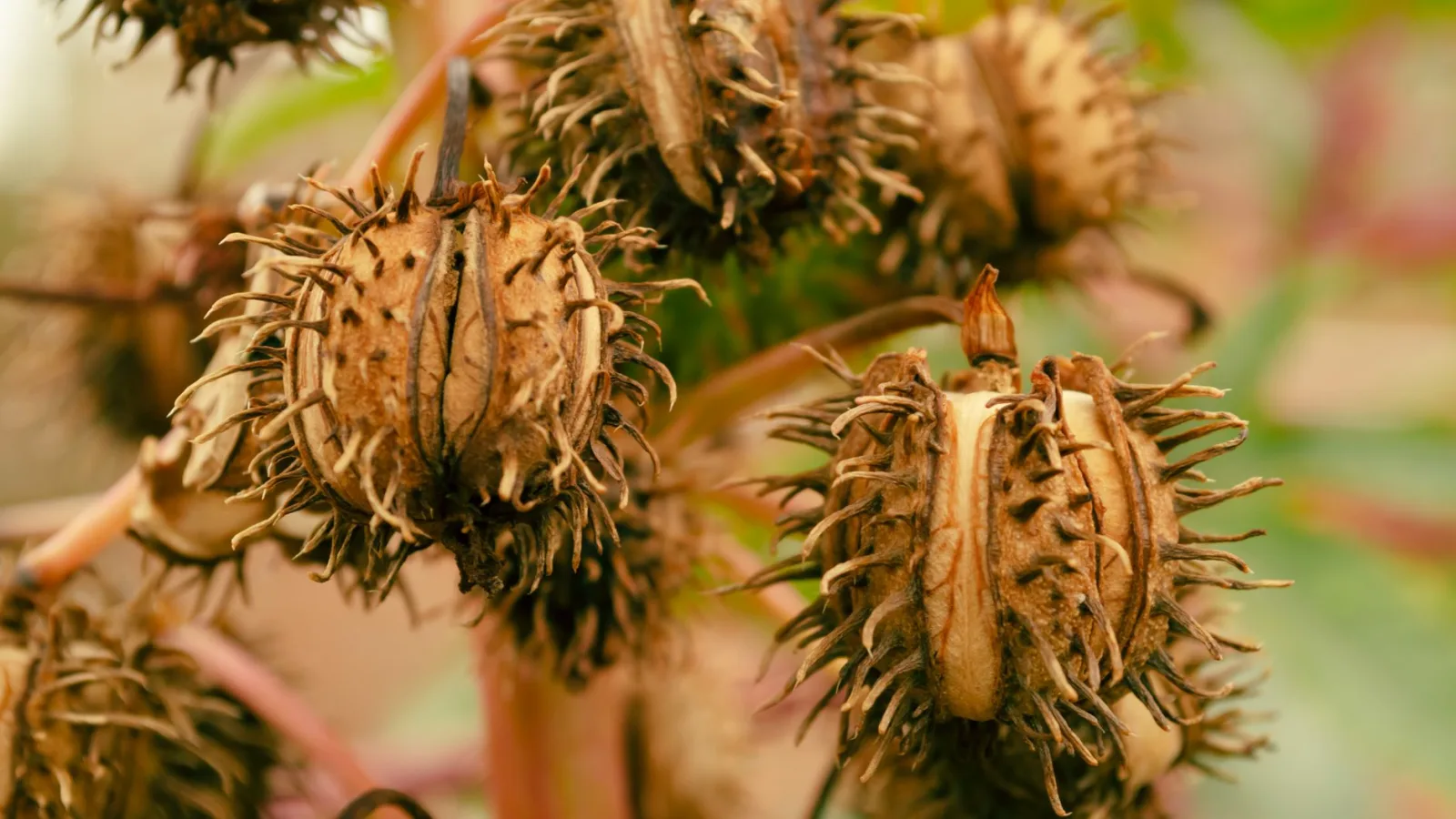
In the northern hemisphere, by late August a well-grown castor bean plant stands at the edge of the garden nearly as tall as a person, its leaves spreading far wider than an adult hand. Pick the tender ones now, blanch them, and dry them, and you have a plate of namul — seasoned greens — all winter long. The seeds aren't ripe yet. And even when they are, they don't come into the kitchen.
Koreans call this plant ajukkari, or pimaja; its botanical name is Ricinus communis. In the northern hemisphere you sow it in April or May and harvest the leaves from July through September.
What the Dongui Bogam Recorded About Bimaja
In the herbs section (chobu) of the Dongui Bogam, the seventeenth-century Korean medical compendium, this plant appears as bimaja (萆麻子), with the vernacular name written out as "ajukkari." Its nature was called neutral, its taste sweet and pungent, and it was noted as slightly toxic. The text adds that the leaves resemble hemp but run much larger, and that the seed took its name from its likeness to the tick that fastens onto cattle. The preparation is recorded too. The seeds were never used raw: they were boiled in salted water, the hulls slipped off, and only the kernels used. You can read the original passage and a translation in the Dongui Bogam entry for bimaja.
This is a record left by an old medical text. We don't read that era's uses as prescriptions for today. But the fact that it named the plant slightly toxic and set down a separate preparation for it does overlap with what we understand now.
The Seed and the Leaf Are Two Different Stories
A protein called ricin has been isolated from castor seeds. Cases of poisoning from very small amounts have been reported in a number of countries. For that reason the seeds are never handled as food, whatever preparation they've been through. Boiling doesn't change that. Neither does hulling.
The part you eat is the leaf. Blanching the leaves, leaching them in water, drying them, then soaking them back to life through the winter is a preparation that has been passed down a long time. Leave the seeds; harvest only the leaves.
Set Against What We Know Today
The compounds reported in castor differ by part of the plant. Ricin is the protein toxin held in the seed; ricinoleic acid is the fatty acid that makes up the oil pressed from that seed. An alkaloid called ricinine is reported as well. What actually meets your body when you eat the dried leaves is dietary fiber — the source of their sturdy, chewy bite.
Where the old record and today's understanding line up is on two points: "slightly toxic" and "not to be used raw." Where they part ways is the seed. The old text wrote down a method of boiling it in salted water and stripping the hull, but in today's kitchen the seed isn't handled at all.
Grow It Now, Dry It Now
Growing it isn't fussy. Put it somewhere with good sun and the leaves keep coming all summer. The plants get large, so leave generous space between them and their neighbors. Once seed pods start to set, pick them off and clear them away before children or pets can reach them. For sowing and harvest months, check the castor bean crop guide.
The kitchen work can start today.
- Pick the tender leaves and boil them just long enough to soften.
- Throw out the cooking water and rinse the leaves in several changes of cold water. Don't skip this step.
- Squeeze them dry and spread them somewhere sunny and breezy until they're bone dry.
When you're ready to eat them, soak them overnight and boil them again. Sautéing them in perilla oil — pressed from perilla seeds — softens the coarseness that dried leaves carry. Heat the oil, turn the leaves in it, then add a splash of water, cover the pan, and let them steam through. Season with guk-ganjang, the thin, salty soy sauce brewed from soybeans for seasoning soups, rather than with salt, add minced garlic, and work it all through the leaves with your hands before they go in the pan — that way the color stays bright instead of turning muddy.
Dried castor leaves belong to the muk-namul — greens dried and later rehydrated — that appear on the table for Jeongwol Daeboreum, the first full moon of the lunar year. The long-standing way to eat them is ssam-style, the leaf wrapped around a bite of ogokbap, rice steamed with five grains.
Head out to the garden today and pick a basketful, starting with the tenderest leaves. Boiling, rinsing, and hanging them up is a single day's work. The seeds, you leave alone.