When rain stays away all summer, garden soil dries out a full knuckle deep. You can haul water all you like, and the leaves still droop by midday. If a simple step before sowing could get your seeds ready for dry spells, it's worth a try.
Seed priming is that step. A meta-analysis published in 2026 in a plant physiology journal looked at how well it works in rapeseed and cotton. A meta-analysis pools the results of many experiments and runs the numbers again. The researchers gathered 761 comparisons from 28 papers.
Soak, Then Dry Again
To prime seeds, you soak them in water or a solution just long enough to start them toward sprouting. Then you take them out and dry them again before any root appears. Some methods use plain water. Others use mineral nutrient solutions, solutions of plant hormones or other biochemical compounds, or water mixed with beneficial microbes.
Seeds treated this way are generally known to sprout more evenly. The researchers wanted to know what happens after that. Does what a plant goes through as a seed stay with it into adulthood and help it get through drought? Scientists call this "drought memory."
Rapeseed and Cotton Held Up in Different Ways
In both crops, plants grown from primed seed withstood drought better. But they did it in different ways.
Rapeseed protected its cells. During a drought, reactive oxygen molecules build up inside cells and damage their membranes. Primed rapeseed showed higher activity of enzymes like catalase that clear those molecules away. It also had less hydrogen peroxide and fewer of the compounds that form when cell membranes break down. The gap was bigger under moderate drought than under severe drought.
Cotton protected the water in its leaves, and its harvest. Even during drought, its leaves held more water, and the plants built up proline, an amino acid that helps cells hold on to water. Yields of seed and of bolls (the pods that hold the cotton fiber) went up noticeably. Unlike rapeseed, cotton showed little change in its antioxidant enzymes, but its harvest still grew.
The best solution differed by crop too. Mineral nutrient solutions worked well for both. Rapeseed did best with plant hormone and biochemical solutions, and cotton did best with microbial ones.
Why "Memory" Is Still a Careful Word
Because this finding comes from 28 papers, the evidence that priming helps both crops handle drought is fairly strong. For cotton, though, results varied widely from study to study. The effect depended heavily on how severe the drought was and which solution was used.
The word "memory" also needs care. The epigenetic hypothesis holds that stress doesn't change the genes themselves. Instead, it leaves chemical marks that control which genes get switched on. This analysis didn't test that directly. It found only that primed plants looked different and had different compounds inside them. It's too early to say that seeds remember drought.
In the Garden and at the Table
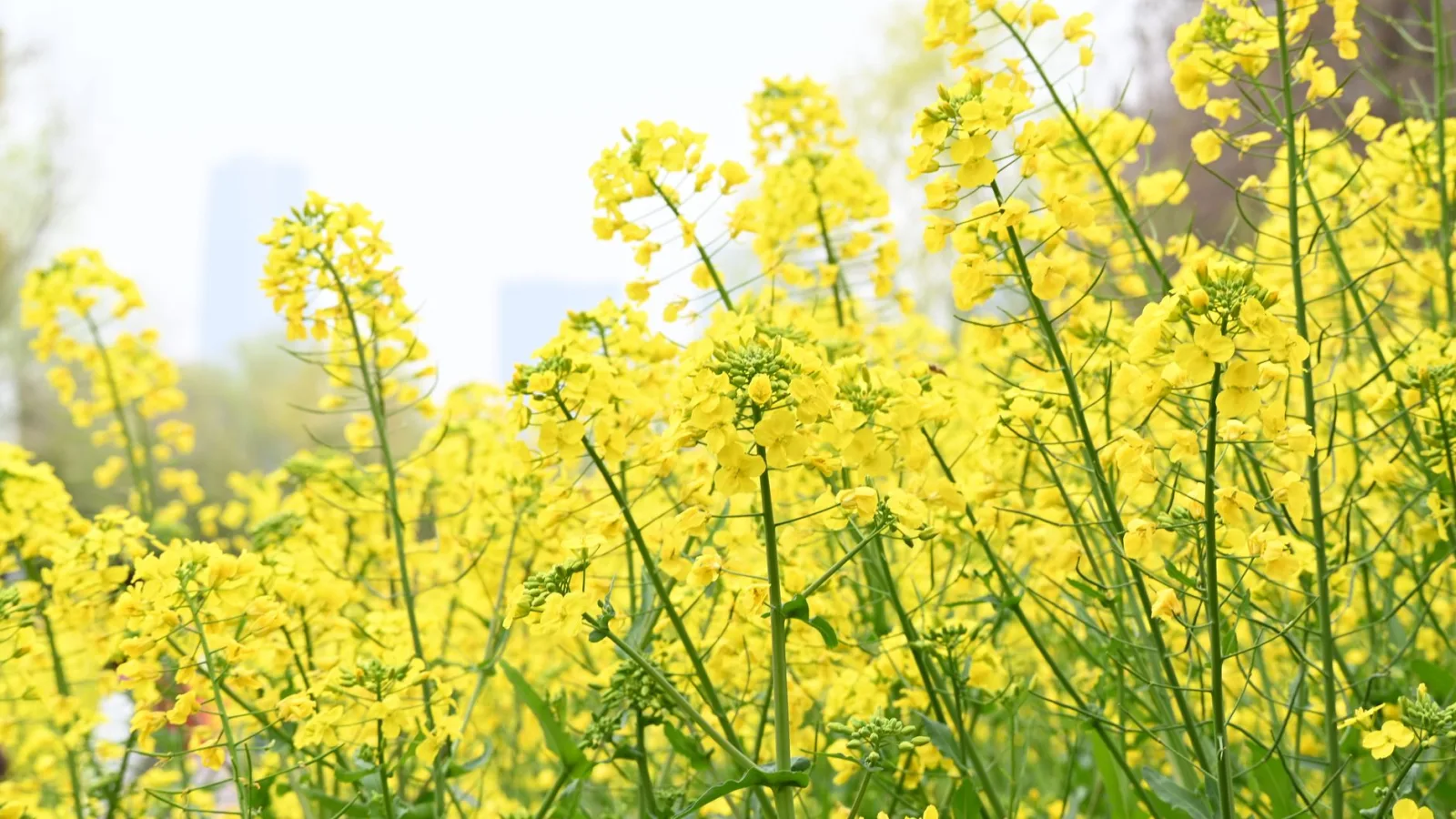
Rapeseed is a cool-season member of the cabbage family, grown on a large scale in Canada, China, India, and Europe for its oil. In Korea and China, people blanch the young leaves and flower stalks in early spring and eat them as seasoned greens (namul, in Korean). Canola oil is pressed from the seeds of varieties bred for eating. It's low in saturated fat and contains alpha-linolenic acid, an omega-3 fatty acid. Cotton grows best in warm places with a long frost-free season, such as India, China, and the United States, and cottonseed oil pressed from its seeds is also used in cooking.
Keep in mind that this study measured enzymes and compounds inside the plants. It doesn't show that drought-hardy rapeseed is any better for the people who eat it. The kitchen payoff is more modest: a chance of a somewhat steadier harvest of leaves and seeds in a dry year.
When you sow rapeseed, start with plain-water priming. Soak the seeds in clean water for about half a day and drain them before any root tips show. Dry them in the shade until the surface feels dry to the touch, and plant them within a few days. If you use a nutrient or microbial product, follow the dose on the label. This study covered only rapeseed and cotton, so we don't know yet whether other crops respond the same way.
Try this today: Divide your rapeseed seeds into two batches and prime only one. Plant them in two side-by-side rows, then compare the leaves in each row during a dry week.
Source: A 2026 meta-analysis of priming-induced drought memory in rapeseed and cotton, published in the journal Plant Physiology and Biochemistry.