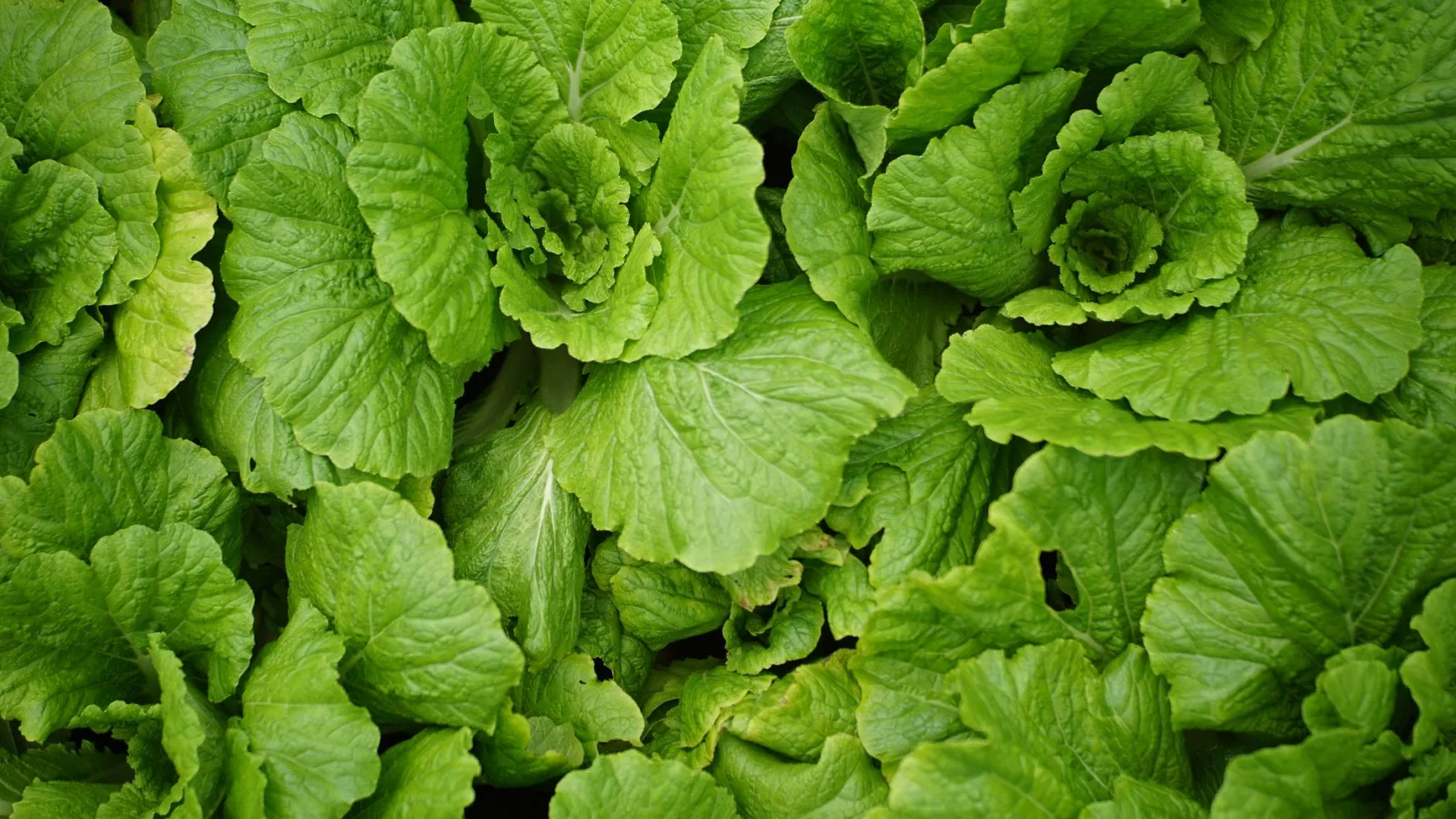
It's early October in the Northern Hemisphere, and the spinach sown in September has put out four or five true leaves apiece. Hold a handful of tender leaves thinned from a crowded row, and you start to wonder whether they can go straight into a salad or should be blanched first. People who look up spinach ask much the same thing. Whether the worry is kidney stones, pairing it with tofu, or iron absorption, one compound always comes up: oxalic acid.
Why Raw Spinach Leaves Your Teeth Feeling Chalky
After chewing raw spinach, your teeth can feel chalky or rough. The usual explanation is that oxalic acid in the spinach binds with calcium in your saliva and forms tiny crystals. Oxalic acid is an organic acid that plants produce, and when it binds with minerals like calcium, it forms crystals that don't dissolve easily in water. Both the kidney-stone concern and the iron-absorption concern stem from this property.
Blanching removes some of the oxalic acid. When you blanch spinach briefly in boiling water and then rinse it in cold water, the oxalic acid that leaches out stays behind in the cooking water and the rinse water. That's why it's better to pour out spinach blanching water than to save it for soup stock. Anyone who has blanched spinach knows how a heaping colander of leaves shrinks down to a single handful. Since you end up eating that much more in one sitting, the step that strips out some of the oxalic acid really earns its keep.
Will Eating It with Tofu Cause Kidney Stones?
The idea that eating spinach with tofu causes kidney stones still gets passed around a lot. It comes from the view that the oxalic acid in spinach can bind with calcium from tofu or milk and raise the risk of kidney stones. At the level of everyday meals, though, it isn't something you need to worry about. A plate of spinach tossed with tofu, or a bowl of spinach soup with doenjang (Korean fermented soybean paste) stirred in, doesn't fall into that category.
The people who do need to be careful are a much narrower group: those who have had kidney stones before. What they should cut back on is eating large amounts of spinach together with tofu or milk in a single meal. Raw spinach retains more oxalic acid than blanched, so if you have a history of stones, blanched spinach is easier on your body than a baby-leaf salad. If you're concerned about how much you're eating, talk it over with your doctor.
An Iron-Rich Leaf, and What to Serve It With
Among leafy greens, spinach is relatively high in iron and folate. But the plant-based iron in vegetables is known to be less readily absorbed than the iron in meat, and oxalic acid, which binds easily with minerals, can reduce iron absorption further. So if you want to make the most of the iron in spinach, pay attention to what you eat alongside it.
Vitamin C helps your body absorb plant-based iron. Try adding a few drops of lemon juice or vinegar to blanched spinach. Green tea can work the other way: its catechins can further interfere with the absorption of plant-based iron, so it's best to wait at least 30 minutes after a spinach dish before reaching for a cup of tea.
A little oil is worth adding, too. Spinach's lutein and its vitamins A and K are fat-soluble, so they're better absorbed when eaten with oil. In Korea, blanched spinach is commonly dressed with sesame oil or perilla oil (pressed from the seeds of perilla, a mint-family herb) and served as namul, a side dish of blanched, seasoned vegetables. It's a pairing that makes sense for exactly this reason. Lutein is a pigment that accumulates in the macula of the eye. That doesn't mean, however, that eating spinach will prevent any particular eye disease.
Eat Blanched Spinach Right Away
If you plan to keep blanched spinach for later, there's one more thing to keep in mind. Spinach is relatively high in nitrates for a vegetable, and while cooked spinach sits in storage, those nitrates turn into nitrites. In babies under a year old, there have been cases of methemoglobinemia, a condition in which the blood's ability to carry oxygen drops. That's why for babies under a year old, cook spinach fresh each time and serve it right away, and don't reheat leftovers for them. It's also wise not to give them a large amount at once.
Growing your own makes this habit easy to keep, because you can harvest just what you need that day. Spinach thrives in cool weather. In the Northern Hemisphere, you can sow it in March and harvest in May, or sow it in August or September and harvest from November through March of the following year. Plants sown in fall can be picked a little at a time through the winter, starting with the outer leaves. China, the United States, Türkiye, Japan, and Iran are among the world's biggest spinach growers. If you garden in the Southern Hemisphere, the seasons are reversed, so time your sowing to the months when the weather turns cool. For a month-by-month schedule and nutrition details, see the spinach entry in the Homiclub Crop Guide.
If you're blanching spinach today, pour off the cooking water, then toss the leaves with a little perilla oil or olive oil and a few drops of lemon juice.