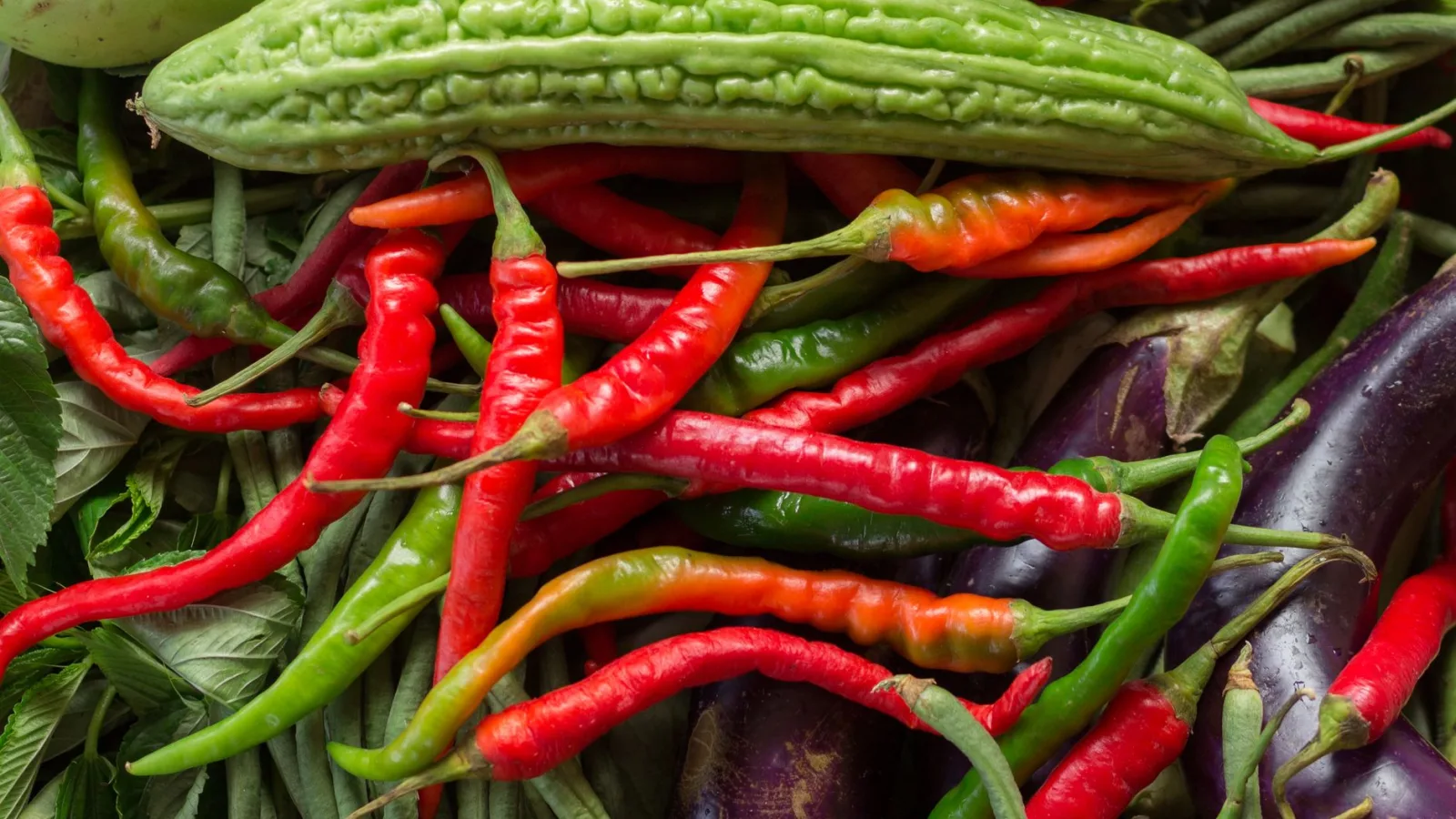
Pick a green chili pepper in the August garden and bite into it, and the first things you taste are grassy sharpness and heat. Leave one on the same branch a few days longer, until it blushes orange, and a faint sweetness settles in behind the heat. Same plant, same fruit, and yet there is a point where the flavors part ways.
What changes inside the pepper as it ripens that makes it taste sweet?
What Changes Inside the Fruit as It Ripens
An international research team chose four pepper lines from the same group as the habanero and compared unripe and fully ripe fruit side by side, looking at both gene expression and chemical makeup. More than 3,800 genes changed their expression between the two stages.
The changes all pointed in one direction. Genes that build starch dialed down, while enzymes that break starch into smaller pieces and transport proteins that ferry sugar between cells ramped up. Starch stored while the fruit was growing gets converted into glucose, fructose, and sucrose during ripening. That is how a pepper's sugar content climbs. The researchers singled out sucrose-making enzymes, sugar transporters, and starch-degrading enzymes as the leading candidates behind the shift in sweetness.
What Else Changes When the Color Turns
Over the same stretch, chlorophyll fades and carotenoid pigments build up, carrying the fruit from green to orange and red. This happened on roughly the same schedule no matter which line the researchers looked at. Capsaicinoids, the compounds behind the heat, were another story: they rose in some lines and fell in others. In other words, heat and sweetness are not under the same controls.
Among the pigments that accumulate in a fully ripe pepper, beta-carotene converts to vitamin A in the body, a nutrient known for supporting the eyes and mucous membranes. Several analyses have also found more vitamin C in fully ripe fruit than in green. None of this adds up to a treatment, though. Think of it as a way to pick up a few extra pigments and vitamins at an ordinary meal.
When to Pick, and How to Eat Them
- For stir-fries or jangajji (Korean soy-brined pickles), pick them green. The flesh is firm and keeps its bite.
- If you want sweetness and color, leave them another 2 to 3 weeks after the color starts to turn. That is when the starch becomes sugar.
- Leaving fully ripe fruit hanging on the plant too long slows down new fruit set. Keep just a few and harvest the rest while they are green.
- Fully ripe peppers are best given a quick toss in a little oil. Carotenoids are fat-soluble, so you absorb more of them that way.
Next time you are out in the garden, flag just two or three fruit on each branch that have begun to color, and pick the rest green. One plant can give you both the heat and the sweetness.