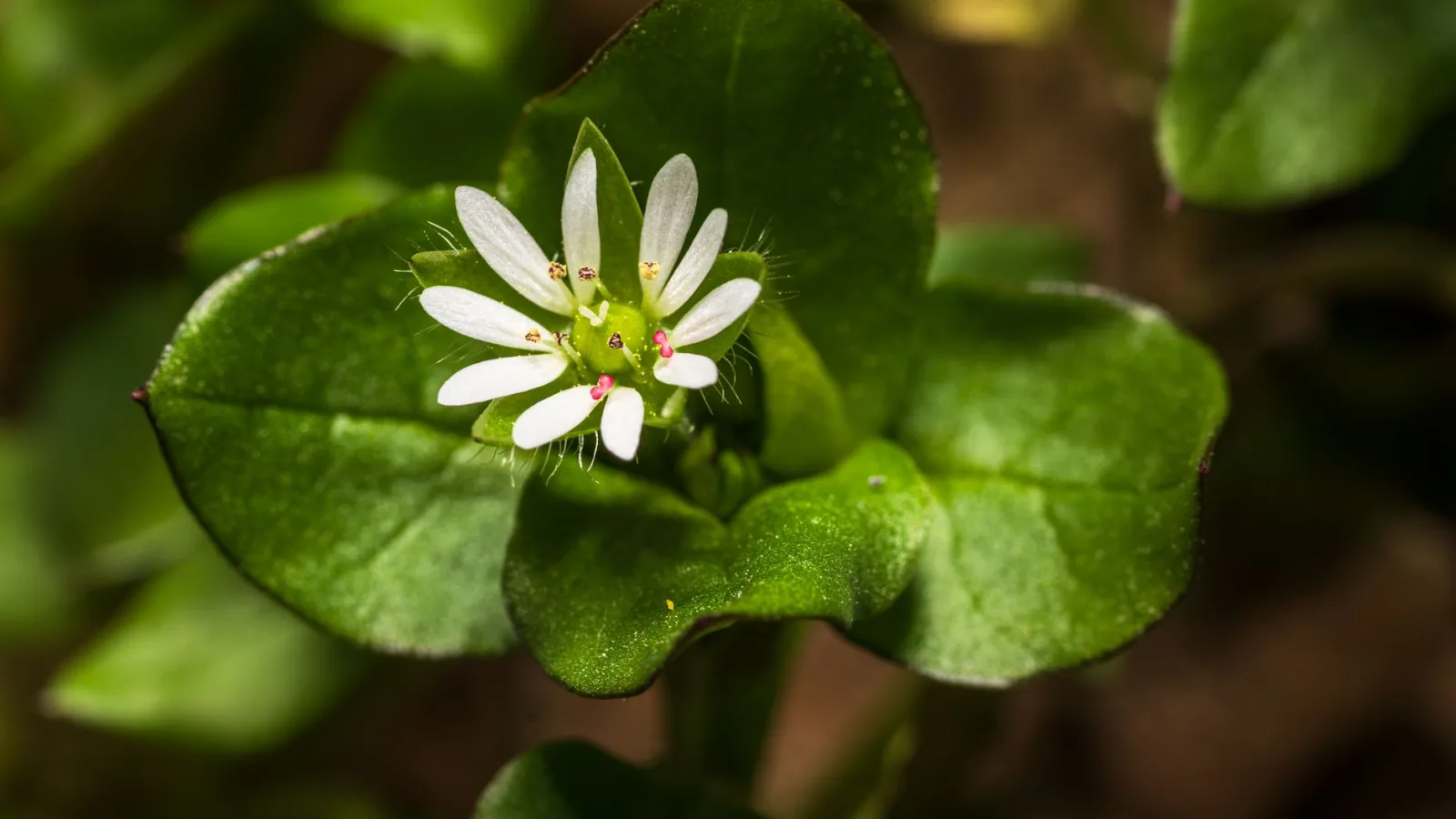
When you're leveling out the beds in September, seed leaves no bigger than a fingernail push up through the cracks in the soil. If those leaves are rounded and set in opposite pairs, and the stems sprawl low along the ground, chances are good it's chickweed (Stellaria media). It's the plant most of us have scraped away with a hoe without ever learning its name. It grows widely across cool, damp temperate regions, so it's worth one look before you pull it.
What the Dongui Bogam Recorded
The Dongui Bogam lists it in the vegetables section (채부, 菜部) under the name beollu (蘩蔞). The old Korean name given alongside it is 'ᄃᆞᆯᄀᆡ 십가비', whose first word is an archaic spelling of "chicken's." Its nature is described as neutral — slightly cold, by some accounts — with a sour taste and no toxicity.
A second name travels with it: gyejangcho (雞腸草), "chicken-intestine herb." The stems trail like a vine, and when you snap one, fine threads stretch between the broken ends. Thin and hollow, they were said to resemble a chicken's gut. A note on preparation survives as well: it can be boiled and dressed as a namul, or eaten raw. This is a record from an old medical text, and it differs from modern medical judgment. It's best not to read it as a claim to treat illness. The entry heading and a reading of the original passage are set down in the Dongui Bogam entry for beollu.
Set Beside Today's Nutrient Reports
Analyses of the aboveground parts have reported saponin-type compounds and flavonoids. Vitamin C has been measured on the high side for a leafy green, though the figures swing widely with harvest timing and with which part of the plant is tested. These are reports that the compounds are present, and there isn't material here to read further than that.
- Vitamin C — a water-soluble vitamin
- Saponin-type compounds — glycosides that raise a foam in the blanching water
- Potassium — a mineral common in vegetables
- Dietary fiber — the insoluble fiber that gives the leaves their texture
Where the old record and the new one overlap is in the eating. Boiled, or raw — that line runs straight through to the way the plant is handled today. Where they part is on effects. An older framework that sorted the body's condition by a plant's nature and taste is not saying the same thing as a nutrient analysis. Take what overlaps, and leave the rest standing as a record.
It Sprouts in Fall and Is Cut in Spring
Chickweed does its best growing in cool weather. In the Northern Hemisphere, seed drops and germinates in September and October; the plant winters over with its leaves pressed flat to the ground, and the tender stems are taken from March through May. In the Southern Hemisphere, shift the calendar six months. You seldom need to sow it — it comes up on its own along the edges of beds and in the soil of containers. Once summer heat arrives, the stems turn stringy and the flavor falls off as it flowers.
Harvest with scissors, taking only the tender tips before the flower stalks rise. Leave the roots and it will come back in the same spot. If you're gathering along a roadside or a field margin, stay clear of sprayed ground and anywhere cars pass, and rinse the soil off two or three times under running water. The leaves are thin, so a long soak leaves them limp. Planting months, harvest months, and the nutrient table are laid out in the chickweed crop guide.
Blanched and Dressed, Spooned over Porridge
Blanch in boiling water just long enough for the leaves to wilt. The saponins can raise a foam on that water, so pour it off. The green itself is mild, so the seasoning comes from doenjang (fermented soybean paste), a staple of the Korean kitchen. Squeeze the water out well, then toss the leaves with doenjang, minced garlic, and sesame oil. Go light on the paste — too much of it buries the plant's own scent. The thin leaves take up oil readily, and a scatter of toasted sesame seeds keeps the dish from tasting flat. Serve it as soon as it's dressed, before it begins to weep.
It also goes into rice, or into plain white porridge. Chop it fine and lay it over the rice as it finishes steaming, or stir it in at the very end of the porridge's simmer. Because it meets the heat so briefly, the leaves keep their color. The old note about boiling it and eating it raw reaches all the way here.
If you're clearing the beds today, leave a hand's width along the edge untouched. The seedlings coming up now will winter over and become the first green of spring.