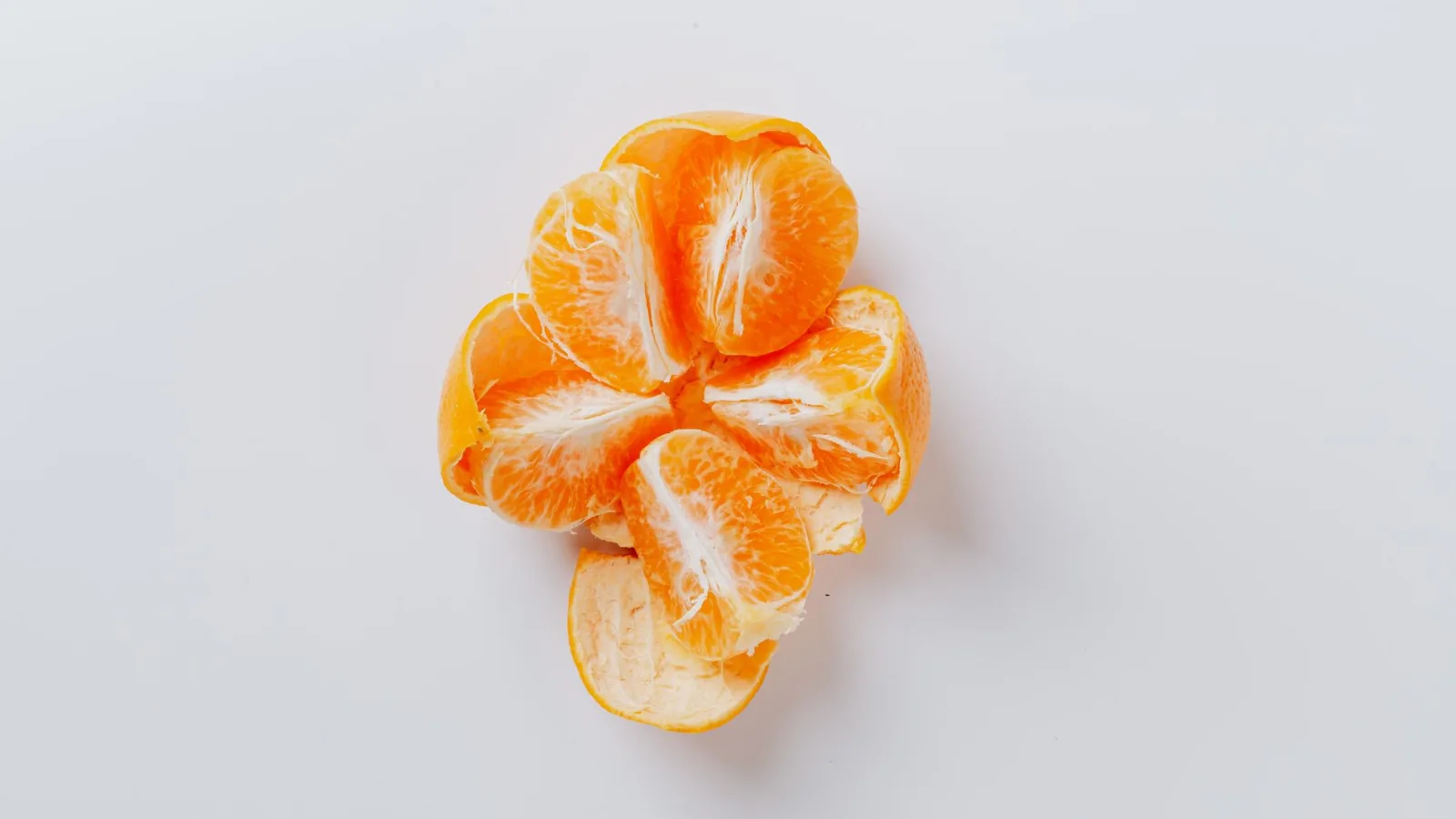
In October, the fruit on a potted mandarin tree starts turning from green to orange. In the Northern Hemisphere, mandarin season runs from now through December, and it's also the best time to dry peels into gyulpi. There's a catch with store-bought fruit, though: the skin is where most of the pesticide residue and coating wax ends up. If you plan to steep the peel as tea, consider growing a tree of your own.
Gyulpi is simply the peel of the mandarin. Freshly peeled, it's called gyulpi. Aged for a year or more, it becomes jinpi (陳皮, "aged peel"). Dongui Bogam, a medical encyclopedia published in 1613 during Korea's Joseon dynasty, explains that the peel is called 陳皮 because well-aged peel is best. The two names refer to the same peel and differ only in how long it has been aged, so you don't need a special tree for jinpi. On Jeju, the island off Korea's southern coast, people still dry the peels left over from winter mandarins and brew them into tea.
Planting: A Grafted Tree in a Pot, in Spring
The mandarin is an evergreen fruit tree from the subtropics, where winters are mild. It's native to China and grown widely in Spain, Türkiye, Egypt, Morocco and Japan. It does best where the average annual temperature is around 15°C and grows most vigorously at 20–30°C. Below -5°C, its leaves and branches start to freeze. If your winters get colder than that, grow it in a pot that you can move with the seasons.
Plant in March or April in the Northern Hemisphere, or in September or October in the Southern Hemisphere. A tree grown from seed takes years to bear fruit, so buy a grafted nursery tree instead. Choose a pot that drains freely through its bottom hole, and set it where it gets sun for most of the day.
Care: Moving It Out of the Rain and Cold
Mandarin trees grow at temperatures between 10 and 35°C. From spring through fall, keep yours outdoors in full sun. When nighttime temperatures drop close to 0°C, bring it inside to a bright window. Frequent rain makes the peel thick and prone to splitting, so move the pot under the eaves when rain sets in for days at a time.
When the fruit ripens in October, it needs a gap between day and night temperatures for the peel to develop deep color and fragrance. Don't rush the tree indoors. Let it sit out in the cool night air until the first frost. The familiar citrus scent comes from d-limonene in the peel.
You'll be eating the peel, so avoid pesticides as much as you can. Check the undersides of the leaves often, and pick off any insects you find by hand.
Harvest: When the Fruit Turns Evenly Orange
Pick the fruit from October through December in the Northern Hemisphere (April through June in the Southern). Once the whole peel has turned an even orange, cut the stem with scissors. Pulling the fruit off by hand can tear the peel around the stem. Even homegrown fruit has dust on its skin, so scrub it with coarse salt or baking soda, rinse it under running water and pat it dry. If you buy your mandarins, choose ones that are both pesticide-free and unwaxed.
Drying and Aging: From Gyulpi to Jinpi
After you eat the fruit, tear the peel into small pieces and spread them out to dry in a shady spot with good airflow. Dongui Bogam lists two separate uses for the peel, depending on whether the white pith on the inside is left on or removed. For your first batch, dry some pieces with the pith on and some with it scraped off, then compare the taste. Store the fully dried peel in an airtight container somewhere cool. Once it has aged for a year, use it as jinpi.
The peel contains hesperidin; pectin, the same substance that sets jam; and nobiletin and tangeretin, which give the peel part of its bitterness and aroma. Researchers have used hesperidin extracted from mandarin peel in test-tube and animal studies that measured antioxidant markers. A cup of tea, however, gives you far less hesperidin than those studies used. Dongui Bogam also lists the peel as 橘皮 in its fruit section (果部), but that is the record of an old medical text, not a finding of modern medicine. Enjoy gyulpi tea for what it is: a warm cup on a winter day.
In the Kitchen: With Ginger, Jujubes and Meat
Look up the ginger and jujube entries in our plant guide too, and you'll have all your winter tea ingredients in one place.
- With ginger: Simmer about 3 g each of dried peel and ginger in 500 ml of water for about 10 minutes. The tea tastes of both spicy ginger and citrus. You can sweeten it with jujubes instead of sugar.
- With jujubes: The sweetness of jujubes (Chinese red dates) softens the peel's slight bitterness. Split the jujubes open before adding them so their flavor comes through.
- With meat: When you boil pork for suyuk (boiled, sliced pork), using a cut like samgyeopsal (pork belly), add two or three fingernail-size pieces of peel to reduce the gamey smell. Too much will leave a bitter aftertaste.
You don't have to wait for a tree. Start with the peel from the mandarin you ate today: wash it, then spread it out in the shade to dry.
Sources: Dongui Bogam, original text of the 橘皮 (mandarin peel) entry in the 果部 (fruit section); Nongsaro (Korea's agricultural technology information portal)