
Tangaek — Decoctions · Trees
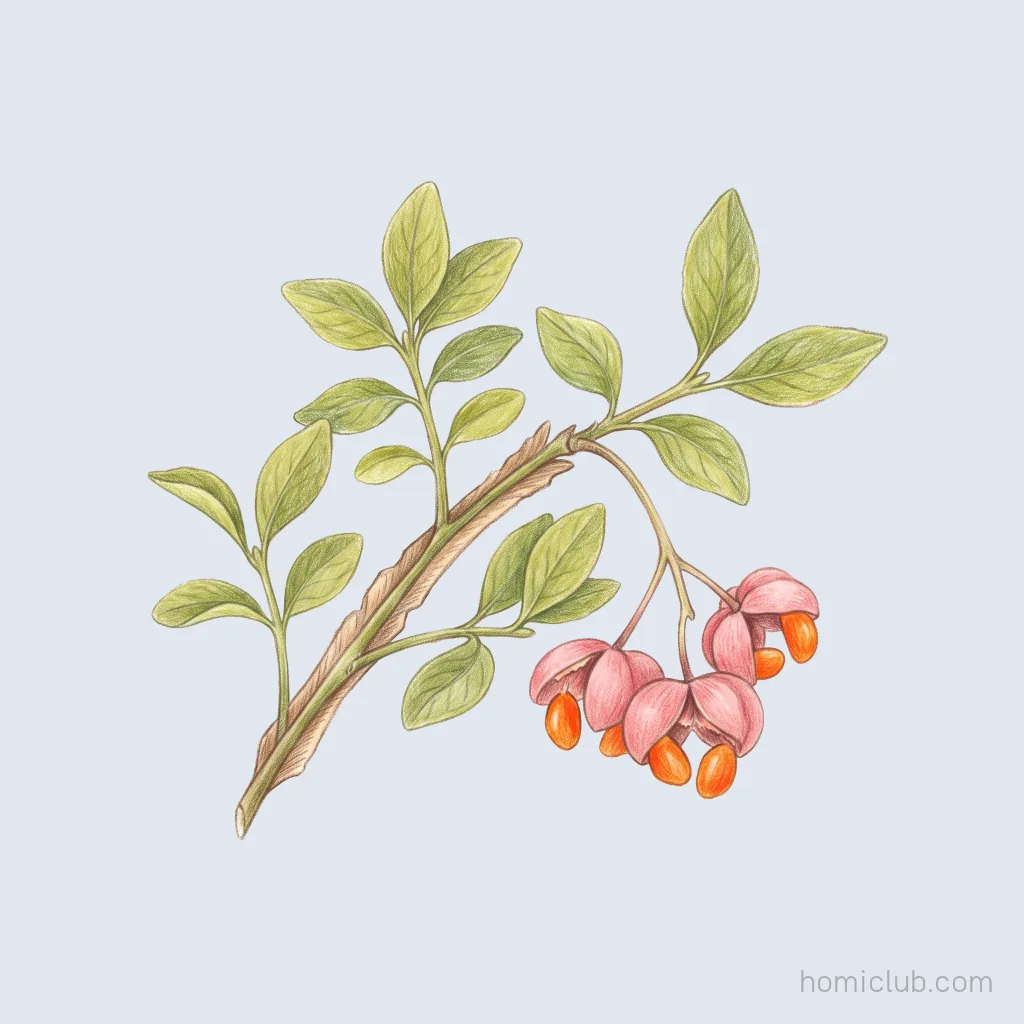
衛矛 Winged spindle
 Related Crop · Winged spindle →
Wimo is the corky wing running along the stem of the burning bush, the hwasalnamu of the crop guide. Three ridges stand out from the stem like the fletching of an arrow, which is why it was also called gwijeonu (鬼箭羽). Korean cooks pick its spring shoots as hotip namul, and gardeners plant it for the scarlet autumn leaf.
Original, read line by line 東醫寶鑑 · Tangaek — Decoctions vol. 3
-
性寒, 味苦, 無毒一云小毒.
Its nature is cold and taste bitter, with no toxicity, though some sources note a slight toxicity.
-
主蠱疰, 中惡腹痛.
It treats gu poisoning and zhu disease, as well as abdominal pain caused by sudden malign influences.
-
除邪殺鬼, 及百邪鬼魅,
It expels evil influences and slays specters, dispelling all manner of malign spirits and goblin energies.
-
殺腹藏蟲,
It kills parasitic worms harbored within the abdomen and viscera.
-
通月經, 破癥結,
It restores blocked menstruation and breaks up hardened masses and accumulations.
-
止血崩帶下, 産後瘀痛,
It stops uterine bleeding and abnormal vaginal discharge, and relieves postpartum pain caused by blood stasis.
-
消風毒腫, 能落胎.
It disperses swellings caused by wind toxin and is potent enough to induce miscarriage, so it must be avoided during pregnancy.
-
一名鬼箭, 處處有之.
It is also called guijian, meaning ghost arrow, and grows commonly in many places.
-
其幹有三羽, 狀如箭翎.
Its stems bear three winged ridges, shaped like the fletching of an arrow.
-
八月十一月十二月採, 削取皮羽用之. 《本草》
It is harvested in the eighth, eleventh, and twelfth lunar months, and the bark and winged ridges are shaved off for use. From the Bencao.
-
又名鬼箭羽, 人家多燔之以祛祟. 《入門》
Also known as guijianyu, households often burned it to drive away evil spirits and curses. From the Yimen.
Related Crop
Winged spindle →
Trees — more entries

This is a cultural and historical record from a classical text, not a claim about any food’s effects. Nothing here is a health supplement or intended to prevent or treat disease. Consult a medical professional about health concerns. · Text: Korean Medicine Classics DB · Reading: Homiclub